
By JULIE CARLE
BG Independent News
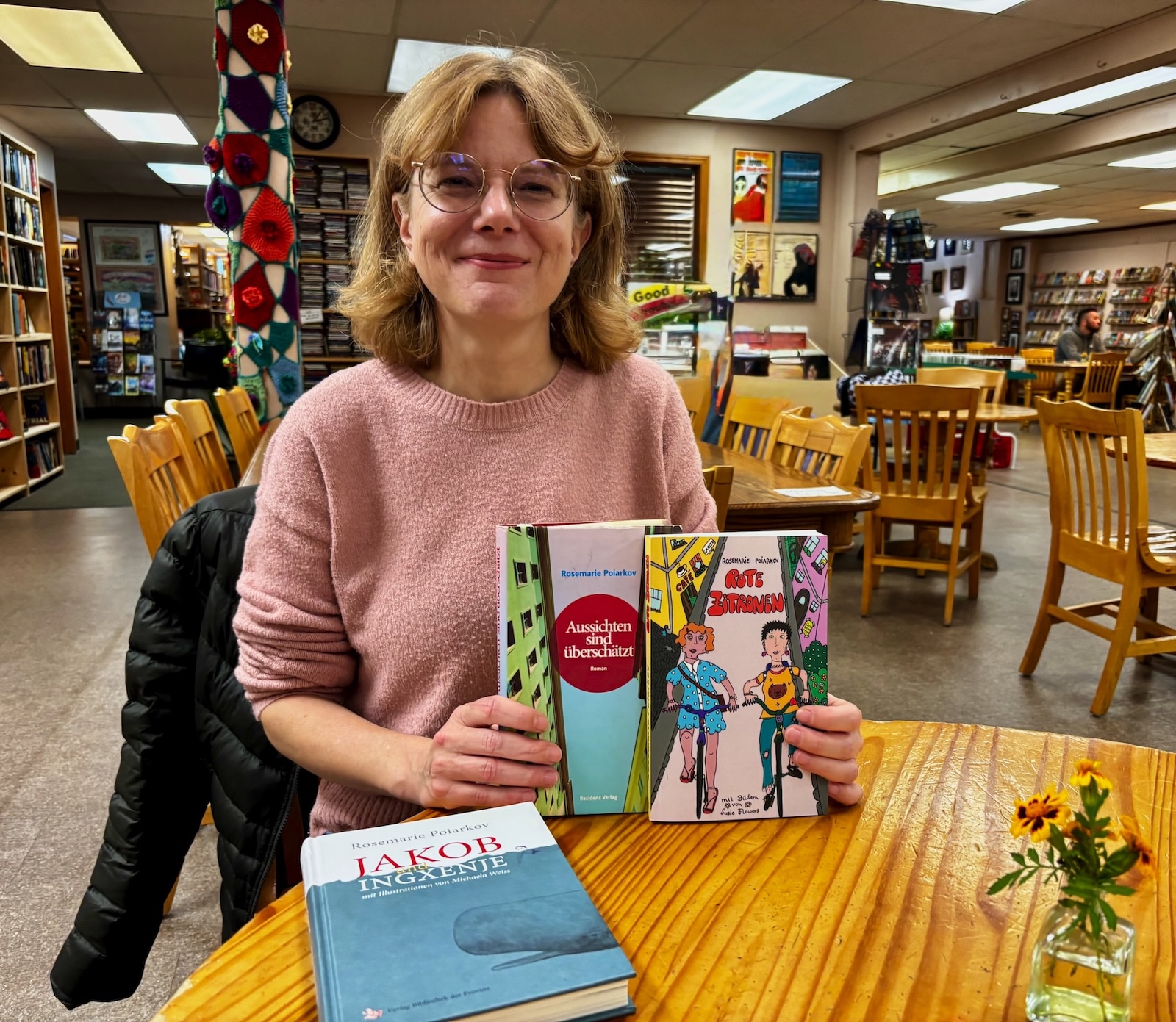
Austrian author Rosemarie Poiarkov spent the fall semester at Bowling Green State University sharing her stories that explore everyday life blended with imaginative elements.
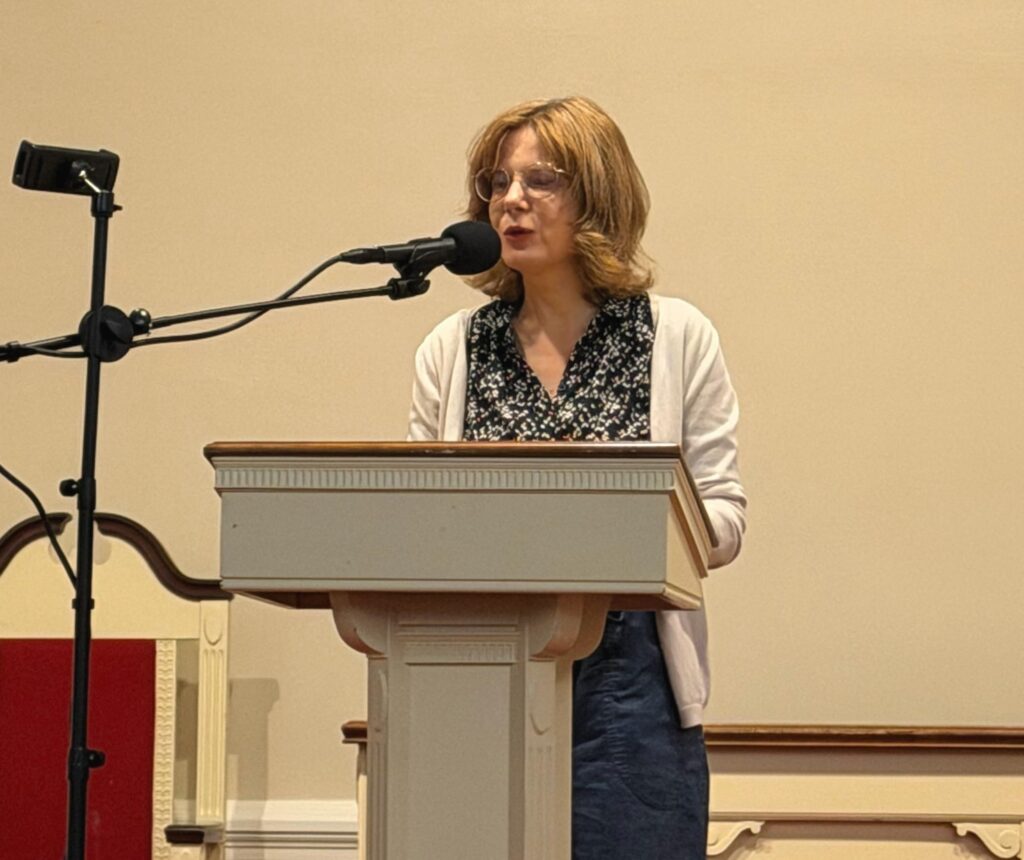
As the Max Kade Writer in Residence in the BGSU World Languages program, Poiarkov taught a course on contemporary literature for advanced undergraduate and graduate students and presented readings on campus and at the University of Cincinnati’s German program.
For nearly 40 years, BGSU has welcomed German-speaking authors, scholars and artists to serve as the Max Kade Writer in Residence to share their work with the campus and greater community.
According to Dr. Geoffrey Howes, professor emeritus of German, the program was started in 1986 by Professor Klaus Schmidt, who was also instrumental in the development and growth of BGSU’s Academic Year Abroad-Austria program.
German-American philanthropist Max Kade and his foundation funded the program to strengthen American colleges’ German programs.
Poiarkov’s journey as a writer started when she was 14, but writing was not the path she envisioned. Instead, the circuitous route to being a writer evolved organically, she said.
She studied philosophy, German literature and political science at university. She taught German as a foreign language and became involved in local Austrian politics, as a Vienna 2nd District Council member.
Her writing career began with a collection of short stories published in 2001, somewhat accidentally after a literary magazine editor discovered her work.
From there, diversity best describes her writing. She has written a children’s book about a sperm whale, a novel for adults with multiple protagonists, and an illustrated young adult novel (“Rote Zitronen,” “Red Lemons”) about a 14-year-old girl. She also wrote a play after a theater director asked for her help.
While her books span multiple genres, she used the opportunities to explore different styles of storytelling, all while maintaining a core focus on the nuances of everyday life. “What’s going on in everyday life is really the thing that’s most interesting to me,” she said.
Her experience as a writer in residence and her time in Bowling Green provided new perspectives for Poiarkov.
“The three-hour creative writing class I taught as part of the residency was very rewarding,” she said. “My goal was to help my students discover the fun in writing and that they start writing more by themselves to gain some confidence in writing.”
“The experience and the cultural differences I observed gave me new insights for my current project, an adaptation of my novel ‘Red Lemons’ into a play,” she said. Teaching the book to American students provided new perspectives on the text.
“Hearing the American students interpret and perform her work in a different language gave me valuable insights,” she explained.
Poiarkov was apprehensive about teaching in the small-town environment of Bowling Green. She had always relied on public transportation and was concerned about the lack of access to transportation. It didn’t take long for her to appreciate the vibrant campus atmosphere and the city’s welcoming community engagement.
The experience of living in a different culture revealed fundamental, yet subtle differences in how lie is organized and perceived. Her everyday practices in Bowling Green helped her “understand how different things can be,” she said about living abroad for the fall semester.
“I really loved my office in Shatzel Hall, because there’s this atmosphere of knowledgeable people wanting and striving for more knowledge,” she said. “It’s really inspiring.”
For Howes, who joined BGSU in the second year of the writer in residence program, the residency became an important part of his work at the university.
“I have been very involved with the Max Kade residency over the years,” he said “Most of the writers have come from Austria because of the Austrian connection through our study abroad program.”
Many of the previous Max Kade writers have also referred colleagues to consider the semester-long position.
“It has been such a wonderful experience for me, and maybe the most important part of my career here, besides running the study abroad program for the students,” he said. “I’ve gotten to know a lot of the writers quite well, and I translate a lot of their works. It’s why I started translating so we could have bilingual readings.”
