By JAN McLAUGHLIN
BG Independent News
Bowling Green City Council passed an emergency ordinance Monday evening to help feed local residents who may have to go without federal food assistance this month.
Council member Joel O’Dorisio introduced the piece of legislation advising the city administration to devote $50,000 from the city budget to support emergency food services. Council unanimously supported the ordinance, and O’Dorisio’s request that it be declared an emergency.
Since council received the proposal just a few hours prior to Monday evening’s meeting, council member Jeff Dennis asked if the city administration had a process in mind for dispersal of the funding.
Mayor Mike Aspacher said the city was in preliminary discussions on how to make sure the funding is equitably distributed to the agencies and organizations that provide food assistance in the community. City leaders also discussed how to make sure those receiving the funds are held accountable.
As of Monday evening, the city did not have a plan in place for the emergency food assistance – yet, the mayor said.
“I’m comfortable we can come up with such a plan,” Aspacher said.
O’Dorisio said he introduced the ordinance because this is the first time since the inception of SNAP (Supplemental Nutrition Assistance Program) that the program has been interrupted.
“I’m concerned if we don’t immediately get funds to the food banks in town we’re going to have hunger in our community,” O’Dorisio said.
The funding will likely come from the city’s general fund, the mayor said.
President Donald Trump’s administration said Monday that it will partially fund SNAP after a pair of judges’ rulings required it to keep the food aid program running.
The U.S. Department of Agriculture had planned to freeze payments to SNAP starting Nov. 1 because it said it could no longer keep funding it due to the shutdown. The program serves about one in eight Americans and is a major piece of the nation’s social safety net for nearly 42 million citizens. It costs about $8 billion per month nationally.
It’s not clear how much beneficiaries will receive, nor how quickly recipients will see value show up on the debit cards they use to buy groceries. The process of loading the SNAP cards, which involves steps by state and federal government agencies and vendors, can take up to two weeks in some states, according to the Associated Press.
The average monthly benefit is usually about $190 per person.
In Ohio, approximately 1.4 million citizens receive SNAP benefits, adding up to a total of $264 million each month.
Others in Wood County are scrambling to provide food for families.
Also at Monday’s meeting, council adopted an ordinance changing the rates for those towing companies working with the Bowling Green Police Division to tow vehicles involved in crashes or those parked improperly.
Council member Jordan Musgrave questioned the need for the increased rates, since new rates had just been approved by council in June. Those increases made sense, he said, since the rates had not changed in more than a decade.
However, Musgrave said he had been approached by constituents who objected to the additional increases.
“I’m going to have to agree with them,” he said.
While Musgrave supported the higher rate for electric vehicles, which require more care, he suggested the other rates for towing and storage stay put. City Attorney Hunter Brown did acknowledge that this would be the second time the rates were raised in the past few months.
The new rates would increase from $160 to $175 for regular police tows, $30 to $40 for outside storage, and $45 to $75 for inside storage.
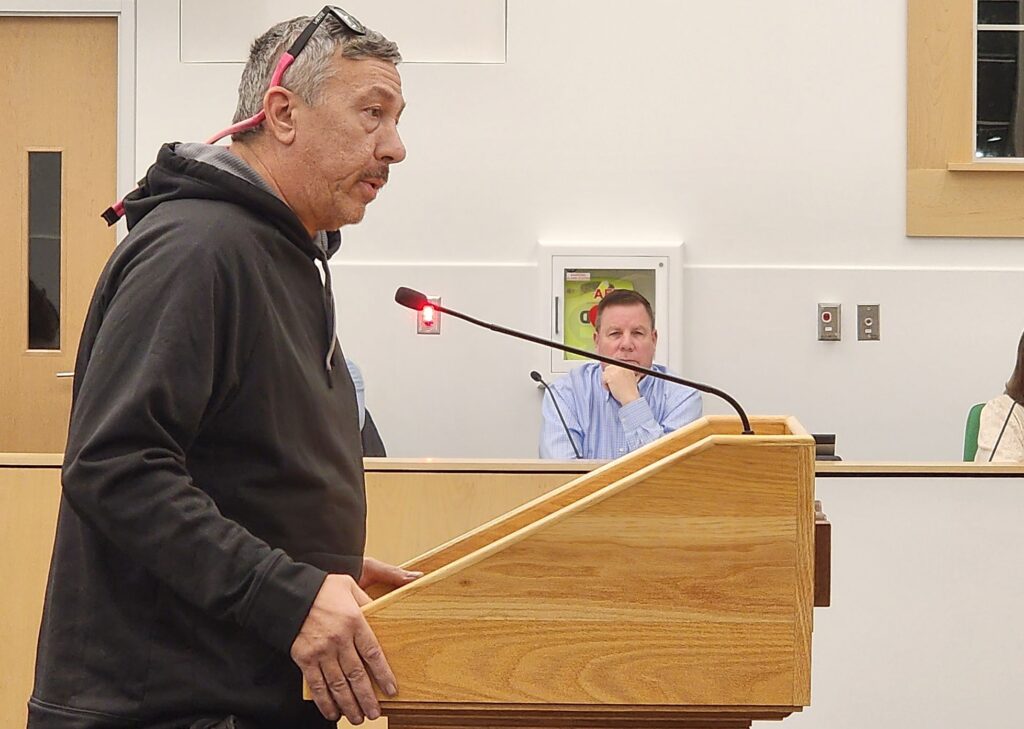
Frank Weldon, owner of Frank’s Automotive in Bowling Green, explained to council that the towing businesses are just trying to catch up with their expenses after years of stagnant rates. A tow truck with a flatbed can cost up to $180,000. All the other equipment is extra, he said.
Council member Greg Robinette said tow truck drivers are members of the business community – in this case helping the police with problem vehicles.
Council member Bill Herald commended Musgrave for listening to his constituents.
Council passed the ordinance 6-1, with Musgrave voting against it.
In other business, council adopted two ordinances regarding low-speed micromobility devices. Brown commended council members Rachel Phipps and Bill Herald for working with him to perfect the legislation.
Three changes made will allow the electric scooters on sidewalks, except in the downtown – as is the rule for bicycles. It allows Bowling Green State University to regulate the scooters differently on campus, and it prohibits the scooters from being operated on streets with speed limits higher than 35 mph.