
By STEPHA POULIN
BG Independent News
Pollinators are responsible for one in every three bites of food you eat, but they need our help to survive, Kaleigh Obrock, agriculture coordinator with Pollinator Partnership, said Wednesday at Wintergarden/St. John’s Nature Preserve.
“Pollinators are critical not only for our food supply, but also for our economy and biodiversity,” she said.
In celebration of National Pollinator Week, a packed audience of Bowling Green-area residents came to Obrock’s presentation in the Rotary Nature Center. Obrock said many native pollinators are at risk due to habitat loss, pesticide use, climate change, and disease.
We don’t need to sacrifice our yards to help pollinators. Obrock’s favorite pro-pollinator tip is simply doing less yardwork.
“Create the habitats pollinators need to survive by leaving things alone–don’t pick up all the sticks and leaves during your spring and fall.”
As rain pelted the tin roof, Obrock detailed the impressive diversity of pollinators in the Midwest, including thousands of species of bees, butterflies, moths, flies, and beetles.
“Many of our regional pollinators go unnoticed in favor of the honey bee, which is non-native,” she said.
She shared sobering statistics about the declining populations of keystone pollinators such as the monarch butterfly and the rusty patched bumblebee, which has disappeared from Ohio since the late 1990s and is now considered endangered.
Painting a picture of the everyday stressors pollinators face, Obrock likened their challenges to human problems. Her vivid metaphors helped attendees better understand the compounding pressures that can devastate insect populations.
“Imagine having the worst day at work. Your boss yelled at you, then you get home, and your whole house is gone,” she said. “Now imagine being a pollinator and experiencing that every day.”
Human activity can create a world of environmental upheaval for pollinators, but there are many ways humans can help, like filling gardens with regional plants.
Some pollinators may starve without the right plants, Obrock said. Native flowers give insects the nutrients they need in return for pollination, while non-natives and cultivars produce less nectar.
“We can use nature and the way nature works to solve problems,” Obrock said.
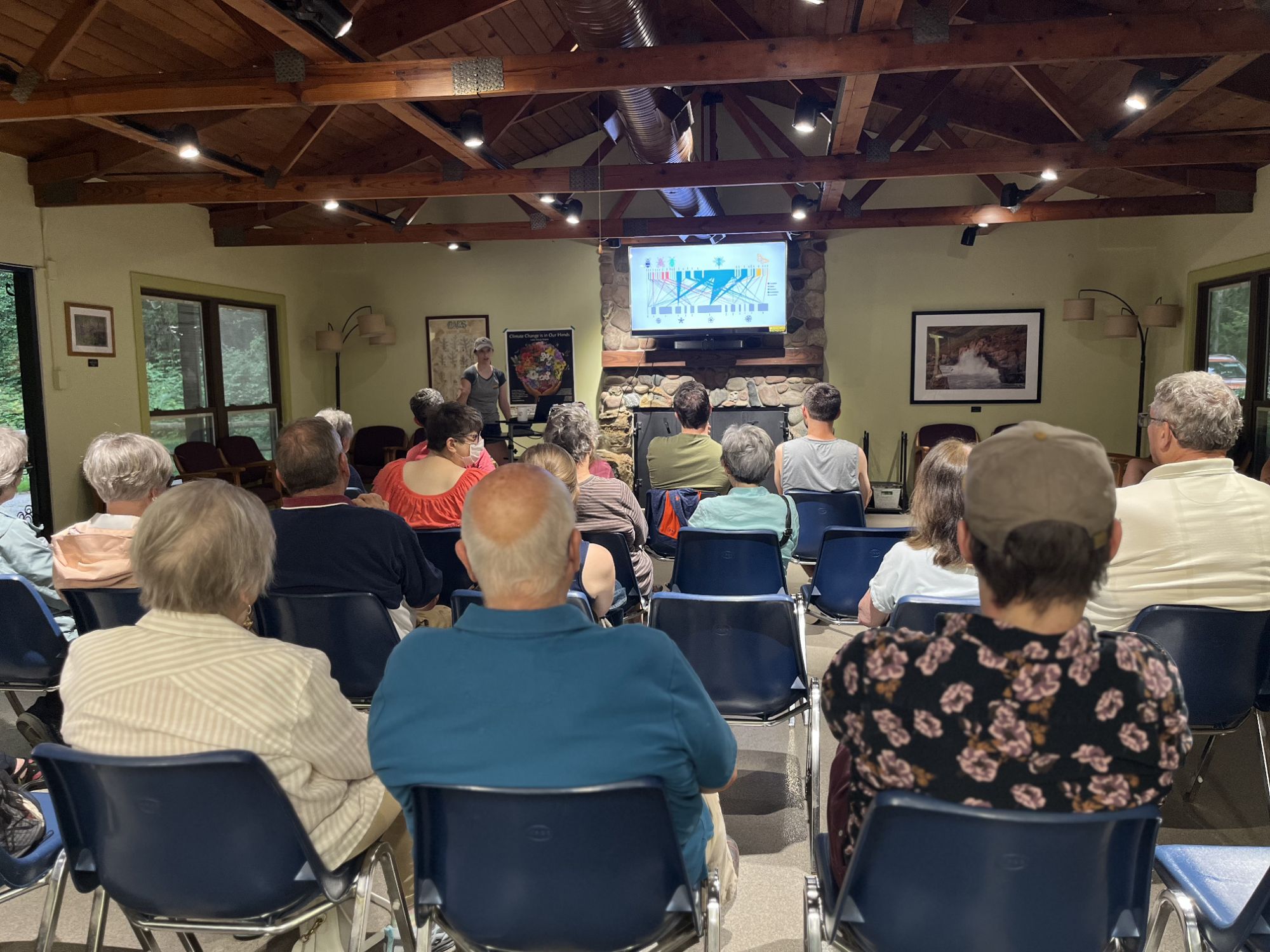
After the presentation, residents sheltered in the Rotary building to grab pollinator pamphlets and gardening guides.
Park staff called off the scheduled nature walk due to the rain, but there’s still time to spot pollinators in BG parks. Wintergarden Natural Resources Manager Cinda Stutzman said the best blooms for pollinators are coming in the next month.
Obrock invited residents to download the iNaturalist app, where they can submit pollinator sightings and contribute to ongoing citizen science efforts aimed at understanding and protecting pollinator species in the region.
Those interested in learning more can visit the park staff in the Rotary building. Brochures and planting guides are also available on the Pollinator Partnership website, pollinator.org.