BY SUSAN TEBBEN
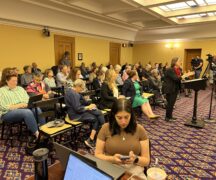
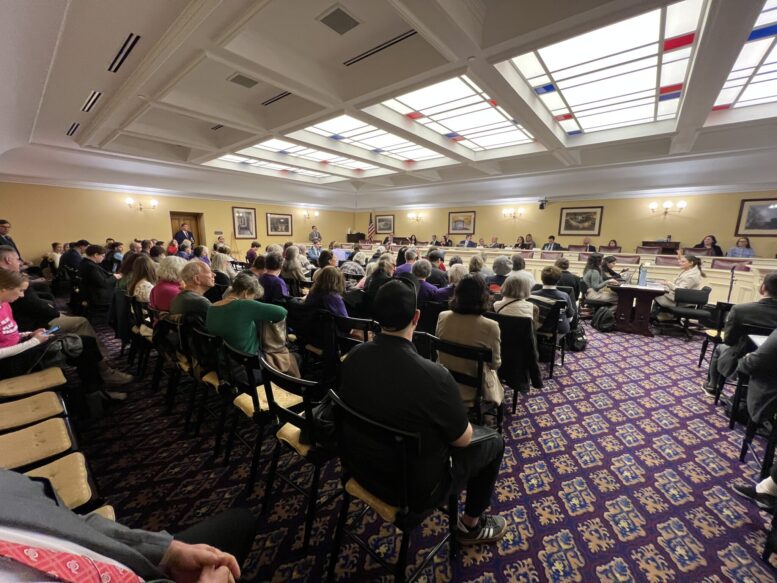
The sound of the adjourning gavel had barely faded before Ohioans at the Ohio Redistricting Commission’s Friday meeting were expressing their outrage at the congressional map that had been passed, and the process to pass it.
While Republicans have received a lot of heat for having ultimate control of the legislature and the redistricting process itself as the majority party, Democrats have not come out of the process unscathed.
As the meeting ended, attendee Katy Shanahan spoke directly to the commission co-chair, Ohio Senate Minority Leader Nickie Antonio, D-Lakewood, and Ohio House Minority Leader Dani Isaacsohn, D-Cincinnati.
“Nickie and Dani, you should be ashamed of yourself for allowing this to go down in your name,” Shanahan shouted as she was seemingly escorted out of the House Finance hearing room.
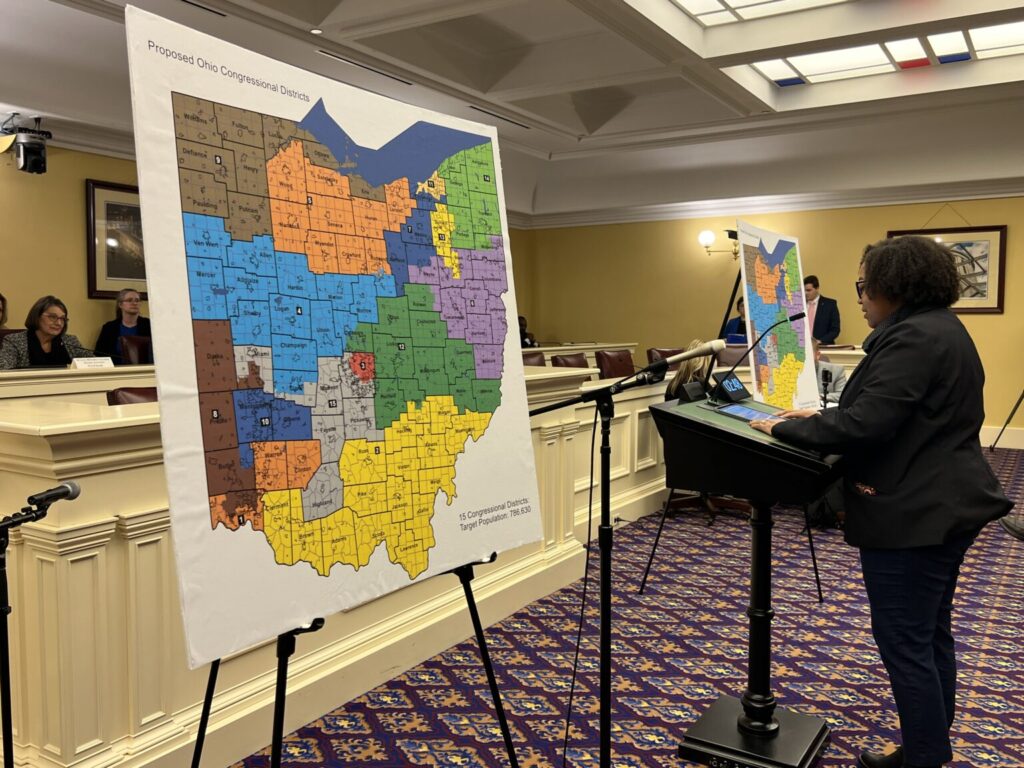
The ire came after a unanimous vote by the commission, allowing the adoption of a district map that broadens Republican advantage in the state, giving them an edge in 12 of 15 congressional districts.
Currently, Republicans hold 10 of Ohio’s 15 Congressional districts. Despite the new Republican advantages, Democrats have expressed confidence they can hold their current five seats.
Members of the public who have watched the process go through many years of turmoil — even after the 2018 constitutional amendment that sought to reform the process and make it more transparent — saw the map as an insult, and the Democrats who voted for it as “sell outs.”
Catherine Turcer, executive director of the voting rights advocacy group Common Cause Ohio, called the process a clear “sham” and “dog-and-pony show,” saying commission members on both sides of the aisle went against the constitutionally-mandated process by not deliberating and engaging the public as the process went along.
“They could have improved these maps, they could have been having hearings all month,” Turcer told the Capital Journal.
“Instead, they just did everything in secret, negotiated in secret, and all the members are a great disappointment.”
Ohio-based anti-gerrymandering group Equal Districts Coalition submitted their own map proposal earlier in the year and supported a Democratic proposal that would have seen the state broken up into eight Republican-leaning districts and seven Democratic-leaning districts.
After all was said and done last week, the coalition said the map adopted by the commission was “even more rigged than it was 14 years and two anti-gerrymandering reforms ago.”
The coalition said the Democrats “hung Ohio voters out to dry,” agreeing to districts that “dilute the political power of our state’s communities of color.”
Isaacsohn and Antonio argued that they’d done what they could to stem the gerrymandering they saw happening to their state, but also argued that the five districts that were considered safely Democratic in the map adopted in 2022 are still competitive in the new map.
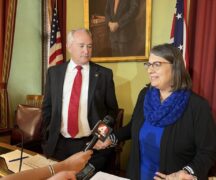
“Like our previous map, Democrats continue to have a narrow path, winning four to five seats under these lines,” Antonio told the media after the vote.
“This was our only way forward to retain our representation in Congress, the voices of the people of Ohio.”
Antonio’s co-chair on the commission, state Rep. Brian Stewart, R-Ashville, acknowledged the map could be a negative or a positive for Republicans depending on the candidates and the campaigns run in the future.
“You don’t have to squint very hard looking at the map to see where Republicans maybe have a better shot at being successful,” Stewart said.
“You don’t have to squint very hard to see where we’re going to have an uphill climb, maybe, if there’s a bad election season for our party, but overall I think it’s a good map.”
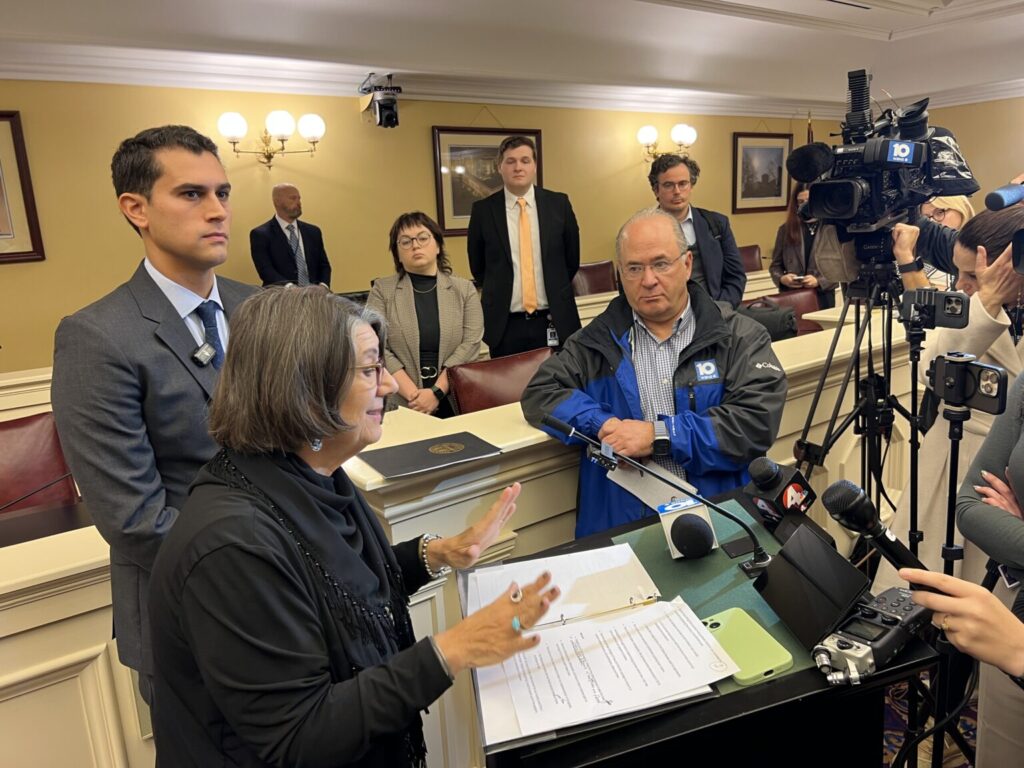
Isaacsohn pointed to the “realities of where our state’s leadership is” as to why the two Democrats decided to vote on the map, what they saw as “the best path to … making sure that Ohioans have as many competitive congressional districts as possible.”
“The options were eliminate all three of our members of Congress, or maintain their ability to run and win in 2026, we chose to make sure that Democrats can run in all three of the targeted districts,” Isaacsohn said, referring to the 1st, 9th, and 13th districts, held currently by U.S. Reps. Greg Landsman, Marcy Kaptur and Emilia Sykes, respectively.
Landsman’s seat may end up “one of the most competitive seats in the country” in the next cycle because of the new districts, according to Alex Linser, chair of the Hamilton County Democratic Party.
The Democrats in that county stand ready to get to work for the next election cycle, despite the fact that the county has been “disenfranchised by being split into two districts,” he said.
“The whole situation is very disappointing, but we are where we are, and we have to look forward,” Linser told the Capital Journal on Monday.
The Democratic leaders on the commission received support from national Democratic Congressional Campaign Committee chair Suzan DelBene, who commended them for “negotiating to prevent an even more egregious gerrymander.”
“This compromise keeps us on the path to taking back the House Majority, and we’ll continue to win across Ohio because voters know it’s House Democrats who are fighting for them,” DelBene said in a statement.
Republicans were also shamed during the process for what anti-gerrymandering advocates saw as a lack of action and a lack of interest in keeping the public in the process.
They defended the process, claiming the bipartisan support of the map proved the process had worked as intended.
Ohio House Speaker Matt Huffman, who was one of the authors of the legislative redistricting reform, claimed the commission led “a fair and open process.”
He added that the new map, which will be in effect until 2031, brings “long-term certainty to congressional district lines.”
Stewart said the Republican caucus in the Ohio House is “pleased” to have 12 districts “in which Republicans have a very good opportunity to be successful.”
“I think when you compare that to the map we have now, I think that satisfies a lot of appetites amongst a very robust Republican caucus, not just here, but in Washington, D.C., amongst our delegation,” Stewart said.
The commission’s bipartisan support blocks any attempt at a referendum that would allow the public to vote on whether to keep the map.
Nevertheless, legal challenges and a future ballot initiative to once again reform redistricting are still on the table.
“I don’t know that we’ve ever passed a map that didn’t result in a court challenge from somebody,” Stewart said.
“I think when you look at the map that complies with every single requirement in the (state) constitution, I think that’d be a very uphill climb and we’re not concerned about any such lawsuit being successful.”
Even as the commission prepared to vote on the map last week, Antonio said the system under which the vote was happening was “broken,” and Isaacsohn said Democrats “are not in control of that process here in Ohio,” leading to their tied-hands negotiation.
The only way to improve would be to go back to the ballot box, they both agreed.
Last year, Ohioans saw an attempt to bring about a citizen-led redistricting process that would have eliminated the elected-official-led Ohio Redistricting Commission, and brought on a vetted panel of Ohioans to do the job.
That initiative met with harsh competition in a counter-campaign that also claimed a “no” vote on the initiative would end gerrymandering.
Republicans on the Ohio Ballot Board, led by Ohio Secretary of State Frank LaRose who opposed the amendment, wrote ballot language for the proposal claiming it would require gerrymandering.
In the end, the effort went down in defeat with many voters expressing confusion over the ballot language.
Turcer was a leader in the campaign to get the previous ballot initiative passed.
She said she and others learned a lot from that campaign, and plan to try again after they’ve taken the proper time to organize and strategize.
“We will all have to pick up our clipboards, but not right away,” Turcer said.
No matter the political party, the most recent actions showed Turcer that “these folks can’t actually be trusted to create fair districts.”
Asked about a legal challenge to the congressional map, Antonio said she wouldn’t be leading the charge, but “it’s going to happen.”