By LINDSAY-JO DOUGLAS
BG Independent News
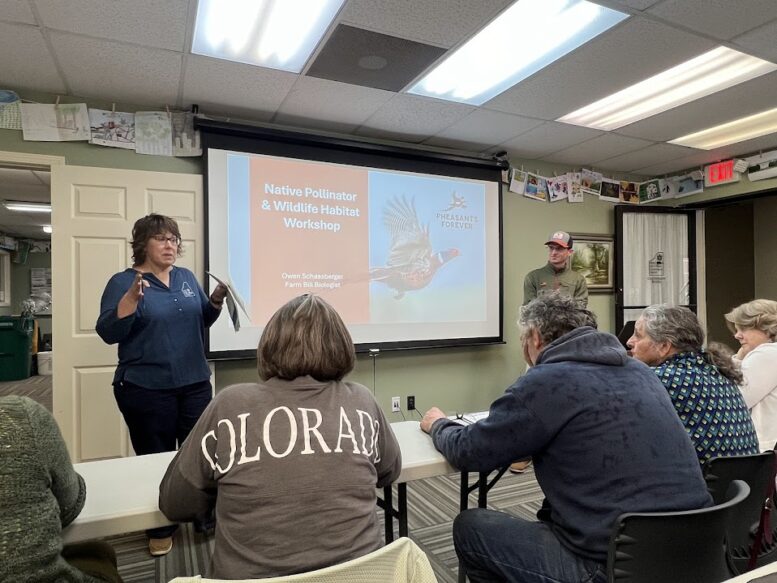
When it comes to planting native pollinator habitats, it’s better to start small than have nothing at all. Wood County Soil and Water Conservation District hosted a workshop to educate attendees on preparing and planting new pollinator habitats as well as the progression and preservation of existing habitats. Because 96% of Ohio is privately owned, the importance of citizens’ conservation efforts was emphasized. The presentation also featured three different grant opportunities to help fund pollinator habitats.
Julie Lause, administrative and outreach manager for Wood SWCD, began the evening with some reminders of the services the organization offers including soil consultations. People can also receive recommendations on the types of plants that would grow best on their type of soil.
If a tree is recommended for a particular soil, Wood SWCD can place an order those seeds in September and include them in the tree seedling sale the following January. This sale typically runs from the first Monday in January through the beginning of March. The 2026 sale has ended.
Owen Schassberger, farm bill biologist with Pheasants and Quail Forever, taught attendees that around the 1940s, Wood County had the greatest pheasant density in Ohio, topping at 300 pheasants per square mile. The pheasant population has since declined due to habitat loss and modern agricultural practices that leave less seed on the ground for pheasants to eat.
Schassberger also taught people the importance of site preparation when it comes to planting pollinator habitats. Preparation can take up to a year and includes mowing, spraying herbicide, tillage, planting, and more mowing. “Prep is the most important step.”
When it comes to attracting pollinators, Schassberger believes “if you plant it, they will come.” He encouraged planting flowers that bloom at different times throughout the year, so pollinators have a continued source of food. Many native flowers and grasses have deep root systems that run 6 – 12 feet underground and also benefit pollinators. Pollinators also like to live in the stems of plants, so people should be mindful when clearing brush in the fall.
Lause said that milkweed is great for Monarch butterflies, because it acts as the butterflies’ host plant. Winter is the best time to spread milkweed, because the freeze-thaw cycle helps plant the seeds. If people are interested in planting milkweed, they can contact the Wood SWCD office to receive seeds for free.
The first grant discussed that is available to landowners is the “backyard conservation grant.” This grant is for up to $300 for planting native plugs in home landscaping in areas up to one-tenth of an acre. This grant is available through Wood SWCD.
The second grant is the “pollinator partner grant.” This is designed for seeding large plots between one-tenth and five acres in size and awards funding at $400 per acre. Grant recipients will work with a conservation professional to develop a seeding plan customized to their property. This grant is also available through Wood SWCD.
To apply for the backyard conservation grant or the pollinator partner grant, click here. Habitats funded with either of these grants are to remain intact for five years.
The last grant available is through the Ohio Wildlife Habitat Initiative (WHI). This grant is geared toward properties over five acres in size. Eligible land includes both cropland and non-cropland. Interested property owners should contact Matt Conner, wildlife management consultant with the Ohio Department of Natural Resources (ODNR) Division of Wildlife at 419-607-7446 or matthew.conner@dnr.ohio.gov.