
By JULIE CARLE
BG Independent News
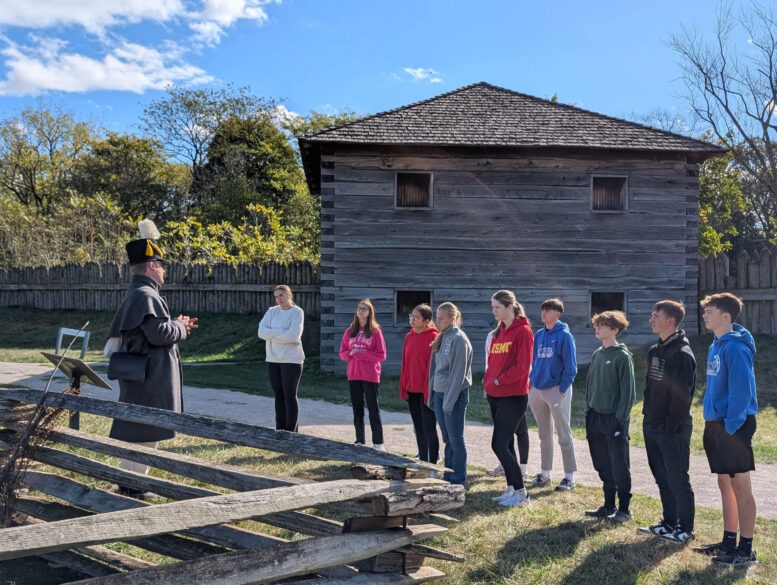
Before reading and talking about the War of 1812, students in Heidi Meyer’s 10th grade Advanced Placement United States History class got a first-hand history lesson when they visited the Fort Meigs historical site in Perrysburg
Sixteen Elmwood High School students learned about Fort Meigs and the War of 1812 through a field trip grant provided by the American Battlefield Trust.
Meyer, who is a huge proponent for providing meaningful and memorable experiences to her students, applied for and received the grant that enabled her students to view the fort and where the battle took place. The grants are awarded based on a competitive national application process, demonstrating Meyer’s commitment to excellence in the classroom.
Sophomore Braxton Benner said before the field trip, he wasn’t aware of the local significance of the War of 1812. The Fort Meigs visit provided a primer that gave the class insights when they studied the war in the classroom.
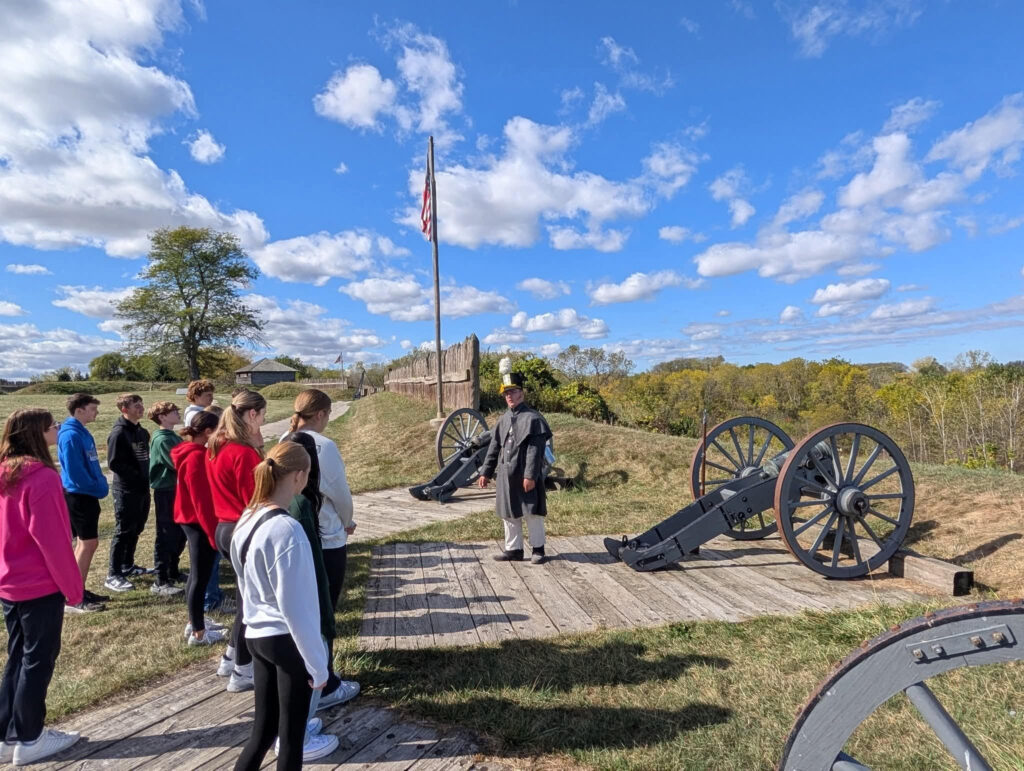
“We got to go with the tour guide and learned what was going on during that time and at the fort,” Braxton said. “They showed us where they were and how the fort was being attacked.”
The guide “actually shot the musket the distance; it was cool to see how it worked,” he said about his favorite part of the visit. “To see it in action, you got a sense of how it actually worked. It felt real, and you could better imagine the damage that was done.”
“The muskets took a lot more time to use and reload,” added Brayden Snyder, a sophomore in the class.
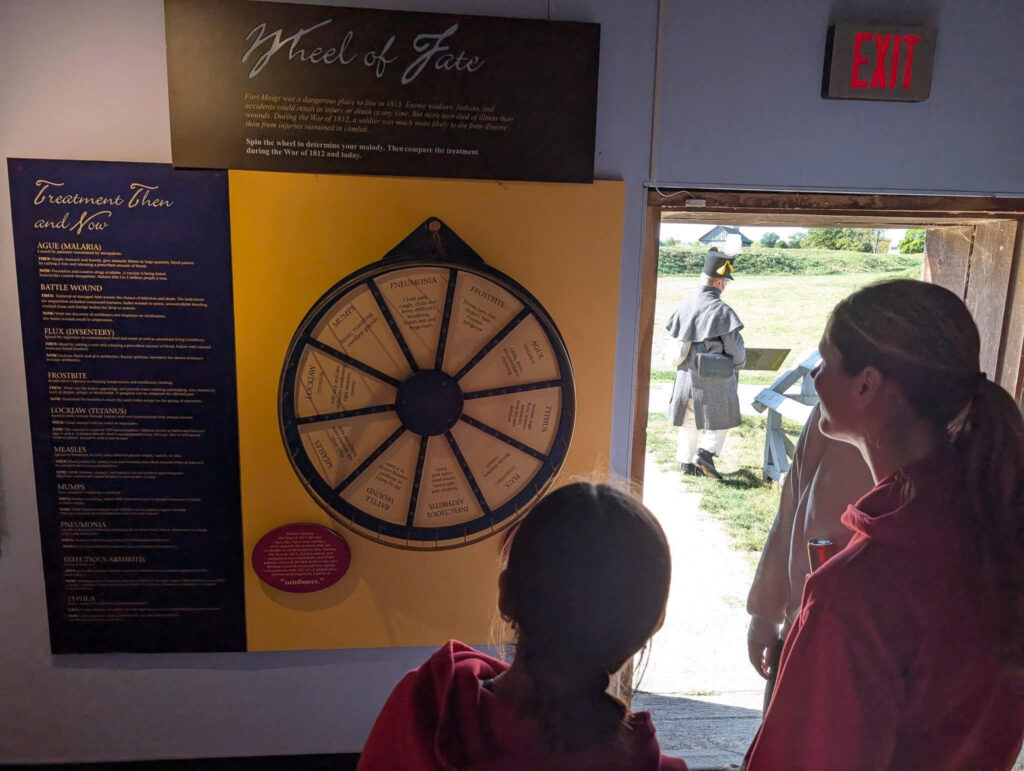
The students also learned about the diseases that took the lives of soldiers, more than battle wounds. Frostbite was a big concern that ended in immediate amputation at that time. “It was poorly treated and led to infections,” Braxton said. “They also connected to how infections are treated now.”
“I really connected with the fort’s building process,” Brayden said. “It was surprising how they worked in the cold, but they still had to get it done.”
In February 1813, General William Henry Harrison ordered the building of the fort to fortify the region and serve as a strategic supply depot and staging area for the U.S. Army.
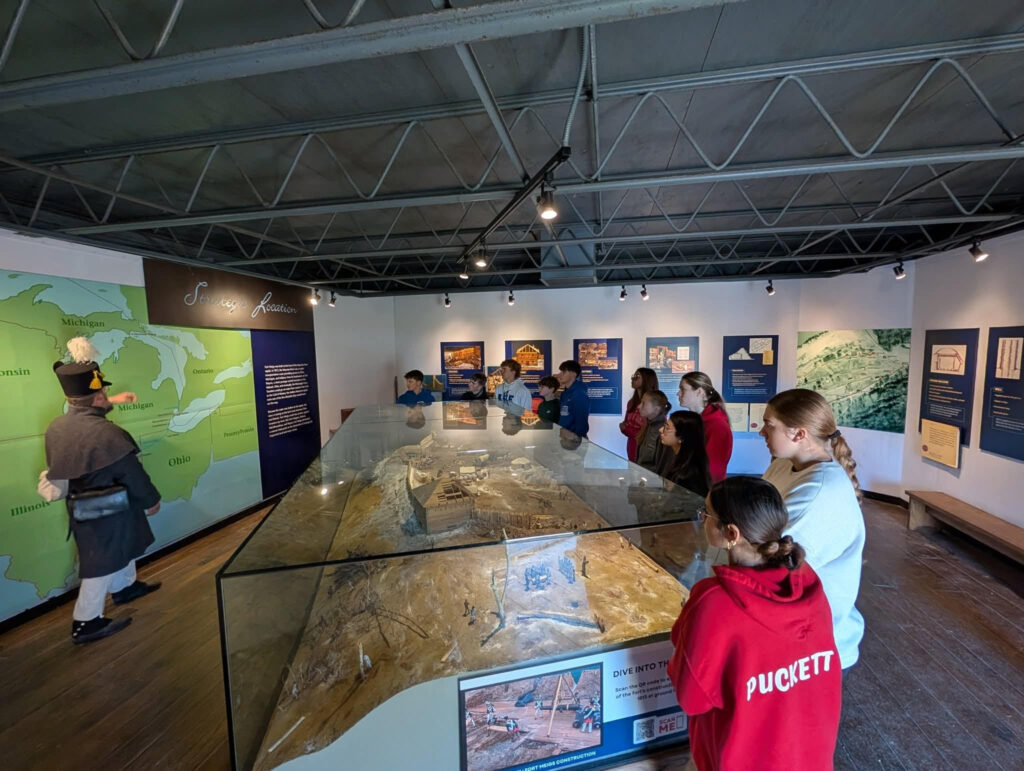
In the cold of winter, the frozen ground made the work grueling, and in the thaw of spring, the mud was so deep, the men worked at times in knee-deep mud. The men had to cut and carry 15-foot logs to construct the 10-acre stockaded fort, which included eight large gates, seven two-story blockhouses and five gun batteries.
According to the fort’s website, Fort Meigs “was the largest wooden-walled fortification in North America at the time and could hold up to 2,500 troops. The fort was completed by the end of April 1813, prior to the British attack.
“In class, we learned the U.S. was losing forts in the Midwest,” Braxton said. “The capital had gotten taken over by the British. The Fort Meigs battle was a big turning point. It would have been devastating if we’d lost the fort. Defense was definitely important.”
“When I was there, it gave me a new perspective on history,” Snyder said. “When I was looking at the view from the fort, off in the distance, I could see a city. I could see how it was in the past and how things were changing at the same time. That’s what’s cool about these trips. You can see the past, but you can see how it impacted what we have now.”
“We need to learn from our mistakes rather than keep on making them over and over again,” he said.
“Learning about the fort’s history, I was amazed by the human spirit and condition and how awesome our ingenuity is,” Braxton said. “We can all make stuff, fight in these big battles under the worst conditions and still come out on top.”
“These kids get a chance to go to where history was made, where our country was created and defined,” said Trust President David Duncan of the History Field Trip Grant Program recipients, “Battlefields are outdoor classrooms that will teach future Americans about our democratic republic.”
