
By JAN McLAUGHLIN
BG Independent News
The thousands of Wood County residents who survive on federal food assistance may soon feel the effect of the government shutdown.
“We’re sort of circling the airport,” Wood County Job and Family Services Director Dave Wigent said earlier this week. “We’re making contingency plans.”
Approximately 7,315 local residents who receive help through the Supplemental Nutrition Assistance Program could lose that aid.
“We have not received anything official,” Wigent said. But a letter to all states from the U.S. Department of Agriculture warned that SNAP programs will start shutting down on Nov. 1.
“I’m hoping we get something official this week,” Wigent said. “Politically, they often come along at the last minute.”
The amount issued in Wood County last month through the local SNAP program was $1,154,630.
“We would be losing $1 million a month,” Wigent said. That would be impossible for the county to make up.
“It’s not going to be replaced” and families will face hunger, he said. “I’m concerned if it goes on long enough that it will be driving cases into Children’s Services for neglect.”
And if Ohio reins in property taxes at the same time, that would be “catastrophic,” Wigent said.
Early in the shutdown, the Wood County Health Department received notice from the state that the Women, Infants and Children (WIC) nutrition program would be the first to lose funding – but that the state had contingency plans to keep that fully funded as long as possible.
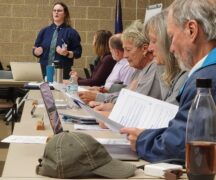
At last week’s Board of Health meeting, Wood County Health Commissioner Ben Robison said the health department is keeping an eye on effects of the federal government shutdown.
“Our immediate concern is our WIC funding,” he said.
The Ohio Department of Health is monitoring the WIC issue, and has been told the Health and Human Services Office still has staff to process payments for programs like WIC, Robison said.
WIC provides its participants with nutrition education, supplemental, healthy foods, breastfeeding support and healthcare referrals. The program improves pregnancy outcomes by providing or referring eligible women to support services necessary for full-term pregnancies; reduces infant mortality by decreasing the incidence of low birth weight; and provides infants and children with a healthy start in life by improving nutrition during critical times of growth and development.
The potential loss of funding for food will put more demands on local food pantries, churches and community organizations that are already stretched thin.
“Our numbers have been going up. People are concerned,” said Peg Holland of the Brown Bag Food Project in Bowling Green.
And with Thanksgiving approaching, higher demands are already expected.
At the same time, Brown Bag is getting less and less from the area food banks, since those programs rely on food from the U.S.D.A.
“They are cutting those funds,” Amy Jo Holland said.
The shutdown began Oct. 1, and is now in its fourth week. Some lawmakers are predicting it could become the longest shutdown, surpassing the 35 days during President Donald Trump’s first term.
On Tuesday evening, Congressman Bob Latta, R-Bowling Green, conducted a “telephone town hall,” taking questions and offering updates on the government shutdown and federal operations.
“We are now on day 21 of the Democrat-led government shutdown,” Latta said. “While Democrats continue to put politics over the American people, I remain focused on serving my constituents. Even though I’ve had my own paycheck withheld by the Chief Administrative Officer during the shutdown, my priority continues to be helping Ohioans. While working in D.C. tonight, I had the opportunity to hear directly from Ohioans about their concerns and was glad to provide updates and resources. Even though many federal agencies are closed, my offices remain open, working, and ready to assist. We are here to help.”
Constituents who were unable to participate in the “telephone town hall” were encouraged to contact Latta’s offices for assistance with federal services at latta.house.gov.