By JAN McLAUGHLIN
BG Independent News
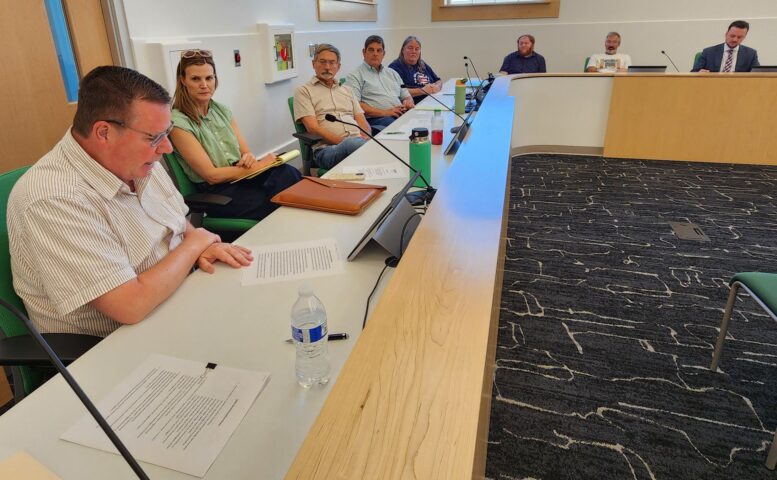
Bowling Green officials reflected on last year while planning for the next during a strategic planning meeting last week.
Mayor Mike Aspacher reported that 170 acres were annexed to the city and zoned for potential development. Nineteen companies made business investments in the city, and $7 million has been spent on improving the South Main Street corridor.
Video scans were made of all the city’s sidewalks, identifying the worst that should be replaced first.
Improvements were made to the city’s water and wastewater treatment plants, multi-use paths are making progress, the downtown alleyway project was completed, and plans are underway to build two new fire stations and renovate the police station.
Aspacher presented council with the administration’s goals for 2026.
Next it was City Council’s turn – with the debate being lengthy on some topics. In some cases, council members were united on the priorities, but divided on the route to get there.
After long discussions, council prioritized revitalizing neighborhoods, adding infrastructure to improve pedestrian and bicycle safety, expanding water treatment, and committing to sustainability efforts.
Following are the goals determined by City Council and the goals set by the city administration.
2026 City Council goals
Continue to focus on neighborhood revitalization efforts
- Increased emphasis on streets, sidewalks and drainage
- Evaluate the city’s rental registration and inspection program through audits
- Review the city’s zoning code to assure it is achieving the desired outcomes
Update subdivision regulations
Continued emphasis on safer pedestrian and bicycle infrastructure
- Contract for an engineering/design study on Poe Road from Mercer Road to Mitchell Road to add a combination of protected on-street bicycle lanes and/or shared use paths and to evaluate other infrastructure to improve pedestrian and bicycle safety
Emphasize council’s commitment to the city’s sustainability values
- Prioritize and fund the city’s Climate Action and Resiliency Improvement Plan commitments and projects each year as part of the annual budget process; consider appropriating a certain amount to serve as matching funds to access federal or state funding
- Create a downtown pilot recycling/composting program
- Increase energy efficiency and renewable energy generation
Proactively address water quality and availability issues
- Prioritize the completion of ongoing improvements at the water treatment plant, including plans to increase reservoir capacity
- Restart efforts to establish an interconnection agreement with nearby communities to provide water in an emergency
2026 City administration goals
Execute plans to update city’s facilities
- City leaders have identified the preferred design partner, and the next phase of design for both fire and police facilities will begin next month.
- Beyond next stage design services, future activity on potential fire station construction is contingent on the result of the November ballot issue.
- The next phase of design and project development will determine the final project cost and budget. The construction timeline is to be determined.
Update the parks and recreation five-year master plan
Complete West Wooster corridor study, from Church Street to Wintergarden Road
Update zoning code
- Subdivision regulations
- Access management policies and guidelines
- Ongoing work associated with the city’s rental registration and inspection programs
Design and construct $1 million in residential paving projects
- Construct the city’s first stand-alone multi-use path. The Brim Road path will connect BG High School and surrounding neighborhoods to the community center.
- Continue implementation of the enhanced 50/50 sidewalk replacement program.
Continue neighborhood revitalization efforts by once again funding the Residential Housing Improvement Grant Program
Continue to invest in municipal utility assets, such as:
- Adding a local renewable energy – likely solar – to the city’s power supply portfolio.
- Adding membrane water treatment capacity at the city’s water treatment plant. This project, in the planning stages since 2022, will add capacity to the city’s reverse osmosis treatment capacity, using the highest water treatment technology available. This project will create additional redundancy and reliability in the advanced treatment processes.