By JAN McLAUGHLIN
BG Independent News
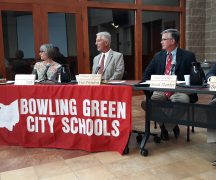
The public got a sneak peek at the new Bowling Green High School plans during a special meeting Tuesday of the BG Board of Education.
“Special meeting is an understatement,” Board President Norm Geer said as he opened the meeting held in the Performing Arts Center.
So far many of the comments about the new building on social media have been complaints about the traffic pattern during construction, and criticism that no walls had yet been erected.
While the design and engineering teams’ presentation Tuesday may not make the traffic congestion more bearable, it may quiet some of the claims that the project is running way behind schedule.
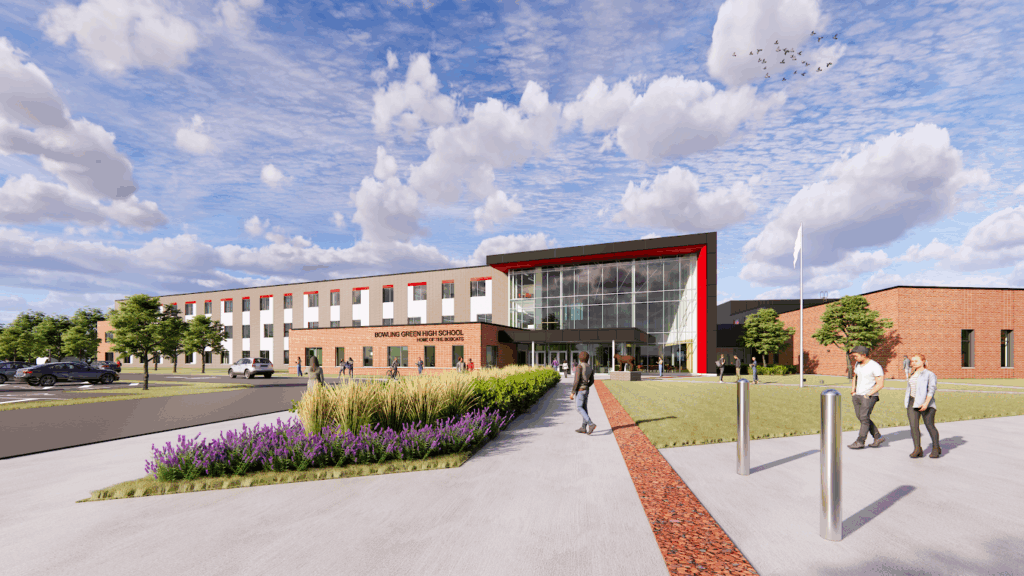
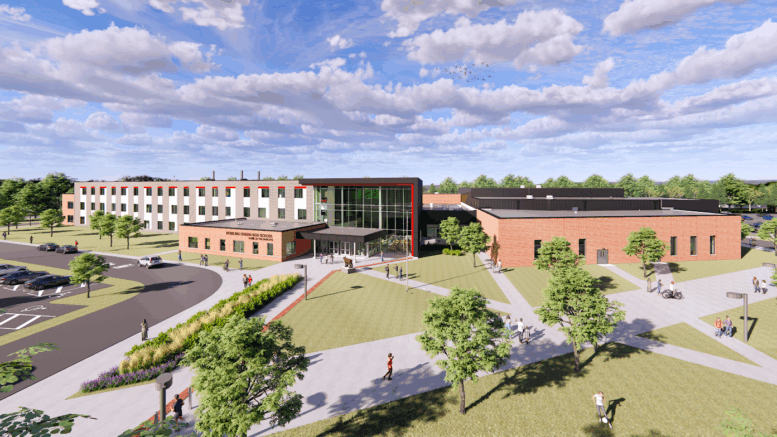
The last two years have been spent planning every detail of the new $70 million, 155,000-square foot high school.
“We all feel we have one opportunity to do this right,” Geer said.
That has meant countless meetings with community members, school faculty, staff and students.
“We wanted to make sure we heard from as many teachers as we could,” said Dusty Lake, from the architectural DLR Group.
There were meetings with specialists on plumbing, electric, geothermal and hardware. Meetings with city, county, fire and police officials. Meetings on safety, meetings on technology, meetings on how to get the most for the district’s money.
“We could have simply designed a building that looks like what you have now,” said Christie Boron, of Emersion Design. “But that’s not what the master plan asked for. That’s not what your teachers wanted.”
And along the way, the project has been on budget and on schedule to open for the 2027-28 school year, Boron said.
“This is a very exciting time at BG City Schools,” Superintendent Ted Haselman said. “Dirt’s being moved. The site looks different daily.”
The original site plan approved by the state cited building capacity at 642. That had to be boosted for current student enrollment of 880 – with flexibility to grow to handle 970 students, Boron said.
“We really don’t see a decline in that site,” she said.
Neither does board member Ardy Gonyer, who said he appreciated the building being designed for potential growth.
“I think Bowling Green is on the right track – and we’re going to grow because we are doing the right things,” Gonyer said.
Lake and Boron, both who specialize in designing K12 school buildings, said they are now ready to pass the job on to construction manager Rudolph Libbe. After months of planning and digging geothermal wells, it’s time to go vertical.
Those wells, paid for by the Inflation Reduction Act, will reduce energy consumption at the new school to half of the typical K12 school building, Boron said. That will add up to a savings of $25 million over 50 years.
“That’s huge,” Boron said.
The school was also designed to make students want to be there, Lake said.
“We worked to design buildings your students are excited to be in. I want the No. 1 challenge for Dan to be getting students to leave the building,” Lake said of high school Principal Dan Black.
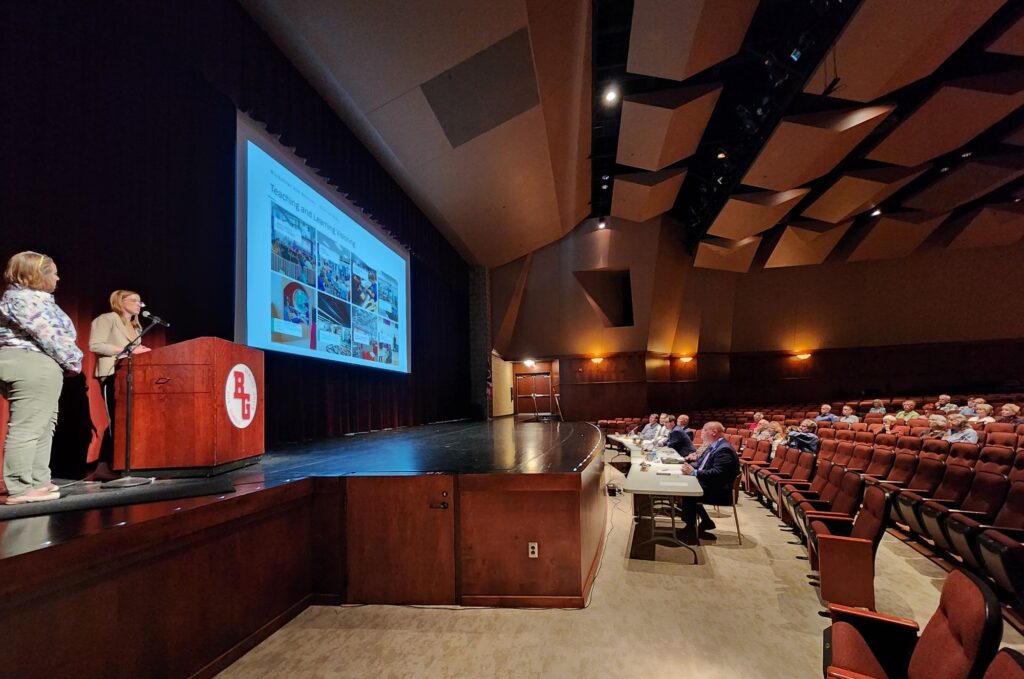
To give the board and public a sneak peek, a powerpoint tour was given to those in the auditorium.
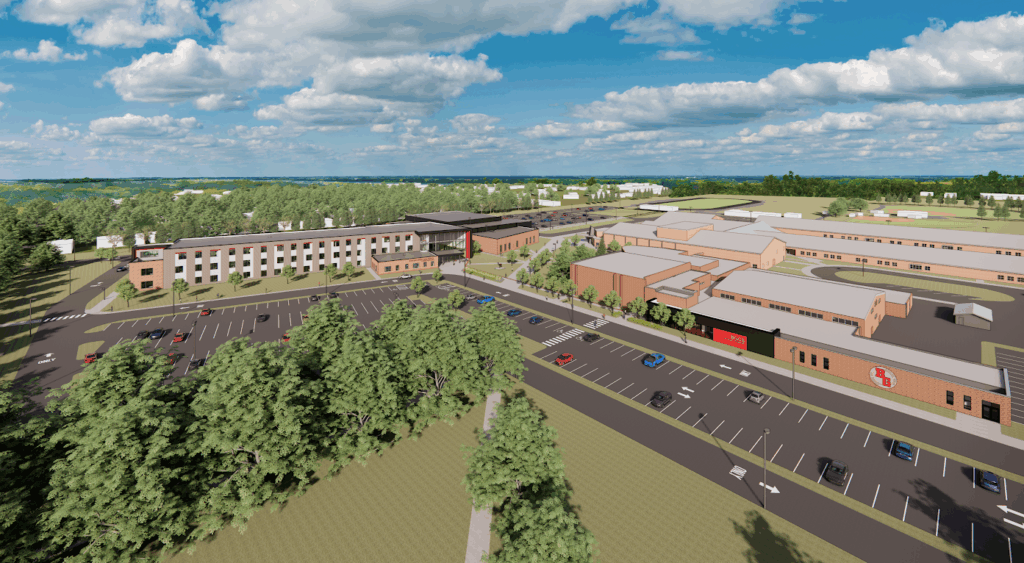
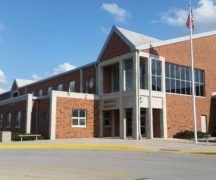
Exterior views showed the overall campus – with the new high school in the southwest portion of the property. The front portion of the existing high school will be demolished, and the northern portion will be converted into an activity center.
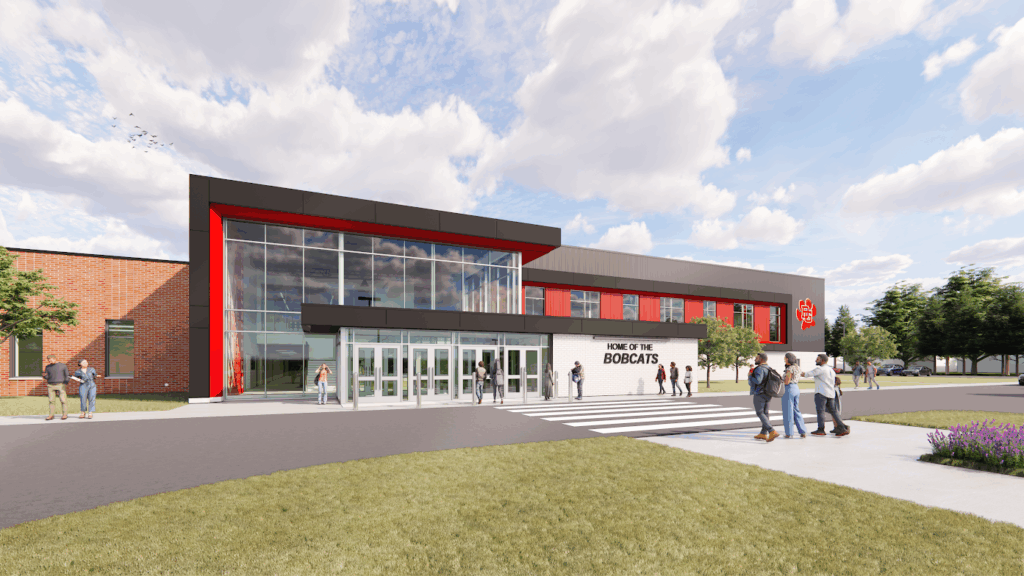
The campus will have a “lot of great green space,” Lake said. There will be a lot of windows with laminated glazing for safety, and “branding” with use of scarlet and charcoal colors.
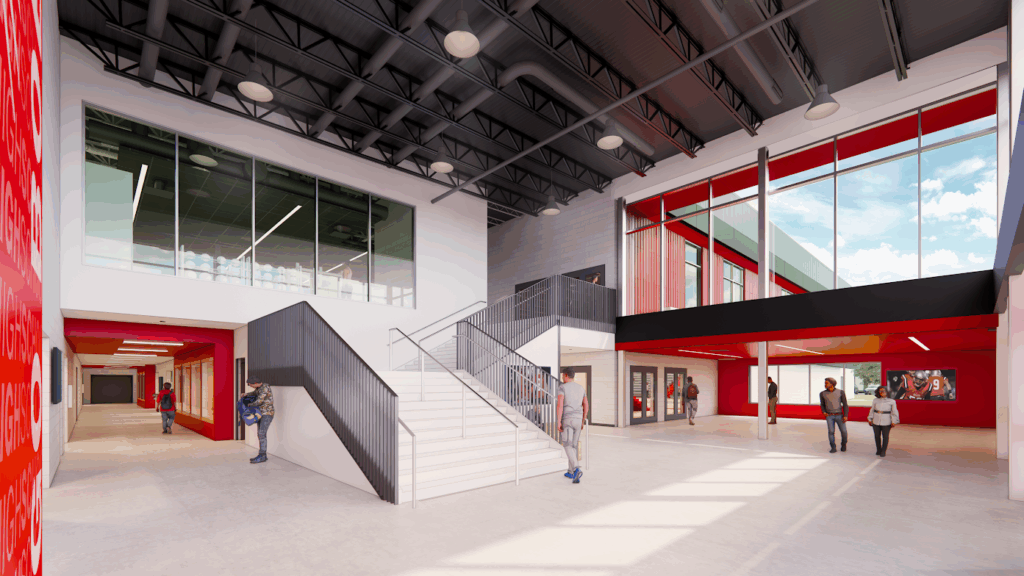
The new high school will have three floors with 26 learning spaces in its academic wing, and two floors in the gymnasium area.
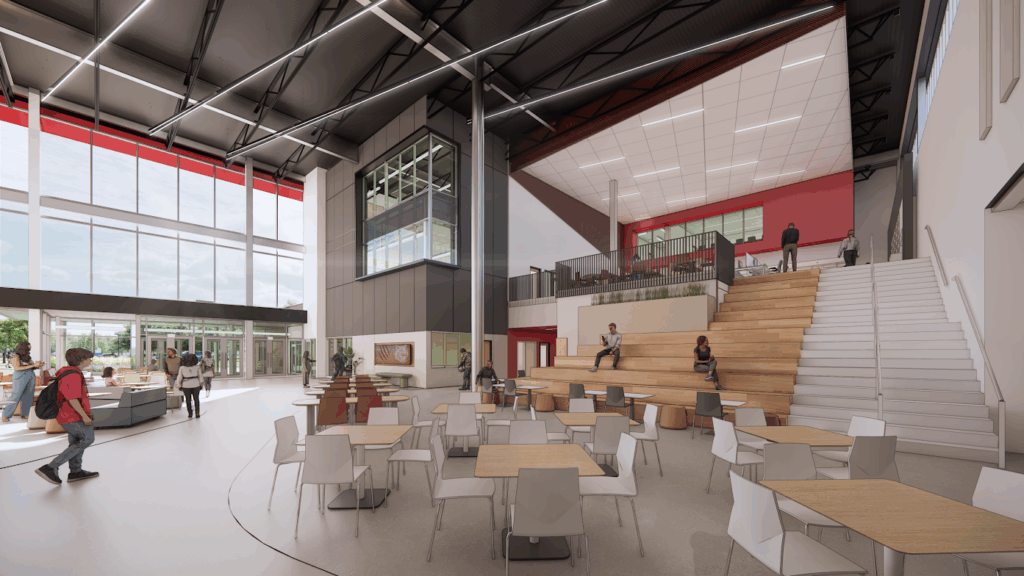
Upon entering the main entry to the high school, people will encounter the “heart of the school” – the Commons and dining area, which will be similar to colleges with “more grab and go options.” Unlike most school cafeterias, which are used only for lunch and study halls, the 4,000-square-foot Commons area will be used as a space for class collaborations.
Leading to the second floor will be the “Learning Stairs” which will be used for presentations and discussions.
Windows are used throughout the building – such as in the media center, ag education, and art classrooms.
“We want learning on display,” Lake said. “So students can see into these spaces. We are making sure teaching and learning are on display.”
The classroom furniture will not be traditional desks lined up in rows.
“We know kids learn best when they are comfortable,” Lake said.
Many of the classrooms will have moveable walls that will allow for collaboration between teachers.
“Gone are the days when students only learned in the four walls of the classrooms,” Lake said.
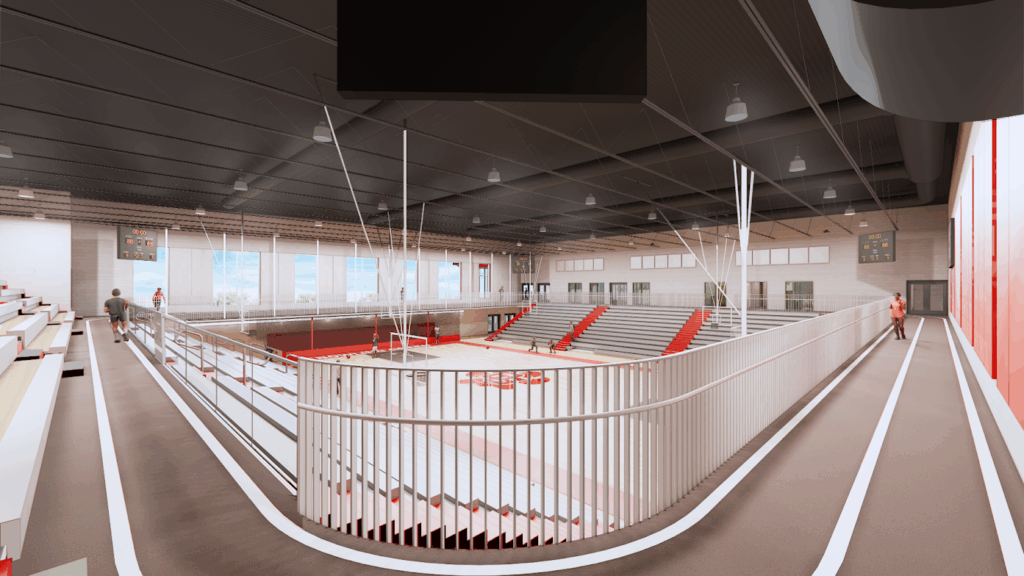
The gym, on the north end of the building will have bleacher seating for 1,750, with a main basketball court and two practice courts, a main volleyball court with two practice courts, and some pickleball courts.
The second level of the gym features a two-lane circular track above the gym.
Next to the gym will be rooms for band, choir and drama classes.
At the conclusion of the building “tour,” board member Ryan Myers thanked the design and engineering teams for spending so much time getting input from the school district and community. Myers and Geer have been school board liaisons during the building design process.
“I appreciate your teams’ ability to listen and work with us,” Myers said. “It’s been very rewarding.”
“It’s been more like a labor of love, and we appreciate it,” Geer said.