By JULIE CARLE
BG Independent News
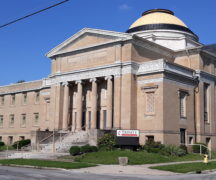
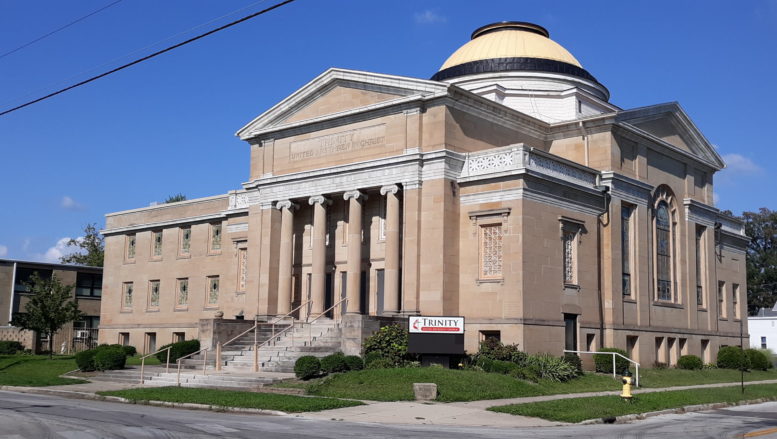
For more than 110 years, Trinity United Methodist Church has been known for its magnificent golden dome, neoclassical style of architecture and vibrant stained-glass windows.
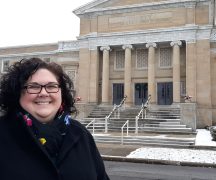
But beyond its standout architecture, the legacy of the church is, and always has been, the people, said Beverly Miner, resident historian who has been a member since 1978.
“The people make the church. There’s a children’s song: ‘The church is not a building; the church is not a steeple; the church is not a resting place; the church is a people,’” Miner said. “The community and the members are what define the church and its history.”
Historical overview
Its history actually dates to 1875 when Rev. John Long started the Bowling Green United Brethren in Christ Church with 15 members.
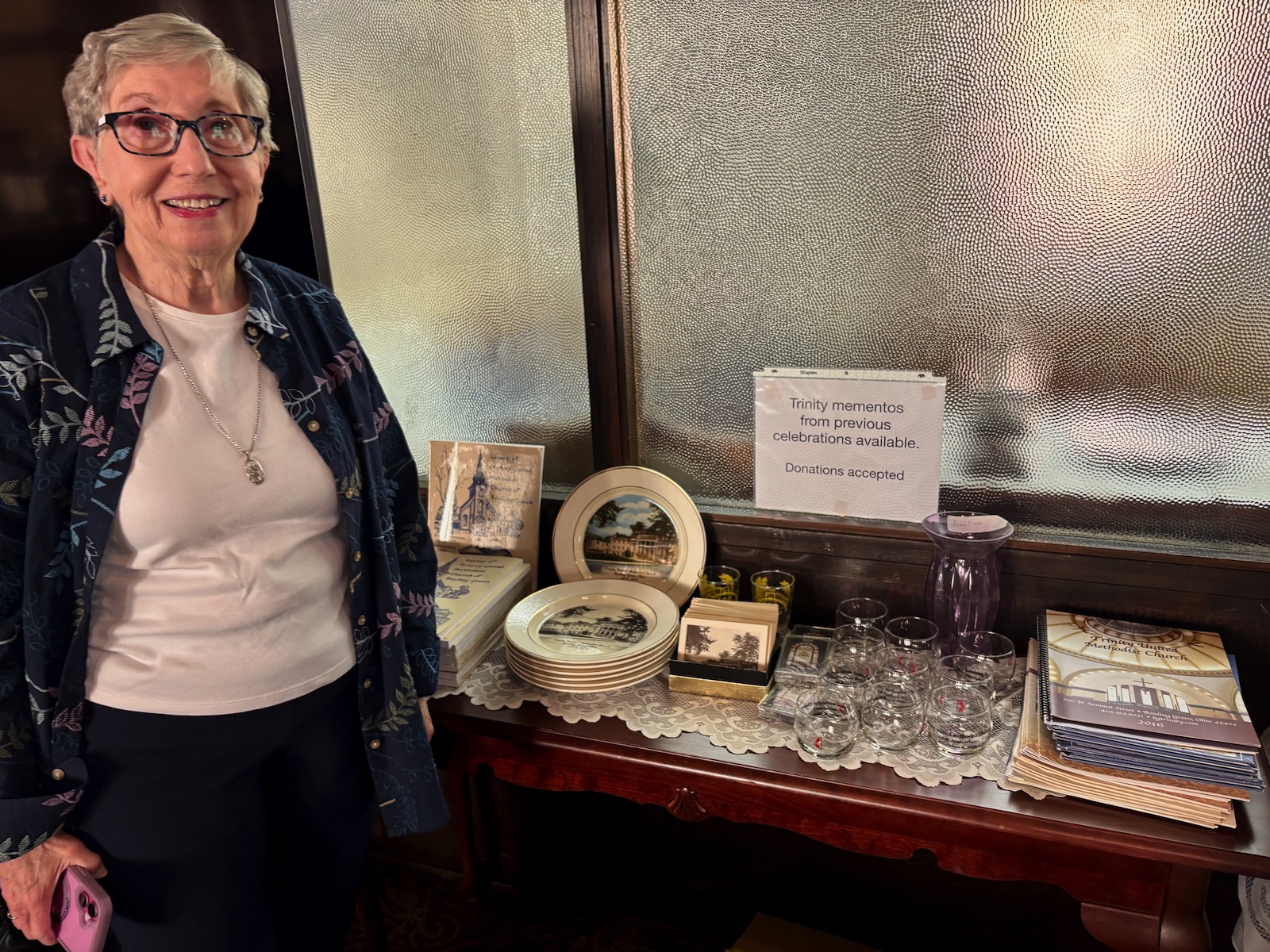
“The church’s rich, tangible history has been actively preserved and celebrated over the years,” Miner said.
The first building was constructed at the current site in 1880 for $4,500 on land at Court and Summit streets that was deeded to the church trustees from Edwin and Rosamond Reed and Earl W. and Carrie H. Merry for $250 (of Reed and Merry Streets fame).
The church’s humble beginnings in 1875 gave reason this year for Trinity United Methodist Church to celebrate its 150th anniversary. Throughout the 150 years, the original U.B. church has grown and united first with the Evangelical United Brethren (1946) and then the Methodist church (1968).
By 1900, the congregation had grown to 450 members. When the Center Township United Brethren church disbanded and its members affiliated with Trinity United Brethren in 1911, the need for a new, bigger church became obvious.
By 1914, the new church building was completed and ready for occupancy, and on March 29, 1914, the church held its dedication service.
The building’s magnificence was in the design and functionality, Miner explained as she showed off many of its features, including classrooms with moveable partitions that open to a central space.
On the outside, the dome is a landmark feature, yet inside the sanctuary, the dome creates exceptional sound quality that has contributed to stellar music programs throughout the years.

Because of the proximity to Bowling Green State University, music students and faculty are frequent contributors to the church’s music programs.
“The Toledo Symphony wanted to play here because of our acoustics, thanks to the dome,” Miner explained.
Renovations over the years have included the addition of the education wing in 1959, which replaced the parsonage that was moved to 220 N. Summit. The stained-glass windows were repaired and restored in 2006, and the dome, which fell into disrepair, was repaired in 2001 and later in 2018, more powerful lighting was added to better illuminate the dome in the sanctuary.
Sanctuary renovations in 2010 included the reconfiguration of the chancel area, the addition of a ramp and carpeting the sanctuary overflow room, main entry and adult classrooms.
“BGSU design students helped with a burgundy and cream color scheme with scrolls, rosettes and cove moldings highlighted in burgundy and gold-leaf application,” Miner said.
Since the church’s beginnings, the buildings have been well-used and well-loved by the members of Trinity United Methodist Church, Miner said. The community and ministries of the church are the true foundation of its legacy.
“To me, the significance of the church is how it supports our members through personal losses and experiences,” she said.
Miner talked about the impressive list of pastors and their accomplishments, along with the families who have supported the church. “The church leaders and the families that have long been involved in Trinity are the reason the church has been around for 150 years,” she said.
The people and the ministries
The people and the ministries are the church’s mainstay. As new people join the church, they share their gifts that lead to new ministries.
Ministries have focused on groups for women, men and children throughout the decades. In the 1950s, member Harold Bordner was instrumental in funding a variety of missions and ministries, Miner said.
More niche groups have also been created, including a bell choir in previous years, a sew/knit/crochet group, dartball, shut-ins ministry, a Relay for Life team, and more recently, a ukulele group known as “Strings of Faith.”
Membership has grown over the decades—from a peak of more than 1,000 members in the 1970s to today’s active membership at about 100. However, regardless of size, the church has remained a steadfast and vital part of the community.
The COVID-19 pandemic changed the service from a videotaped worship that was shared on Facebook to a drive-in service in the north parking lot until the spring of 2021. The pandemic also played a role in the most recent decline, as it did with most churches and other organizations.
A recent revitalization and reorganization is boosting membership and interest in the church, said Pastor Mary Sullivan, who joined the church earlier this year.
“She was vital to getting our anniversary celebration off the ground,” Miner said about Sullivan’s pastoral leadership. “It never would have taken place without her help.”
The anniversary committee also provided the backbone and legwork for the celebration. Members included Miner, Charlene Avery, David Drain, Rev. Helen Dukes, Jeannie Householder, Drew Oswald, Bev Robie, Pastor Mary Sullivan and Doug Walter.
A new focus for Trinity
For Sullivan, the move to Trinity United Methodist Church this year was a gift at this moment in time.
She is the daughter of a United Methodist minister, but her path to the ministry was anything but linear, starting with an art degree, specializing in sculpture from Ohio Northern University.
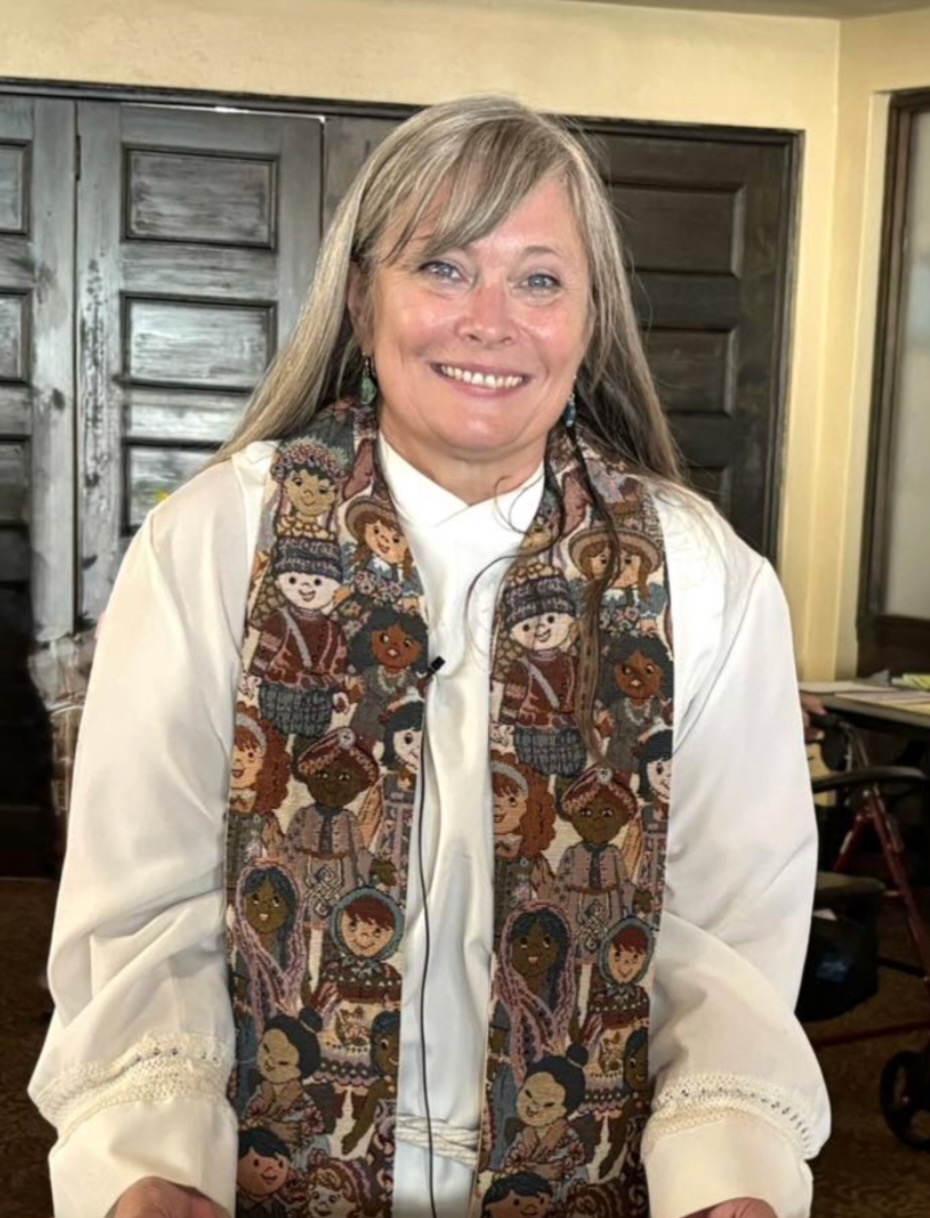
Marked by a deep sense of calling, her journey was tested by burnout, a move to Alaska to work in social services, and an eventual reaffirmation of her passion for urban ministry and church revitalization.
“I never really felt called to ordination until I got into seminary and took homiletics and things like that started happening. But went through the whole process, had a bad day at my interview for ordination, didn’t get it,” she recalled.
During a drive to the church where she served as the Christian education director, she heard God speak to her three times, instructing her to go to England to serve in the British Methodist Church. “It was the most amazing experience of my life,” she said.
She returned to southern Ohio to work in two small churches and a community center. “I burned out in six months and ran away from ministry to Alaska,” where she worked with at-risk families through Catholic Community Services.
The job led to being asked to “return to the pulpit” to fill a position that a close friend was leaving. The experience reaffirmed her call to the ministry, eventually returning to Ohio to go through the ordination process again.
After serving at a couple of small churches in Napoleon and Metamora, she was called to St. Paul’s in downtown Toledo, where she affirmed her call for urban ministry. She served the poorest and often homeless populations, making great strides in outreach and service during 14 years as its pastor.
After COVID’s impact, she took a position with the conference as an assistant to the bishop, serving as a regional missional specialist.
She specialized in church revitalization, using asset-mapping and strategic planning to help congregations shift from a management focus to a mission focus, which she believed was key to their survival and growth.
“I specialize in consulting with small membership, micro churches, that are either trying to revitalize or thinking about new ways to be in ministry,” she said.
She helped churches move from multiple committees for their administrative councils to one leadership team board. “They are focused more on the mission of the church and less on the management of the church, which gives them a much greater chance of revitalizing,” she said.
She joined Trinity to help the church with its own revitalization strategies and plans.
Her ministry philosophy is grounded in authenticity and humility, believing it is important to be human and transparent with the congregation.
“The ministry’s greatest blessings come from the people,” she said.
Since joining Trinity, she has started to develop a vision for the church. She hopes to start a community arts center, “leveraging existing strengths like its ukulele, quilting and painting groups to create a front porch for building relationships with the wider community,” she said.
“The 150th anniversary served as a catalyst for a trend of actively engaging with and preserving the church’s past,” Sullivan said. “It started as just a celebration, but I suggested we make it a fundraiser for a mission and for the ministry of the church and give the people who have memories of the church the option to give back one more time.”
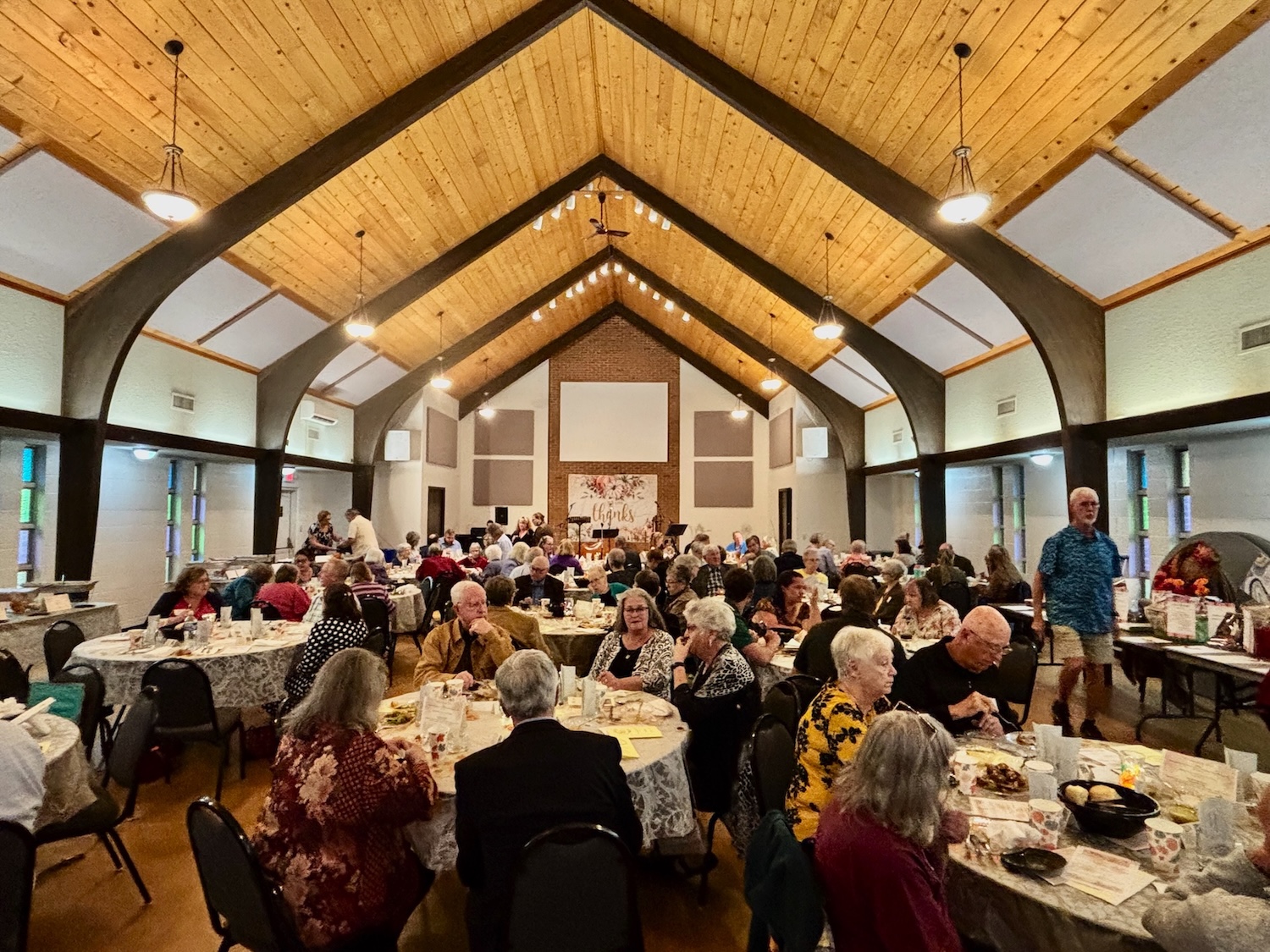
Through silent auctions at the celebration, they raised $1,700 that will go to families who have suffered from natural disasters and an additional $500 specifically for the United Methodist. Committee on Relief. They also raised $2,700 for Trinity.
“The anniversary was this wonderful celebration, but it also had a purpose,” she said. “I’m so grateful for the generosity of the businesses that donated to the auction and for all the work behind the scenes.”