By JAN McLAUGHLIN
BG Independent News
Bowling Green is being asked to pave the way for more “Complete Streets” and create a culture for non-motorized traffic.
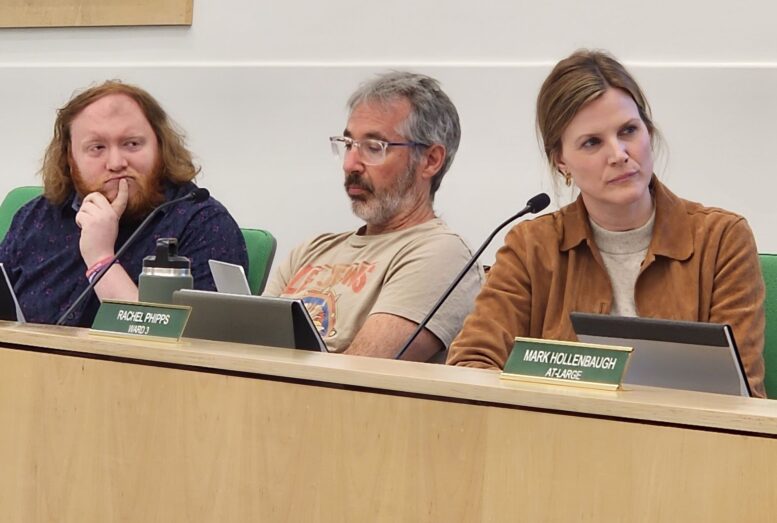
Last week, City Council member Rachel Phipps introduced a resolution encouraging the city to adopt an active transportation and “Complete Streets” policy for Bowling Green.
The city first passed a resolution to support a Complete Streets initiative in 2015.
Complete Streets is an approach to planning, designing, building, operating, and maintaining streets that enables safe access for all people who need to use them, including pedestrians, bicyclists, motorists and transit riders of all ages and abilities.
Active transportation refers to human-powered transportation that engages people in healthy physical activity while they travel from place to place – like walking, bicycling, using strollers, wheelchairs, skateboarding and rollerblading.
Since then, the city has planned and constructed many projects that incorporate active transportation and Complete Streets elements.
In 2023, the city updated its bicycle facilities and destinations map – a comprehensive city-wide bicycle plan, and in 2024 the city adopted a Safe Routes to School Plan.
“This recognizes the momentum we’re building in this area, and encourages the city to do more in this direction,” Phipps said.
“I care a lot about this stuff,” Phipps said, noting that she hears frequently from city residents that they want their streets to be planned for more than motorized vehicles. “Our citizens want more pedestrian and bicycle infrastructure. This comes up a lot.”
Creating a mindset for varied forms of transportation takes more than public education, Phipps said.
“Infrastructure on the road goes a long way to make people more mindful of other users,” she said. “It’s really a culture.”
In her six years on City Council, Phipps said she has seen advances in the city’s philosophy about Complete Streets.
“The city’s mindset has really changed over those six years,” she said.
For example, city officials adopted a bike plan, “and are actually using it,” she said.
The resolution suggests that the city views active transportation and Complete Streets principles as integral to everyday transportation decision making practices. The city will encourage staff to attend professional development on non-motorized transportation issues, and to identify sources of funding for improvements.
Annual reports will be required, with focus on performance measures identifying:
- Total miles of bike lanes, shared and dedicated.
- Linear feet of pedestrian accommodations added or reconstructed.
- Number of high visibility crosswalk, sidewalk and crossing treatments added.
- ADA curb ramps added or reconstructed in the public right-of-way.
“It’s important that we are measuring and conveying to the community that what we are doing is important for the community,” Phipps said.
This new resolution expresses a commitment by the city to:
- Incorporate active transportation and Complete Streets designs into all publicly and privately funded transportation, street and roadway projects – including new construction, resurfacing, restoration, reconstruction, rehabilitation, repair, maintenance, utility and redevelopment projects.
- Actively look for opportunities to repurpose rights-of-way to increase multimodal transportation opportunities and connectivity for all forms of transportation.
- Focus on non-motorized connectivity improvements to destinations such as schools, parks, work, recreation, professional services and retail.
- Follow the most relevant or applicable design standards for projects.
- Consider design standards that are balanced, flexible, sensitive to the needs of many users, and provide a comparable level of safety for all users.
- Work to achieve active transportation and Complete Streets projects through single elements incorporated into a particular project, or incrementally through a series of smaller improvements or maintenance activities over time.
- Consider the needs of all users of various modes of transportation including people with disabilities, pedestrians, bicyclists, motorists, transit and school bus riders, delivery and service personnel, freight haulers, emergency responders and adjacent land users.
Although there is no set formula for a Complete Street, it may include some of the following elements: sidewalks, dedicated bike lanes, shared bicycle lanes, high visibility crosswalks, wide shoulders, pedestrian refuge islands or medians, street lighting, audible pedestrian signals, pedestrian countdown signals, pedestrian hybrid beacons, rapid flash beacons, sidewalk bump-outs, road diets, access management strategies, roundabouts and neighborhood traffic circles, traffic calming strategies, street trees and landscaping, bicycle racks, pedestrian and bicycle amenities, and reduced speeds.