From OHIO DEPARTMENT OF COMMERCE DIVISION OF INDUSTRIAL COMPLIANCE
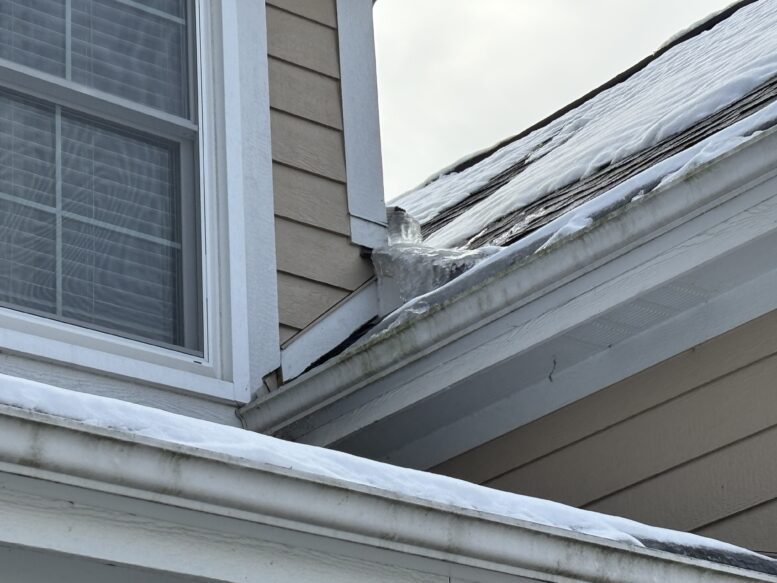
Now is the time for Ohioans to inspect their properties for damage caused by Winter Storm Fern and the current freezing temperatures. The Ohio Department of Commerce Division of Industrial Compliance and the Ohio Board of Building Standards urge homeowners to look for signs of winter damage, especially ice dams, which can lead to costly repairs if left unchecked and unaddressed.
An ice dam most commonly occurs when heat from inside a home melts snow on the roof, allowing water to flow toward the colder edges where it refreezes. This creates a ridge of ice that can grow over time. When outdoor temperatures remain extremely cold compared to indoor temperatures, a home’s vulnerability to ice dams increases.
Investigation into the cause of an ice dam is necessary to determine the best course of action. The Board of Building Standards, which is within the Division of Industrial Compliance, offers the following tips:
What to watch for:
- Wet or damp areas inside the home near ceilings closest to the roof, especially where the ceiling meets exterior walls.
- Icicles hanging from gutters or eaves.
- Uneven snow depth on the roof, such as shallower snow over heated spaces, such as living areas, and deeper snow over unheated spaces, such as eaves, garages, or porches.
Steps to reduce risk
- Regularly inspect and maintain attic insulation, adding insulation where needed.
- Once the snow has melted and ice has thawed, regularly inspect gutters and keep them and downspouts clear of debris and flowing freely.
- Inspect flashing along roof edges and penetrations, and repair any areas that may be damaged.
- Verify whether an ice barrier exists along eaves and roof valleys, and consider adding one if one isn’t already installed.
- Look for any gaps between the attic and conditions spaces, and seal those gaps with caulk, insulation, or weather stripping. This will help to prevent any accelerated melting on the roof over those areas, which can contribute to ice dams forming.
- Consider thermal (infrared) imaging to identify and correct major heat leaks into the attic.
If an ice dam is found
- Do not climb onto the roof and attempt to remove or melt the ice dam, especially since it may be slippery.
- Call a reputable roofing company to inspect the damage and offer guidance.
“Ice dams often develop gradually and can cause serious damage if ignored,” said Ohio Board of Building Standards Executive Secretary Regina Hanshaw. “Homeowners should take time now to check their property, especially since early detection and timely repairs are the most cost-effective way to protect your property.”
Home energy auditors or weatherization contractors can also identify and fix air leaks and inadequate insulation in a home’s attic, which is a common contributor to the formation of ice dams.