By JULIE CARLE
BG Independent News
PERRYSBURG—When Pope Francis introduced the concept of “integral ecology” over 10 years ago, he linked care of the environment with social justice. He emphasized that the well-being of the Earth and its poorest inhabitants are inseparable.
“We are not faced with two separate crises, one environmental and the other social, but rather one complex crisis, which is both social and environmental.”
In the decade since Pope Francis delivered the encyclical “Laudato si,” the Catholic Church has doubled down on its call to care for creation and those most affected by the climate crisis.
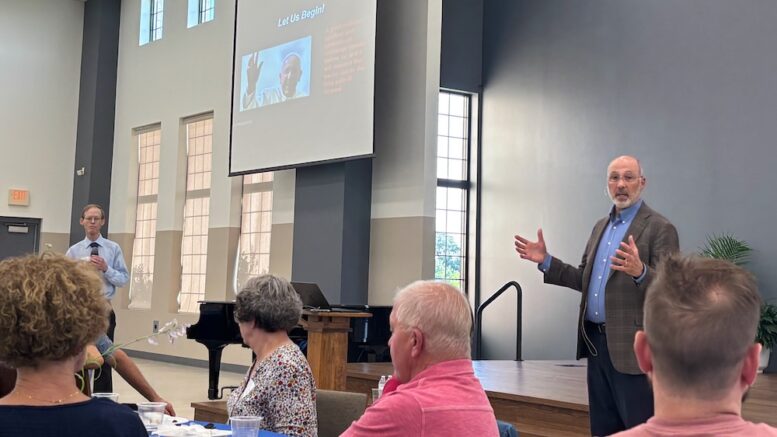
Dan Misleh, executive director of the Catholic Climate Covenant, talked about the church’s response to climate change at Perrysburg’s St. John XXIII Parish’s Creation Care event on May 28.
“We must hear both the cry of the Earth and the cry of the poor,” Misleh said, quoting Pope Francis.
Highlighting the scientific realities of climate change, Misleh explained how the burning of fossil fuels causes global warming and triggers extreme weather, human migration and the spread of disease.
Among the statistics he pointed out: Since 1970, plant and animal life and freshwater have fallen by 84%. Global wildlife populations have declined by two-thirds. Each year, around 12 million tons of plastic enter the oceans, and half of all plastics ever produced have been made in the last 15 years.
The issue is not new, Misleh said. A 1912 Popular Mechanics article addressed the “Remarkable Weather of 1911.” The article stated that the world was burning about 2 billion tons of coal each year, which adds about 7 billion tons of carbon dioxide to the atmosphere. The article explained that the carbon dioxide makes the air like a blanket and raises its temperature.
According to Misleh, the Pope warned during a 2024 interview that the world is approaching a breaking point. “Climate change at this moment is a road to death,” Pope Francis said, underscoring the urgency of coordinated action.
“How do you handle when people are out there just absolutely totally denying that climate change exists?” asked attendee Travis Chapin.
“I don’t spend a lot of time with people who deny this because you’re not going to change their mind anyway. It’s an ideological or political, or something, issue,” Misleh responded.
Ten percent claimed the covenant isn’t doing enough. Another 10 percent said, ‘You don’t know what you are doing,” he explained. “So the remaining 80 percent, that is where we are working.”
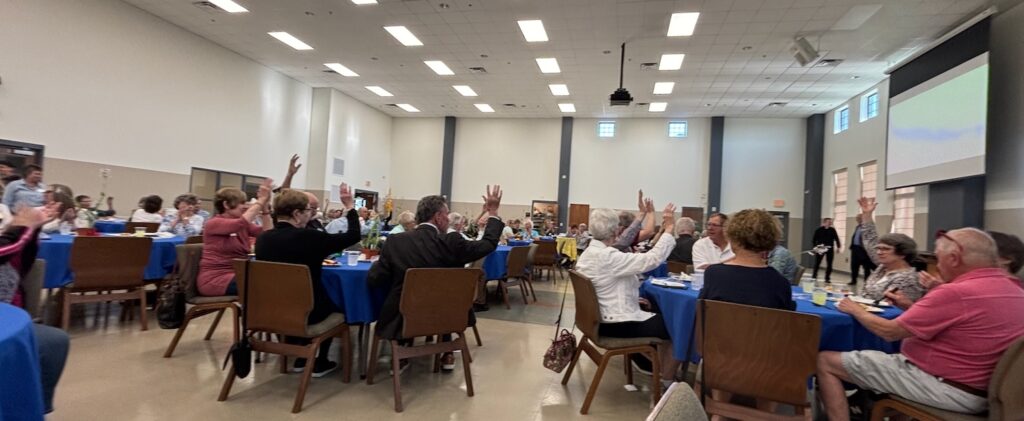
Misleh challenged the audience of more than 100 people to rethink humanity’s relationship with the environment.
“The basic question is, are we apart from creation or are we a part of creation?” he asked, followed by, “We are definitely a part of creation.”
Despite the grim outlook, he shared hopeful developments such as the rise in renewable energy and electric vehicle adoption. He also showcased the Catholic Climate Covenant’s initiatives, particularly the “Catholic Energies” program, which helps Catholic institutions reduce their carbon footprint while saving money. He stressed the moral imperative for Catholics to actively participate in environmental stewardship, describing it as essential to living a virtuous Christian life.
Misleh suggested everyone ask themselves three questions:
- What brings you joy?
- What are you good at (skills, resources and networks)?
- What work needs doing?
The intersection of the answers holds the call for each person’s role in the “vital journey toward renewal,” he said.
Bob Clark-Phelps, who helped lead the planning committee for the event, stressed the importance of “continuing the education that is based on keeping the Pope’s message going forward.”
Because the problems have not disappeared, but in fact, have become deeper and more complicated, he wanted to make sure that people are still hearing about it.
“The idea was let’s regather people, refocus on this message and bring that to all of the communities of faith, not just to Catholics,” Clark-Phelps said. “He (the Pope) wrote that letter explicitly for the first time to all people throughout the entire world, because the problems he’s talking about are global problems that concern everybody.”
There is not just a challenge here, but also a joy.
“When you see tonight’s event, you see the spirit of the people who are here. They are happy to see old friends,” he said.
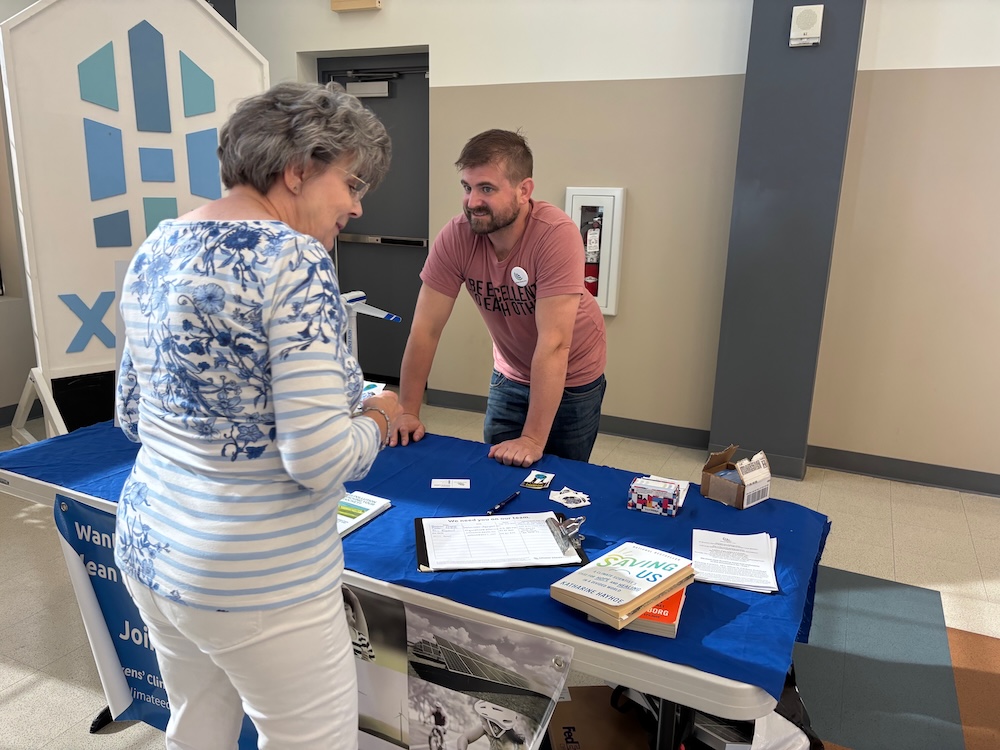
They realized they are not alone and there are things they can do as individuals and as part of a group. He pointed to the nearly dozen local organizations that displayed their work at the event. Each of them is working toward change in areas such as composting, native plants, and environmental education. Clark-Phelps encouraged everyone to “find an organization, get involved, and you will start to feel better right away.”