By JAN McLAUGHLIN
BG Independent News
Public schools are not the only entities that could sustain large financial losses under the battle being waged against property taxes in Ohio.
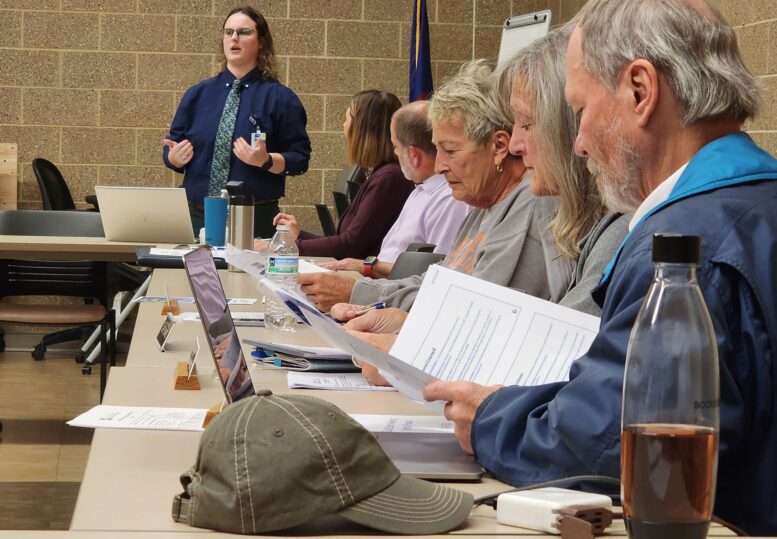
Wood County Health Commissioner Ben Robison shared his concerns about loss of property tax revenue Thursday evening to the Wood County Board of Health.
Currently, approximately 20% of the health department’s operating budget comes from a property tax levy and inside millage. The loss of that funding would have dire effects, Robison said.
“It would not be without impacts,” he said.
A group called Citizens for Property Tax Reform is attempting to put a constitutional amendment to eliminate property taxes entirely on the statewide November 2026 ballot.
In the meantime, the Ohio House of Representatives recently passed House Bill 309, which allows county budget commissions to reduce property tax levies to avoid what they view as unnecessary or excessive collections.
The House is also considering another bill that would change the way county commissioners would handle proposed property tax levies that come before them. Currently, county commissioners are required to approve attempts to put levies on the ballot if the governmental entities seeking the levies believe they are needed.
The wording change states that county commissioners “may” rather than “shall” vote to allow the levy on the ballot.
In addition to health departments, libraries and park districts would be affected by this language change.
At the same time, Robison said the health department is keeping an eye on effects of the federal government shutdown.
“Our immediate concern is our WIC funding,” he said of the Women, Infants and Children nutritional food program.
The Ohio Department of Health is monitoring the WIC issue, and has been told the Health and Human Services Office still has staff to process payments for programs like WIC, Robison said.
In other business at Thursday’s board of health meeting:
- Epidemiologist Ashleigh Konopka talked about a “Project Firstline” training she led, funded by $200,000 from the National Association of County and City Health Officials. The initiative was designed by the Centers for Disease Control to help frontline healthcare workers understand and apply infection control principles. The training topics included how germs are spread, isolation practices, proper use of personal protective equipment, hand hygiene, safe injection practices, cleaning and disinfecting, disease reporting and food safety.
- Board President Nilgun Sezginis talked about the recent visit of the mobile dental care unit to Northwood City Schools. The dental staff did a great job of calming anxious children, she said.
- Board member Cathy Nelson asked how the health department talks about vaccinations, with increasing efforts to discredit their value. “Vaccines are still a proven way to prevent illness,” said Pat Snyder, who is in charge of health promotion and preparedness at the health department. And Deputy Health Commissioner Rachel Aeschliman said that patients are often directed to their health care providers for advice.