By JAN McLAUGHLIN
BG Independent News
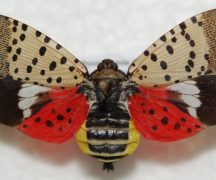
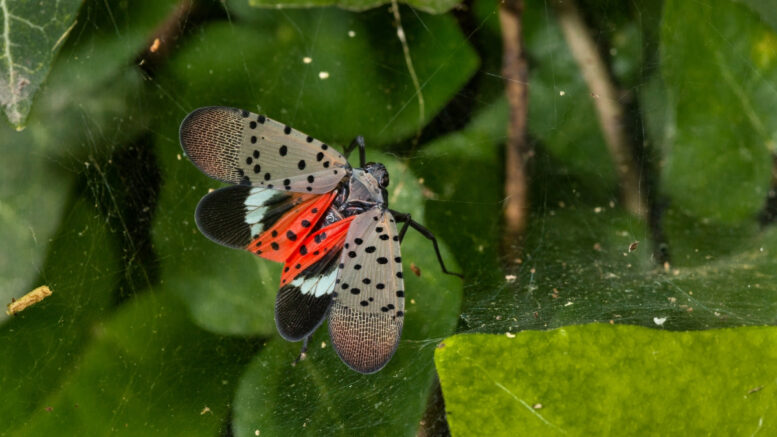
Local residents who spot invasive spotted lanternflies are being asked to take quick action – see it, squash it.
Earlier this year, Wood County was added to the list of Ohio counties having quarantines to reduce the spread of the non-native insect.
While the areas of Perrysburg and Rossford have noticed the spotted lanternflies for a couple years, the pest showed up more recently in Bowling Green, according to BG Urban Forester Adrien Lowien-Kirian.
“In Bowling Green, we’re just starting to see them this year- here and there,” she said. “I assume it’s going to get worse in the next couple years.”
The arrival of the flying insects is not a cause for panic, Lowien-Kirian said.
“They are more of a nuisance,” she said.
The spotted lanternfly is an insect native to Asia that is a pest of grapes, hops, and apples, along with many other species of plants. This is a concern for Ohio’s grape and wine industry, which contributes more than $6 billion dollars in economic activity to the state yearly, according to the Ohio Department of Agriculture.
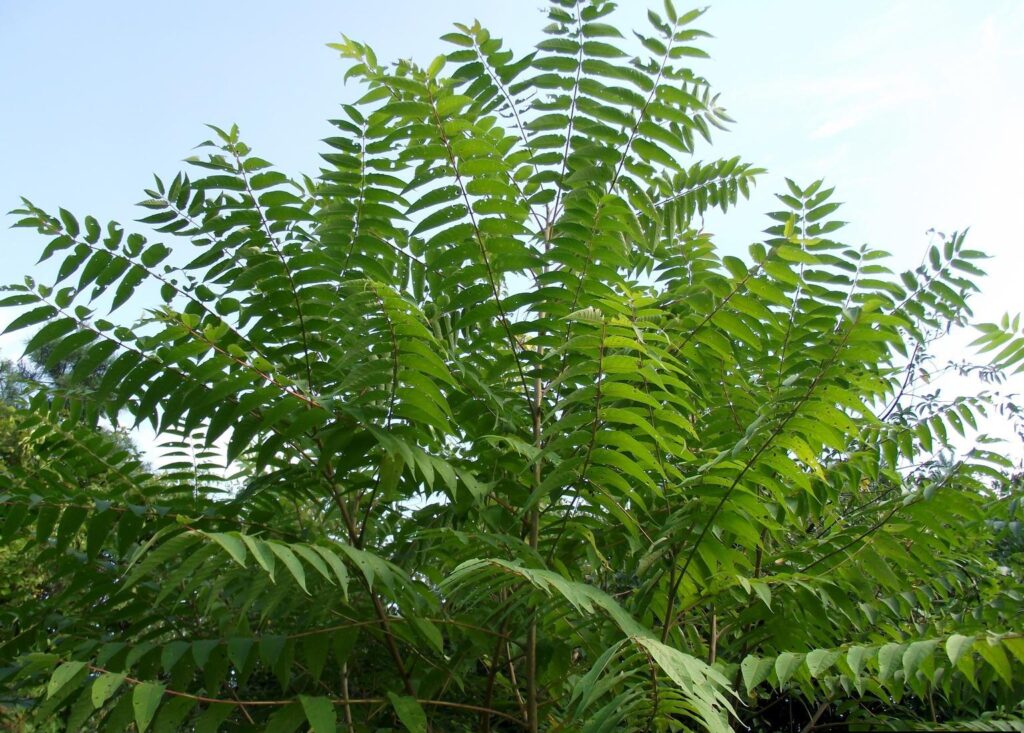
An invasive tree known as “tree of heaven” is the primary host for the spotted lanternfly. Those trees often pop up in spaces that are not well maintained, Lowien-Kirian said.
Nymphs and adults feed in large numbers on sap from grapevines and other perennial and annual plants, resulting in wilting, dieback and sooty mold damage. The bugs have also been known to feed off of maples, walnut trees, and fruit trees.
The spotted lanternfly is not a physical threat to humans. They do not bite or sting. But they do leave behind excrement on trees and vines that create black sooty mold, Lowien-Kirian said.
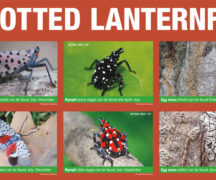
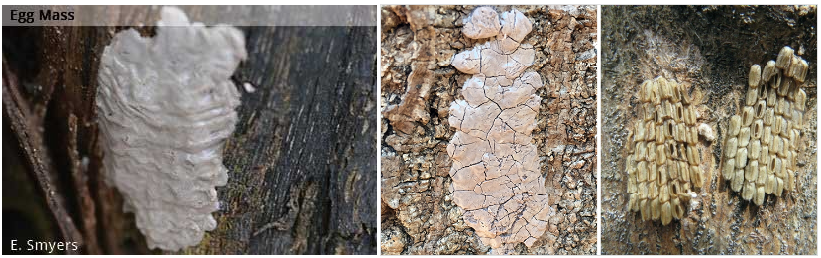
And now – between the end of September through December – is the time when they are laying eggs on any flat services, she added. The egg masses look like gray clay.
Lowien-Kirian recommended three ways for local residents to prevent the spread of the spotted lanternfly.
First, remove the “tree of heaven” from properties. They are usually just little scrub trees that grow where there has been little upkeep, she said.
Second, if you come across a lanternfly, step on and squish the insect. However, that’s easier said than done, Lowien-Kirian said.
“They are hard to hit. They are fast,” she said.
One surer method for killing the bug is to vacuum it up – then empty the vacuum and kill the insect.
And third, if you come in contact with the egg masses, put them in soapy water. For those unsure if the masses are from spotted lanternflies, there is a smell test, Lowien-Kirian said.
When the masses are smashed, they smell like really “gross” burnt peanut butter, she said.
The insects are known to travel great distances by hitching a ride on train cars, she said. Rail lines are a “great corridor” for egg masses to spread, Lowien-Kirian said.
The spotted lanternfly was first detected in the U.S. in Pennsylvania in 2014. It was likely brought to the U.S. by imported goods. The first confirmation in Ohio was in Mingo Junction in 2020.
Following is some information from the Ohio Department of Agriculture.
- Although SLF cannot bite or sting, both nymphs and adults often jump when approached.
- Slow the spread of SLF by checking your vehicle and any outdoor equipment and firewood when going in and out of a quarantined county.
- Manage SLF on your property by removing host plants, destroying eggs, and using chemical control when appropriate.
Control tips for your property:
- ODA is not currently removing SLF or tree of heaven from private properties. View management guide (pdf) for treatment options.
- Inspect items: Check outdoor furniture, garden equipment, and firewood for SLF before moving them. Follow quarantine regulations if moving to a new area.
- Remove host plants: Remove SLF host plants like the invasive tree-of-heaven and wild grapevine.
- Destroy egg masses: Scrape egg masses into soapy water or rubbing alcohol, or treat with horticultural oils in winter or early spring.
- Control nymphs and adults: Swat or stomp them when populations are low. Live and dead lanternflies can also be removed with a vacuum cleaner or shop vac, promptly disposing of the vacuum bag.
- Use low-toxicity insecticides: Apply horticultural oils and insecticidal soaps for nymphs and adults, reapplying as needed.
- Apply contact and systemic insecticides: Use bifenthrin, carbaryl, malathion for spot treatments, and dinotefuran or imidacloprid for longer protection. Consider hiring a professional pest control business for severe infestations or to remove tree-of-heaven.
- Protect pollinators. Do not apply systemic insecticides when trees or shrubs are in flower, or if nearby flowering plants may take up pesticide (as in soil drenches).
- Use products labelled for control of spotted lanternfly in a manner consistent with the label.
- Report SLF or tree-of-heaven infestations on public property to the property owner or responsible party, like a park manager or municipal office. While they are not required to control the infestation, they may choose to do so.
- If you believe the infested property to be vacant, you can contact your local code enforcement department or municipal office.