By JAN McLAUGHLIN
BG Independent News
It’s probably fair to say that nobody likes paying property taxes. But it’s also likely that most people appreciate the services those tax dollars pay for – like street repairs, first responders, and public education.
However, increasingly loud complaints about rising property taxes in Ohio have led state legislators to seek reform by eliminating a long-standing source of revenue for local governments.
Since 1920, inside millage in Ohio has been a steady revenue stream for local governments – counties, municipalities, townships and schools. It’s the only property tax that doesn’t require voters’ approval.
“It’s the bare minimum to keep the doors open,” Wood County Auditor Matt Oestreich said of the inside millage.
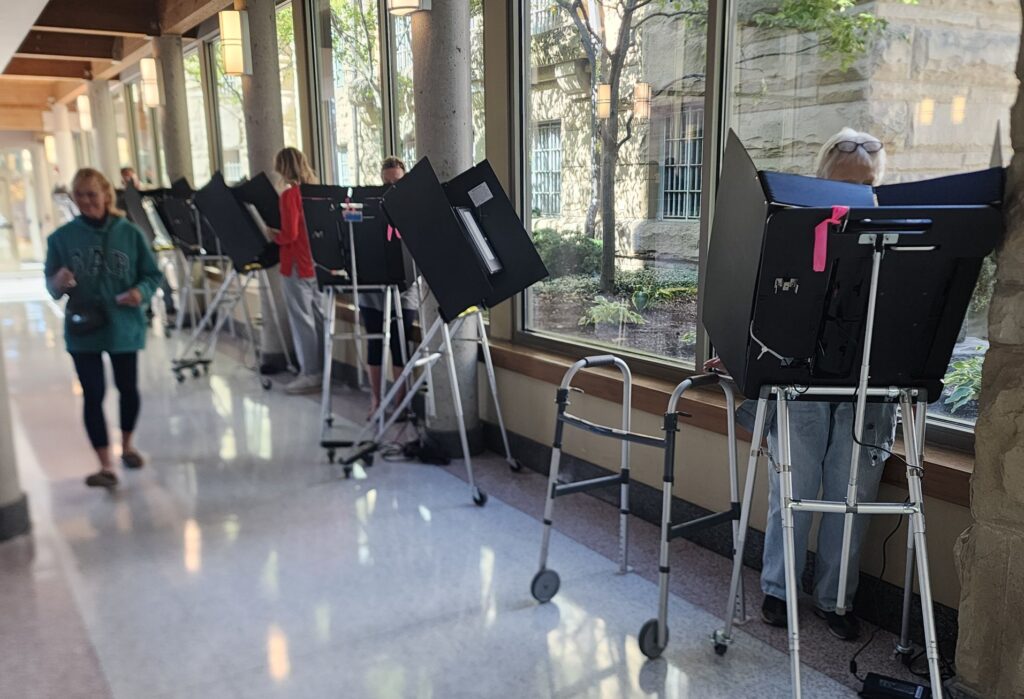
But House Bill 335 would eliminate inside millage and end the $3.5 billion helping to fund local governments each year. Under the bill, communities would have to get voter approval this November to keep that funding, or lose it entirely starting January 2026.
That would be devastating, according to local county, city and school officials.
Up to 10 mills can be set aside for inside millage, with different amounts for different entities. Wood County, for example, collects 2.4 mills. That brings in about $11.6 million a year, which is close to 20% of the county’s general fund. The commissioners allocate $246,000 of that funding each year to the Wood County Museum.

A ‘solution’ creating more problems
County officials agree that property tax reform is needed, with real estate value increases being “astronomical” in recent years, Oestreich said.
But this proposal in the state legislature creates more problems than it solves.
“They are asking us to do more with less,” Oestreich said. “I think we’ve already done a good job with that in Wood County.”
Plus, HB 335 only provides relief to taxpayers if another tax doesn’t make up for the deficit created, Wood County Commissioner Craig LaHote said. “It only saves money if it’s not replaced,” he said.
Proponents in the legislature say getting rid of inside millage, strengthens taxpayer protections, increases transparency, and improves local government accountability — all while preserving essential services.
However, Wood County officials contend that essential services can only be preserved if other tax revenue is generated – which the state is not providing and which will be pushed onto local government to find.
The proposed legislation would allow some entities to increase sales taxes and income taxes – both of which are regressive taxes requiring low income residents to pay the same rate as wealthy residents, LaHote pointed out.
And those tax increases would be required to get a super majority vote by citizens.
“So the state is saying, ‘We’re going to take away your taxes, and you’re going to have to get new ones. And by the way, you have to get 60% of the vote,’” Oestreich said.
And anyone who’s kept an eye on tax levies in recent years knows that voters are increasingly fickle about approving increases.
“People love their fire and EMS. They like their police. But they’re not so sure about anything else,” Oestreich said.
Shifting away from property taxes to income and sales taxes will also result in businesses and utilities being let off the hook. Countywide, property tax revenues are made up of 70% from residents and agriculture, while 30% come from businesses and public utilities.
But businesses and utilities pay no income or sales taxes – meaning residents will get stuck with the entire tax bill.
“That’s another tax break for utilities, on the backs of people,” LaHote said.
Municipalities like Bowling Green would face a loss of $2.5 million and Perrysburg a loss of $2.84 million.
“They would have to look for more income tax to replace it,” Oestreich said.
Loss of inside millage could also cause local governments to have problems with collateral for bonds, contract issues, credit rating increases, and greater costs when borrowing. Bond holders have traditionally liked inside millage since it provides a secure tax base.
The timing of the proposed end to inside millage is also problematic, since it would go into effect on Jan. 1, 2026, while any sales or income tax increases to buffer the loss would take six months to a year to go into effect – if approved by voters.
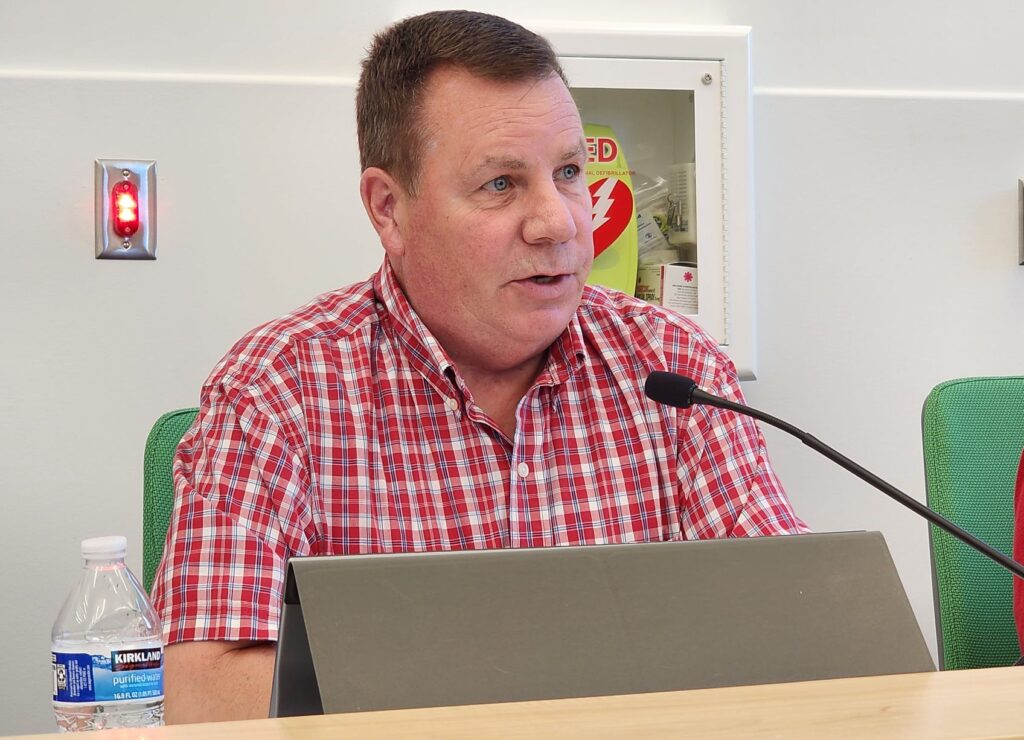
City of Bowling Green
The end of inside millage would mean a loss of $2.4 million annually to Bowling Green.
If passed, this legislation would not only eliminate inside millage, but also prohibit the use of new emergency and substitute levies, and grant county budget commissions the authority to override voter-approved levies – without offering any mechanism to replace the local revenues that would be lost.
Mayor Mike Aspacher voiced his concerns in a letter to the community.
“This bill threatens the financial foundation of essential services in our community, including public safety, infrastructure, and education,” Aspacher said. “In Bowling Green, inside millage plays a crucial role in supporting core city services – particularly in areas such as police and fire protection, street maintenance, and public administration.”
The elimination of these revenues would result in an estimated reduction of 11% of the city’s total general fund revenue.
“Nearly every department would be affected, limiting our ability to provide the level of service our residents expect and deserve,” the mayor said. “This drastic measure would harm local governments’ ability to provide services without the ability to raise taxes through votes of the electorate. It effectively undermines our local fiscal autonomy and forces us into a situation where we must rely more heavily on state funding or alternative revenue sources such as income or sales taxes, which may not adequately replace lost revenue.”
Furthermore, Aspacher said, public schools would face devastating consequences. Without stable, predictable local revenues, Bowling Green City Schools could be forced to make significant cuts that would directly impact student learning, staff retention, and programming that families have come to rely on.
“We support the idea of thoughtful and transparent reform to Ohio’s property tax system. However, HB 335 is not that,” the mayor said. “It is a rushed and potentially reckless proposal that undermines local control, destabilizes community services, and removes the voice of the voter from the funding decisions that shape our future.”
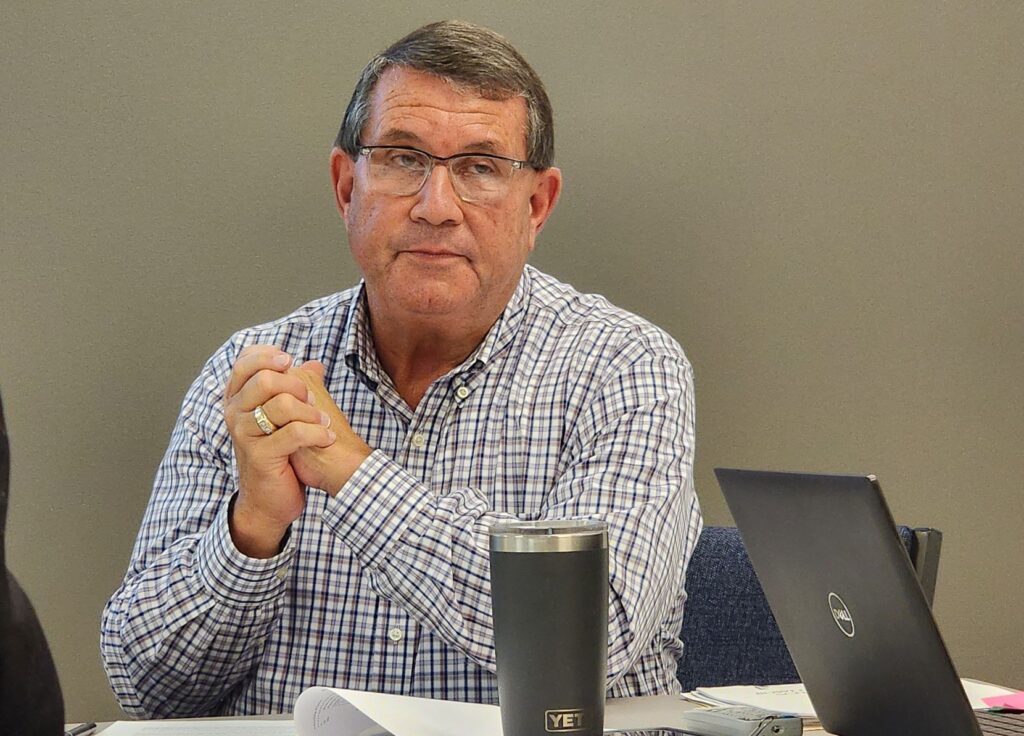
Bowling Green City Schools
Public school districts in Ohio are already facing funding challenges, with state lawmakers passing legislation slashing schools’ expected budgets by hundreds of millions of dollars.
The loss of inside millage would be a further blow to school budgets.
Matt Feasel, treasurer of Bowling Green City Schools, said the district would take a hit of more than $3.9 million – with more than half of the millage passed by district voters in May disappearing.
“It’s so frustrating,” Feasel said. “They are taking away local control.”
As for legislators’ perspective that inside millage has not been approved by taxpayers, Feasel sees it differently.
“I think that’s a very weak argument,” he said, noting that the long-standing millage was approved more than a century ago. “Inside millage didn’t just magically appear.”
Feasel wrote letters to State Sen. Theresa Gavarone, R-Bowling Green, and State Rep. Haraz Ghanbari, R-Perrysburg, explaining his position working as a school treasurer for 41 years.
“I recognize the need for a thoughtful and thorough evaluation of any proposal to ensure our tax and school funding systems remain equitable and predictable. H.B. 335 is not the answer,” he wrote.
Feasel said H.B. 335 is the most consequential piece of property tax legislation to affect Ohio’s public schools in the past 50 years.
“The proposed changes would fundamentally alter core components of Ohio’s school finance structure, disrupt local governance and create operational challenges for every school district in the state,” he wrote.
The residents of the Bowling Green City School District should retain the right to govern their schools and their community, according to Feasel.
“Loss of revenue as a result of passage of this legislation is a message to the residents of this school district and community that their support of the .75% income tax by 71% really didn’t matter,” the letter stated.
Feasel reminded Gavarone, who lives in Bowling Green, of the local impact of getting rid of inside millage.
“City and county services would drastically be affected as well. This is your community,” he wrote. “Consider what you are willing to live with and without because you will be affected as well.”
Proposal to eliminate all property taxes
While facing the possible loss of inside millage, Ohio public services also have the threat looming over them of the elimination of all property taxes.
The group Citizens for Property Tax Reform has advanced the proposal, which would create a new section in the state constitution stating, “no real property shall be taxed, and no law shall impose any taxes on real property.” It goes on to define “real property” as land, crops, buildings and other permanent improvements.
If enough valid signatures are collected, the issue would appear on the November ballot in Ohio.
In Wood County, property taxes have been approved over the years for 18 school districts, 21 villages, 19 townships and five cities. They pay for services from fire and ambulance departments, libraries, Wood County Committee on Aging, Wood County Health Department, Wood County Developmental Disabilities, Wood County Alcohol Drug Addiction and Mental Health Services, Wood County Park District, and Wood County Job and Family Services.
“It would be devastating for them,” LaHote predicted. “Dramatic adjustments would be required.”
“People expect the fire truck and ambulance to show up,” Oestreich said. “I don’t think people realize the depth or the magnitude of this.”
Again, the options left would be higher sales or income taxes – or doing without services that have been a mainstay in Ohio communities.
County auditors want reasonable reform
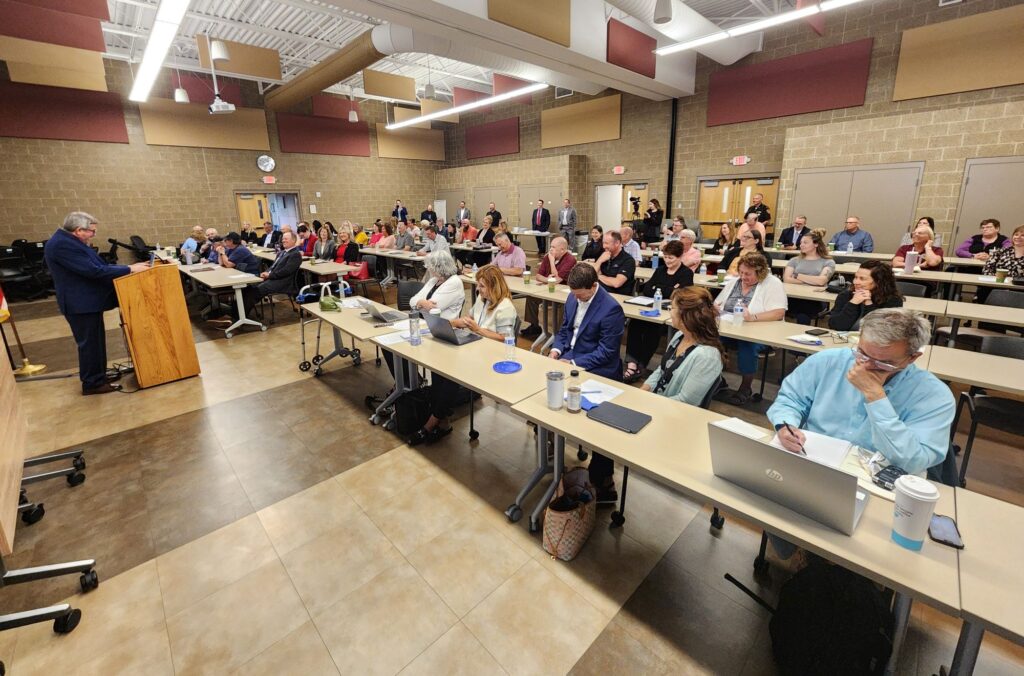
In May, more than 60 officials from Northwest Ohio gathered in Bowling Green to learn how to make their voices heard.
County auditors from across the state – tired of being blamed for higher property taxes – talked about the need for state legislators to get a grasp of rapidly rising rates.
Median home values in some areas have gone up 67% in the past five years, said Montgomery County Auditor Karl Keith. So if a home valued at $114,500 in 2014 jumped up to $239,000 in 2024, the county auditors are required to set new values accordingly.
These spikes are a trend across the nation.
And while tax increases do not exactly mirror the higher property values, they are a problem.
County auditors want the responsibility for reform to be placed at the right door – not at the county auditors offices or the school districts – but squarely with the state lawmakers who keep sidestepping the issue.
The biggest roadblock to reform is rooted in the state legislature’s unwillingness to learn how the 20-mill floor works, and make changes to it, said Warren County Auditor Matt Nolan.
Currently, Ohio schools are guaranteed a minimum of 20 mills of property taxes to operate. However, when property values increase dramatically as they have in recent years, property owners can see large swings in their property tax bills. The CAAO proposes removing the 20-mill hard cap and changing the growth to be adjusted with inflation. This way, schools can continue receiving funding for increased costs, but not huge jumps unless they go back to the voters.
The state legislature is going through the motions – proposing 19 bills regarding property taxes since January, the auditors said.
“But those do not address taxpayer reform,” since they avoid addressing the 20-mill floor, Nolan said. “Waiting for the housing market to crash is not a solution.”
The problem isn’t the fault of school districts, Nolan said.
“We’re the only state that funds schools the way we do,” he said of the process ruled unconstitutional by the Ohio Supreme Court but not fixed by the state legislature.
“The legislature has done nothing to fix that,” Keith said. “The school funding issue continues to haunt Ohio.”