
By ROBIN STANTON GERROW
BG Independent News
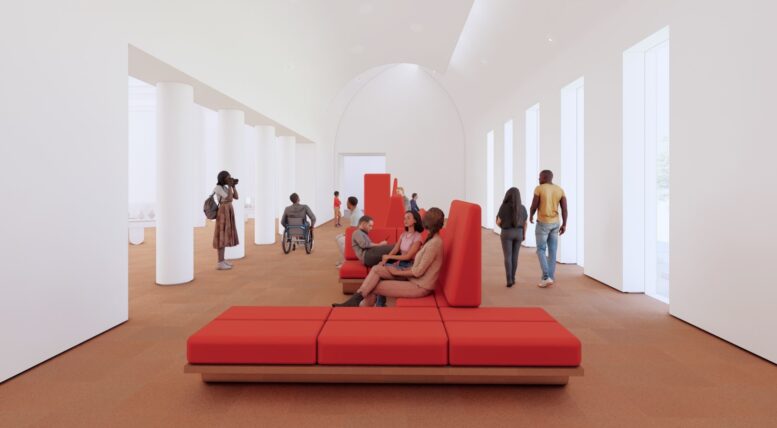
While the Toledo Museum of Art (TMA) is constantly evolving with new exhibits, it hasn’t undergone a major renovation in 40 years. That changed in 2025 when the museum began closing some of the galleries as it prepares to reimagine not only the architecture, but how art is experienced.
“It’s a moment in time where people are rethinking museums generally and how they’re going to present their collections,” said Andrea Gardner, deputy director of the TMA. “It was certainly in the back of our mind, that at some point in the future, we would be joining their ranks.”
With aging mechanical systems and infrastructure, the museum decided this would be the ideal time for a major renovation. Gardner noted that it is rare for a museum to have the opportunity to make such dramatic changes.
“We knew we were going to have to do a major infrastructure upgrade to the heating and cooling system, which necessitates taking all the artwork out of the galleries anyway,” she said. “It makes natural sense this would be the moment where it’s time to upgrade everything. That’s what precipitated us deciding to go ahead and reinstall the galleries. And it’s the moment where you can do it comprehensively. It’s that once in a lifetime, once in a generation, moment where you can do it all at once, as opposed to a gallery or a few galleries at a time, which is what typically happens.”
The TMA is also taking this occasion to completely reimagine how the holdings of an art gallery are presented.
“This is the opportunity to re-present the galleries in a way that’s going to make so much sense to the audience,” Gardner said. “We are going to take a chronological approach, which is different than what most museums do. It’s not just chronology, but it’s chronology across geography. Typically, at museums, including our museum, you would have Asia over here, and you would see all of the Asian art from the beginning, until usually the 19th century. And the same thing with African art over here. And then you might have American art, and it would be, from the 18th century to up until the early 20th century. But with this, you’ll have antiquity, and you’re not just seeing Mediterranean antiquity, you’re seeing it in dialogue with ancient China for the first time. Then you move into the Middle Ages, and you see the same thing. You’re seeing what’s happening across the globe at any given moment, which I think that our viewers will find really fascinating.”
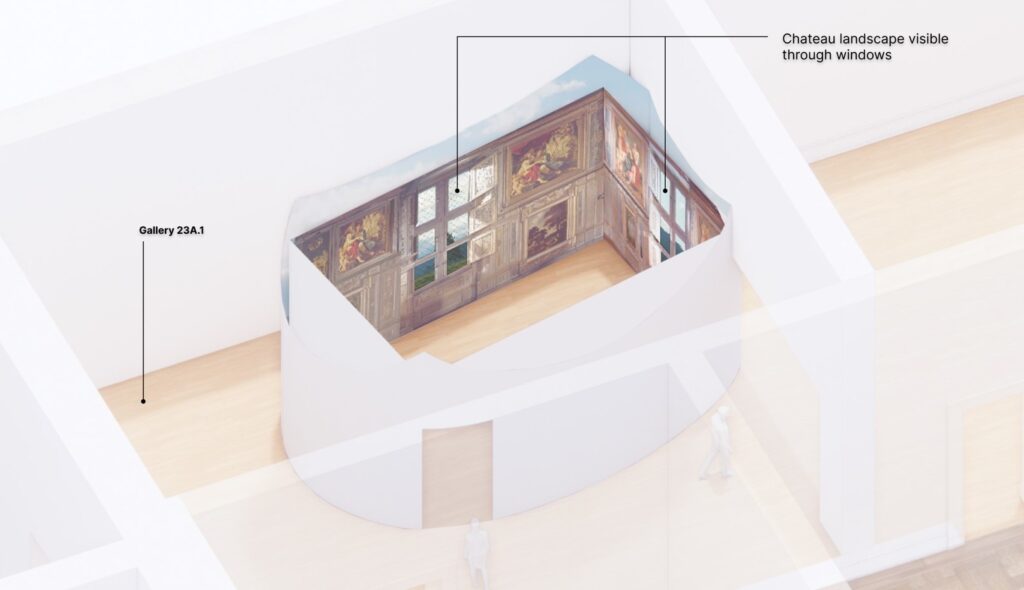
According to Gardner, this approach is rarely seen, especially at large institutions.
“That’s not what you usually see, for a variety of reasons,” she said. “One of the reasons being the bureaucracy of museums. It requires departments and curators working together in a way that’s really difficult depending on the structure and complexity of a museum. A museum like the Met, for instance, could never do it because they have things like the America’s wing. And that can’t interact with the Europe wing. It’s just too big, it’s too complicated.
“TMA is of a size that we can pull it off,” she continued. “All the curators and the different galleries are working together. Same thing with media. A lot of times, these are ‘works on paper galleries,’ or ‘painting and sculpture galleries,’ but we’ve decided to integrate all media together so that you can comprehensively see what was happening at any given moment, as well across different media. So really, for the first time, you’re going to see not only geographically, but also creatively, what all was happening in the world at that particular moment in time.”
The renovation goes beyond just a reorganization of the artwork. The entire flow of the museum is going back to the original architectural concept.
“We’re reinstituting the ability to do a loop through the museum,” Gardner said. “When we did our last big renovation in the early 80s, it bifurcated the wings. Up until that point, you could always do a loop, which was the intention of the architects at the beginning. There’s something really nice about that path of wandering around and being able to experience it all, rather than having to go back to a point and then start on the other half.”
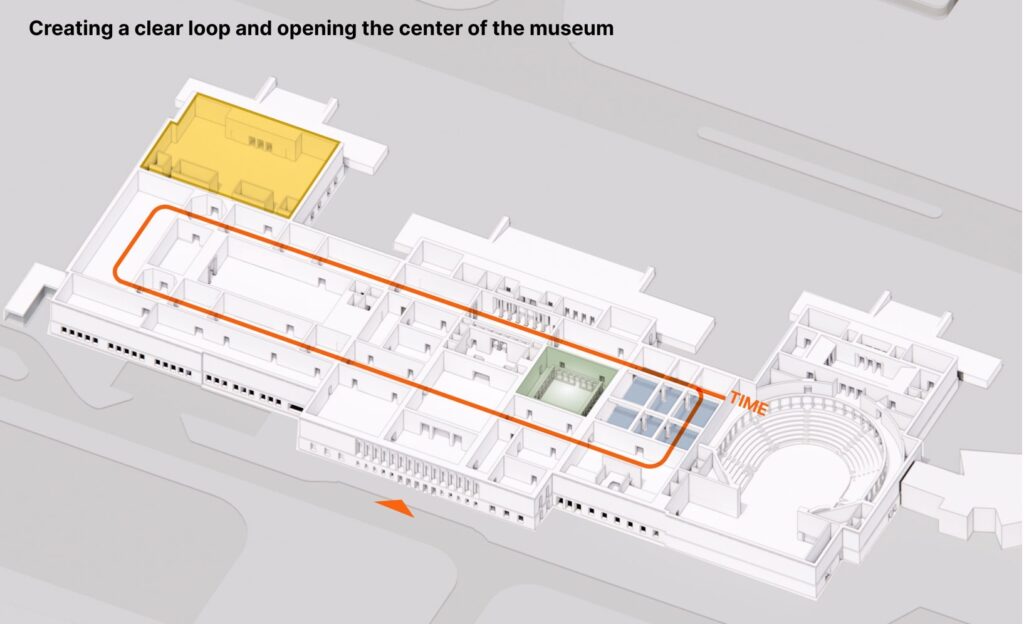
Some of the larger galleries will also be relocated to maximize the impact of the new model.
“I’m excited about where the cloister is moving,” Gardner said. “That is a huge endeavor to get it closer to the classic court, closer to the narrative that the Middle Ages is in a dialogue with antiquity. It was always so far away and now they’re going to be right next to each other, which makes a lot of sense.”
The logistics of a renovation of this scale have been a challenge. The galleries themselves will be closed for periods of time during the construction, and the entire Green Building gallery level is scheduled to be closed this fall and with a grand reopening in 2027. The Glass Pavilion, The Family Center, the Education Wing and the Library will remain open.
“There are certain core functions that we’ll be able to keep open in this building throughout the course of the project, but a lot of the things will obviously have to close at the very end so that then we can renovate them and have that big grand reveal, which will be really exciting for everybody,” Gardner said.
“Obviously people’s favorites will be coming back out,” she said. “There will be a lot of new artwork and new favorites people will encounter when we do the reveal. At the end of the day, it’s really about everybody enjoying and seeing it. The thing that I’m most looking forward to is actually watching visitors walk in and seeing their reaction.”