By JULIE CARLE
BG Independent News
The Wood County Park District’s Buttonwood Park restoration project and the resurfacing of the Slippery Elm Trail are one step closer to progressing.
At Tuesday’s board of commissioners’ meeting, Executive Director Chris Smalley was authorized to sign an environmental covenant for the Buttonwood Park/ Betty C Black Recreation Area at 27174 Hull Prairie Rd, Perrysburg. The park, which features fishing and scenic views of the Maumee River, will be restored in collaboration with the Black Swamp Conservancy and with H2Ohio funding.
The project was previously approved to receive H2Ohio funds totaling between $400,000 and $440,000 through the Ohio Department of Natural Resources. The park district, as the landowner, must sign the environmental covenant before the funds are released to the Black Swamp Conservancy for the restoration and conservation project. The covenant requires the park district to agree to “keep the site in its restored state that the funds are used for,” Smalley said.
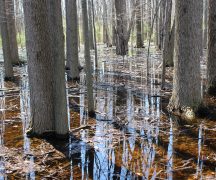
The park district and the conservancy group joined forces earlier this year to work together to develop and implement restoration plans for Buttonwood Park, which had been damaged by ice jams and flooding in both 2015 and 2018.
No specific restoration plans have been determined yet, Smalley said, but once the H2Ohio funds are available, the two organizations which work well together, will draft some initial ideas before they hire engineers and designers for more concrete concepts and plans.
“The Black Swamp Conservancy is a fantastic group of people. They are passionate about what they are doing, and they are incredibly confident,” Smalley said.
“This seems like a great amount of money to do some really cool environmental conservation ideas there,” he said. “This is the first domino in a large series of dominoes, but it’s exciting.”
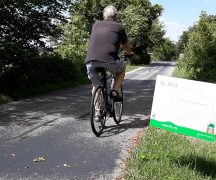
The Slippery Elm Trail resurfacing project is on track for 2026 with a grant of almost $1.1 million from the Ohio Department of Transportation, which was approved in June.
The board authorized Andrew Kalmar to serve as the Local Project Administrator for the project, which will resurface the entire 13-mile stretch of asphalt from Bowling Green to North Baltimore.
River creatures’ presence indicates good water quality
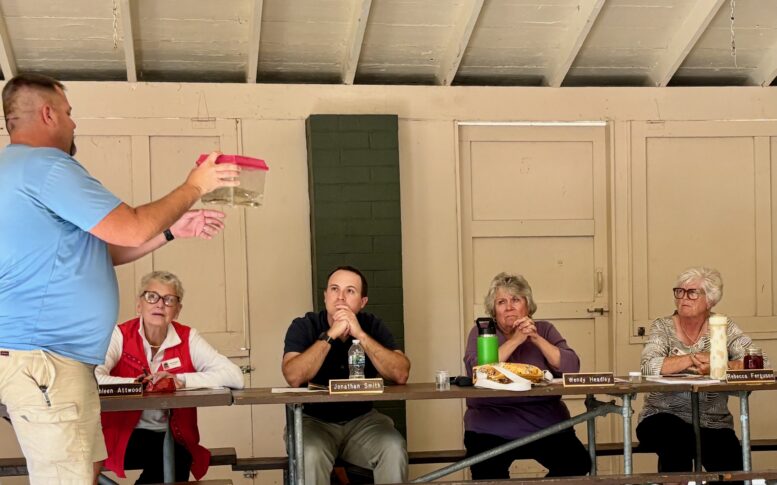
The ecological health of the local river could be effectively measured by monitoring its macroinvertebrate populations, Bill Hoeflin, senior naturalist, reported during the board meeting.
Program Manager Jim Witter and Hoeflin shared a variety of specimens, including caddisflies, scuds, stone catfish and darters, that they collected in the Portage River prior to the meeting.
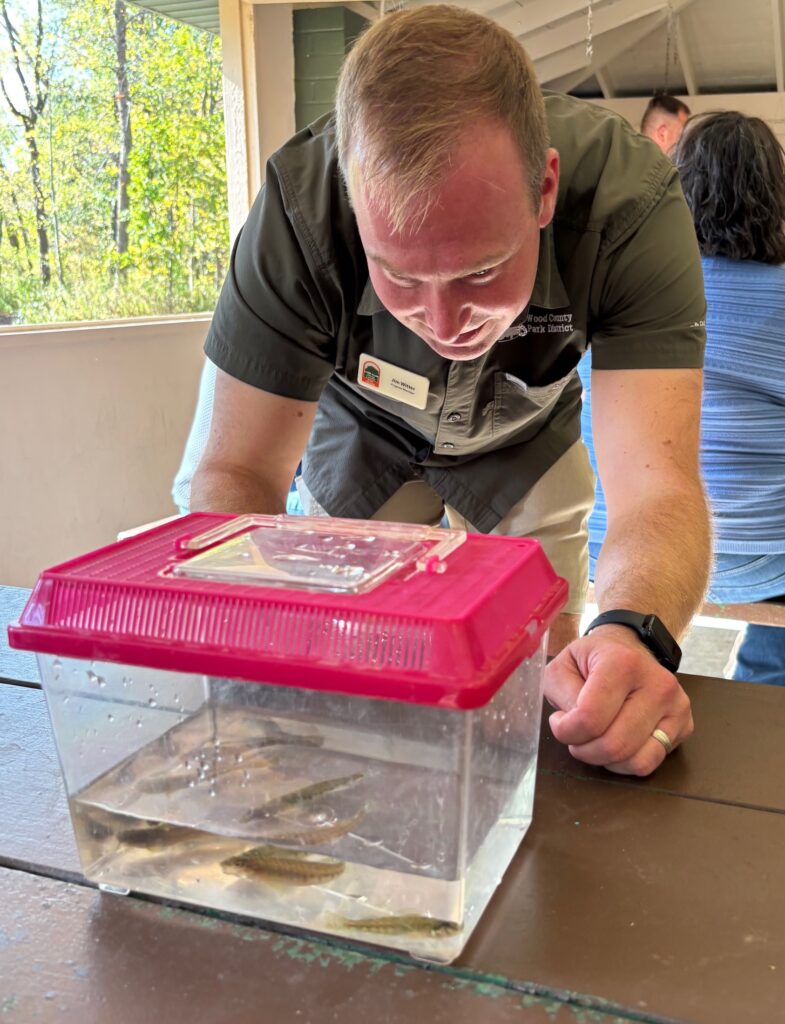
Hoeflin explained that macroinvertebrates are visible to the eye, but they don’t have backbones. “Their presence or absence and relative abundance can tell us about the health of the river… they can be long-term indicator of water quality,” he said.
The existence of the vertebrates, like stone catfish, madtoms and darters, prove there is a sufficient food source for them to thrive.
The river’s vitality is fundamentally dependent on the health of the surrounding forested land (the riparian corridor). The trees that are part of the river’s channel provide the foundational energy source for the entire aquatic food web, he added.
”The primary source of energy for the local river system is leaves from the trees along the banks,” he said. “The leaves are broken down by “shredder” organisms that consume fallen leaves, break them down into smaller particles that then feed ‘filter feeds,’ like native muscles. This demonstrates a direct link between the trees and aquatic life.”
Maintaining a healthy, forested corridor along the river is the most effective way to support the ecosystem. The trees along the banks help keep the water cool, oxygenated and providing energy.
“If we are monitoring on a regular basis, and we notice changes, like all of the high-quality macro and vertebrates disappear, that can mean that onsite or upstream, there’s been an event that’s changed the quality of the water and killed them off,” he said. “When that happens on a big scale on any of our large rivers, we notify the Ohio EPA and the Department of Natural Resources, and they come in to test the water to figure out what has changed. And they vary by species whether they are grazing on algae or if they’re consuming other macro invertebrates.
Also during the meeting:
- The board celebrated a third-place state award for the park district police department. A photo of a district police cruiser competed in the Light Ohio Blue Photo Contest.
- Upcoming park district events were announced including: a treasure hunt for geocaching at Bradner Preserve on Oct. 23 from 4 to 6:30 p.m.,a Native Nursery Night on Oct. 23 from 5:30 to 7 p.m., and a Habitat Hero volunteer project at the W.W. Knight Preserve on Oct. 25 from 9 a.m. to noon.