By JAN McLAUGHLIN
BG Independent News
Despite being “landlocked” in every direction, Wood County Regional Airport is working to offer airplanes the longest runways possible.
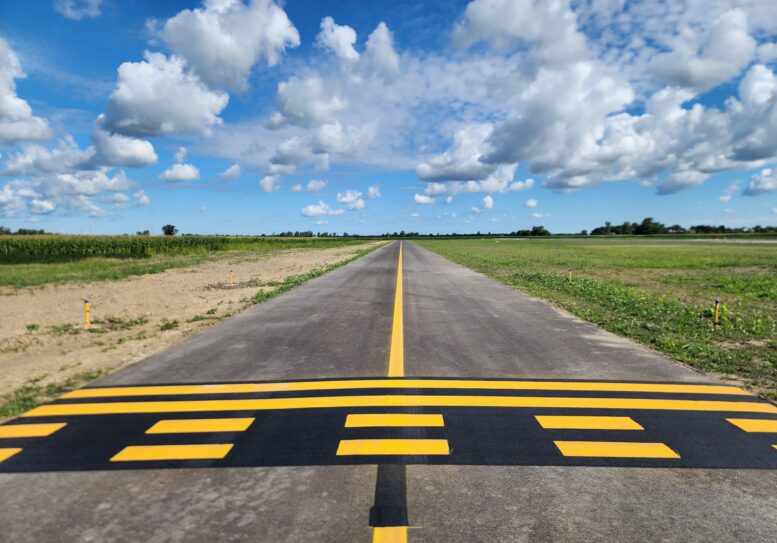
The north-south runway was recently extended northward, giving pilots 3,200 feet for landings and takeoffs, compared to the previous 2,625 feet. To increase safety, the pavement was also widened from 50 to 60 feet.
Next on the wish list for airport officials is federal approval for an extension of the east-west runway, hopefully by 2027, said Patrick Orem, new manager of the airport in Bowling Green.
That runway is currently 4,200 feet long. Ideally, the pavement could stretch 5,000 feet – but airport officials may have to settle for 4,800 or 4,900 feet, Orem said.
“The magic number is 5,000 feet for jets,” Orem said.
The growing pains at the airport are caused by physical confines in every direction. To the east is Interstate 75. To the south is Bowling Green State University. To the west is the CSX railroad and a manufactured home park. And to the north is Newton Road with homes and power lines.
But it’s not just the physical boundaries that make growth difficult. It’s also the expenses involved.
The recently completed runway project came in at $7.5 million. New LED lighting for the taxiway was $380,000, and replacement of the weather station is another $380,000.
“Nothing at the airport is cheap,” Orem said.
The FAA paid for 90% of the runway project and lighting, leaving 5% to be paid by the state and another 5% locally.
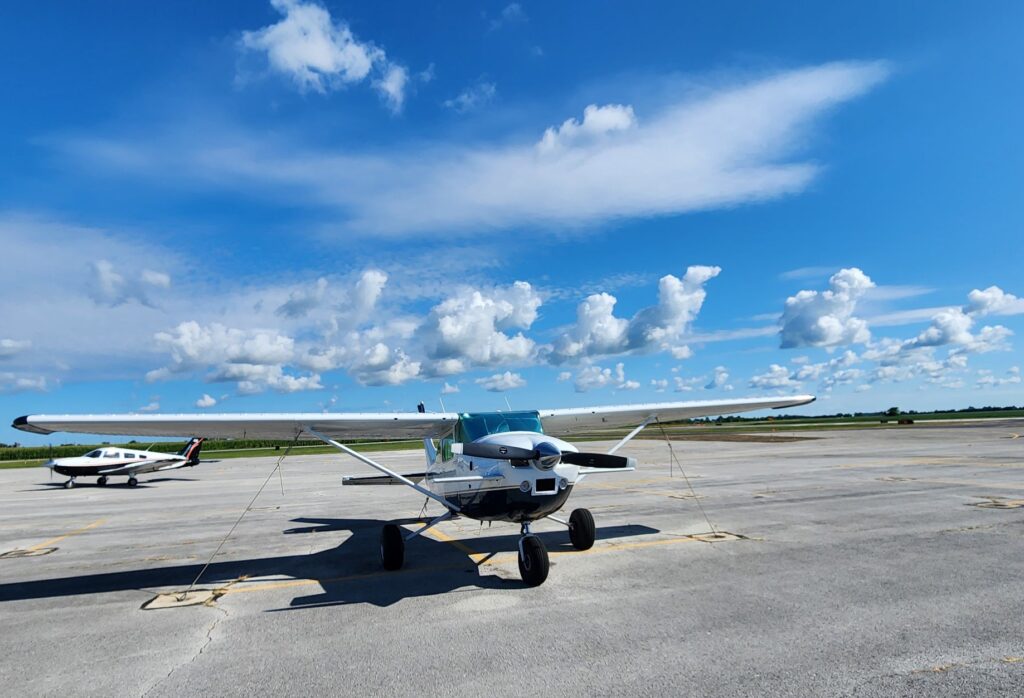
Still up in the air is the possibility of adding hangar space – which will cost about $2.5 million for two hangars. Airport officials are in the initial planning stages to secure that funding – which may attract more local pilots to store their planes at the Wood County airport.
For the first time, the state is offering grant funds for hangars and fuel facilities.
“Hopefully we can get some of that, too,” Orem said.
In addition to being expensive, airport improvements also tend to be slow moving. Efforts to secure funding for the north-south runway extension began before the COVID pandemic.
“We finally got funding,” Orem said.
The airport’s main revenue comes from fuel sales, with the BGSU Flight Program being the largest user of the facility. A smaller portion of the revenue comes from rental of farmland on the airport acreage.
The expansion of the north-south runway has the potential to bring more traffic to the airport. The BGSU flight school has regulations that are now surpassed, including more width for safety.
The extended runway could help expand training for students getting their wings.
The previous runway length accommodated small single-engine planes and multi-engine planes being flown by experienced pilots. But a longer runway was needed for student pilots in the BGSU Flight Program to land multi-engine planes on that runway.
The airport’s current east-west runway is long enough to accommodate student pilots taking off and landing multi-engine flights. However, if there are strong winds from the north or south, the planes should use a north-south runway rather than try to land in a stiff crosswind.