By JAN McLAUGHLIN
BG Independent News
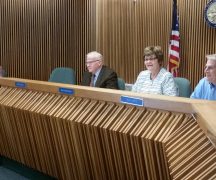
The Wood County Commissioners were asked Tuesday to keep a 50-year-old promise to provide a safe place for the county’s elders who don’t have trust funds or big bank accounts.
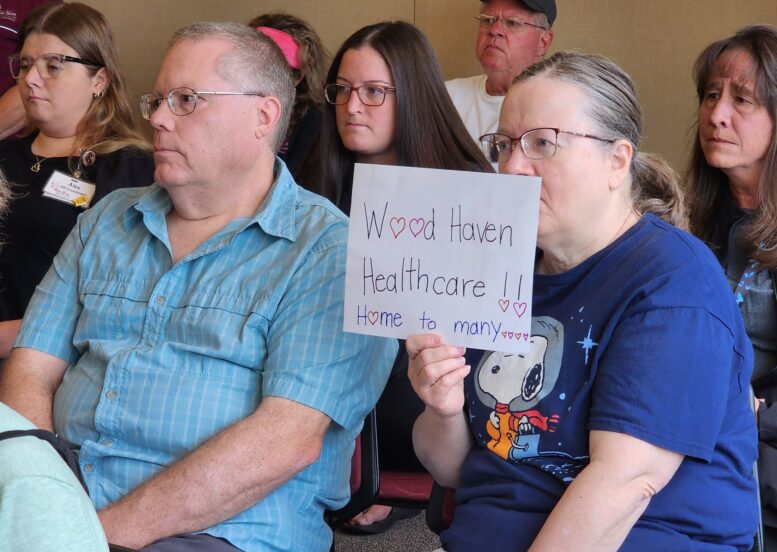
After hearing in April that the commissioners were looking at the options of closing or selling off Wood Haven Health Care, the commissioners’ hearing room on Tuesday was filled with the nursing home supporters.
Surrounded by more than 30 staff, residents and their families, Wood Haven Administrator Jeff Orlowski laid it out for the county commissioners.
Wood Haven does not turn away seniors on Medicaid. While three other facilities in the county accept Medicaid patients, some have a low cap to limit the number of residents who aren’t self pay. And some facilities ask self-paying residents to leave once their funds are gone.
“We are a county-owned, community-based safety net. A public commitment. A promise. And unlike for-profit facilities, we don’t turn residents away, or force them out when they can no longer afford to pay privately and must rely on Medicaid,” Orlowski said.
While there are other options for senior living in the county, they are profit-based.
“Wood Haven is different. We are locally owned. We are nonprofit and community-based. We exist to serve people,” he said.
But the fluctuating census at Wood Haven has been a point of contention, with the facility not always meeting the goal of being self-sufficient.
Currently, with a healthy 77% census of its certified 93 beds, and a lower turnover rate for the 131 employees, Wood Haven is doing the best it can with its outdated facility at the corner of Dunbridge and East Gypsy Lane roads, Orlowski said to the commissioners.
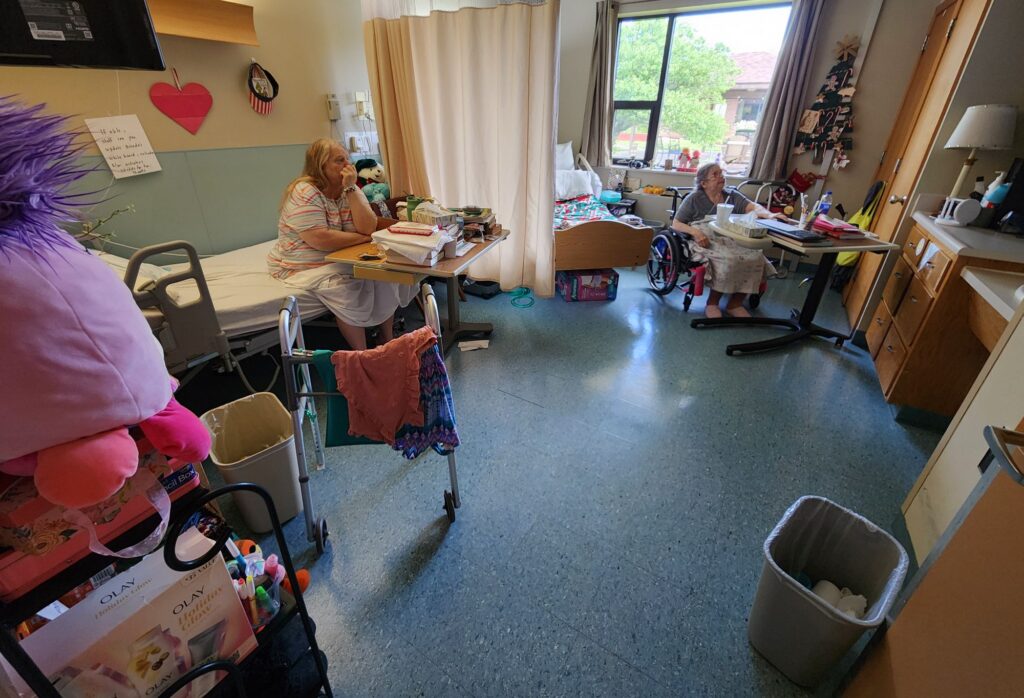
“We have served this community faithfully in a building constructed in 1971, with the smallest room sizes allowed by law currently, just 240 square feet for two people, or 120 square feet per resident, and four residents sharing one bathroom,” Orlowski said. “While others around us have modernized, expanded, or built from the ground up, some of our residents must still move their bedside tables each time they access their closets because of how limited the space is.”
Orlowski gave the staff credit for doing extraordinary work in an outdated facility.
“Families want to come to Wood Haven, because they trust our care. But they hesitate when they walk into aging, outdated rooms that don’t reflect the quality we provide. Still, despite these physical limitations, we’ve maintained a 77% occupancy rate, because families know the care is exceptional,” he said, noting a recent patient satisfaction score of 9.4 out of 10. “Imagine what we could do with a facility that truly matched the quality of what happens inside it.”

Orlowski challenged the commissioners to take the options of closing or selling the facility off the table – and instead invest in the building.
“Fix the building, and the families will come. The census will rise. The finances will stabilize,” he said.
Orlowski reminded the commissioners that during the COVID pandemic, when many nursing home facilities had outbreaks and deaths, Wood Haven had neither.
And he talked about the turnaround with staffing problems.
“To maintain high-quality care, we made the decision to invest in our caregivers – offering competitive wages to attract skilled, compassionate people. And that investment paid off,” he said. “One of the top reasons families choose Wood Haven is because we continue to offer a higher staff-to-resident ratio. Better staffing leads to better care, and less burnout for the people delivering it.”
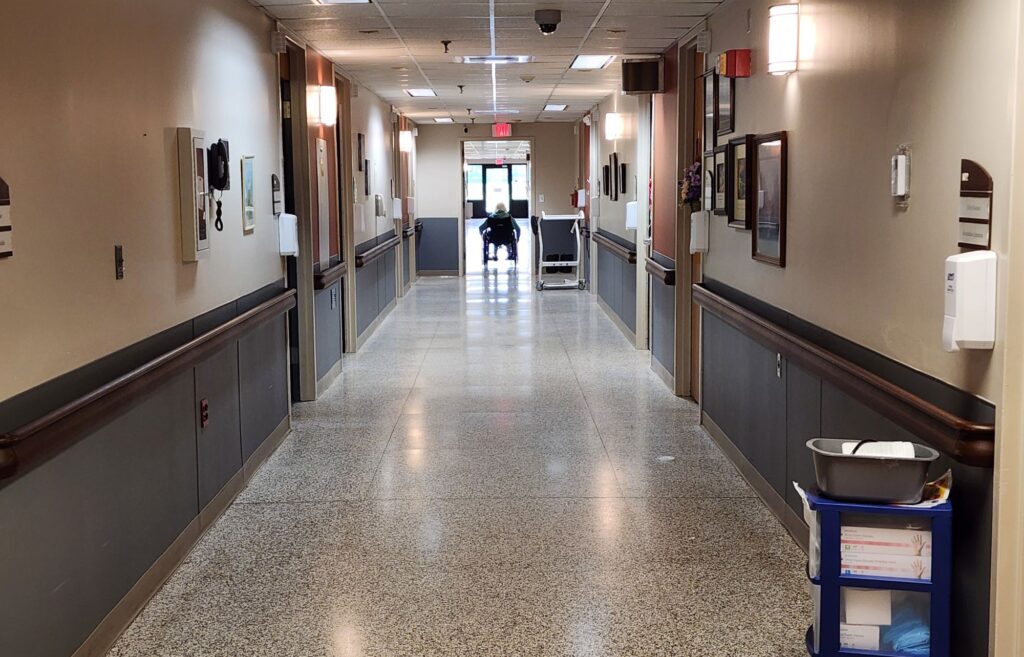
Orlowski stressed that Wood Haven offers a safety net for those with no other options
“Many of our residents rely on government assistance to afford long-term care. These are individuals with no other options, no private insurance, no trust funds, no savings to fall back on,” he said. “If Wood Haven no longer exists, where will they go?”
That leaves families with heartbreaking choices – placing loved ones in facilities farther from home, with fewer staff, and sometimes, far lower standards of care, Orlowski said.
He pointed out that the commissioners have funded improvements at other county facilities – the jail, Job and Family Services, and the courts.
“You found a way to fund those improvements, because you recognized a need. I’m asking for the same level of commitment to our older adults,” Orlowski said. “We don’t need luxury – we need decency, dignity, and the same investment in the people who built this county as we give to those held accountable by it.”
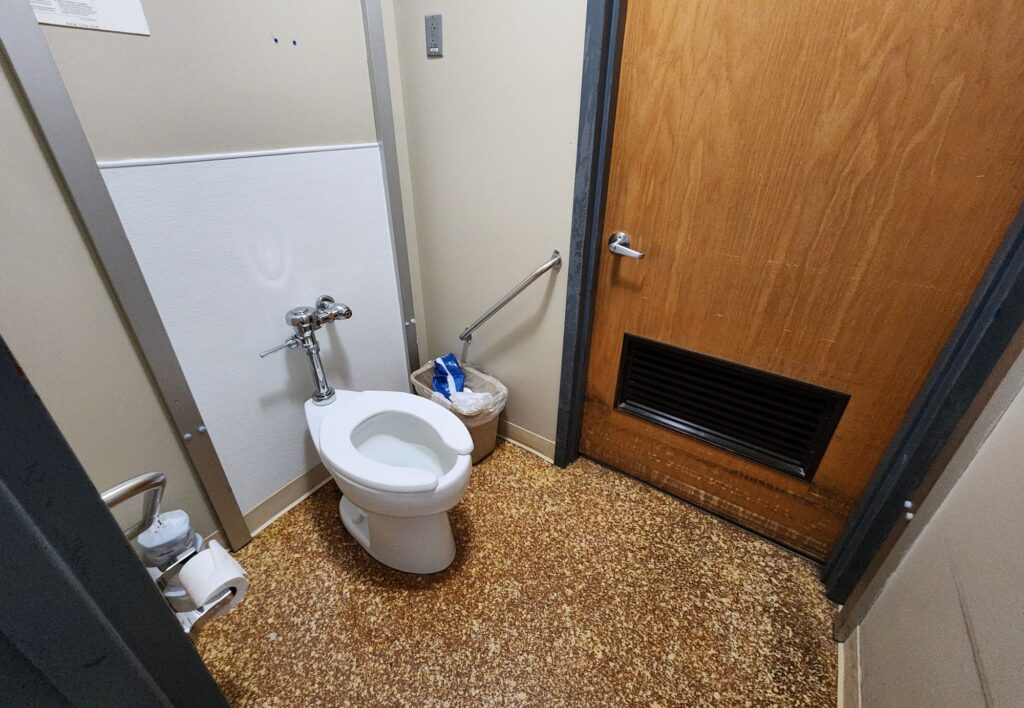
New senior living facilities in the county resemble beautiful hotels, and families assume the care must match the surroundings, he said. Meanwhile, Wood Haven continues to deliver award-winning care in rooms that haven’t changed since 1971.
“Every empty bed is not a failure of our team. It’s a reflection of families walking through outdated resident rooms and deciding to go elsewhere,” he said. “No matter how extraordinary our care is, first impressions matter. Dignity matters. Privacy matters.”
In 2017, the county did invest in some renovations of heating and air conditioning in rooms, windows, paint, a remodeled dining room, lobby and nurses stations. Orlowski said he was grateful.
“But let’s not pretend that was enough,” he said to the commissioners. “The resident rooms, the heart of our care, remain untouched. Small. Crumbling. Difficult to clean. Challenging to maneuver.”
Orlowski asked the commissioners to look at the big picture, not just the view through a financial lens.
“From 1971 to today, when did we lose sight of that commitment? When did serving older adults with dignity and with pride become optional instead of essential?” he said. “The commissioners of 1971 made a promise to this community. I am asking you today to keep it.”
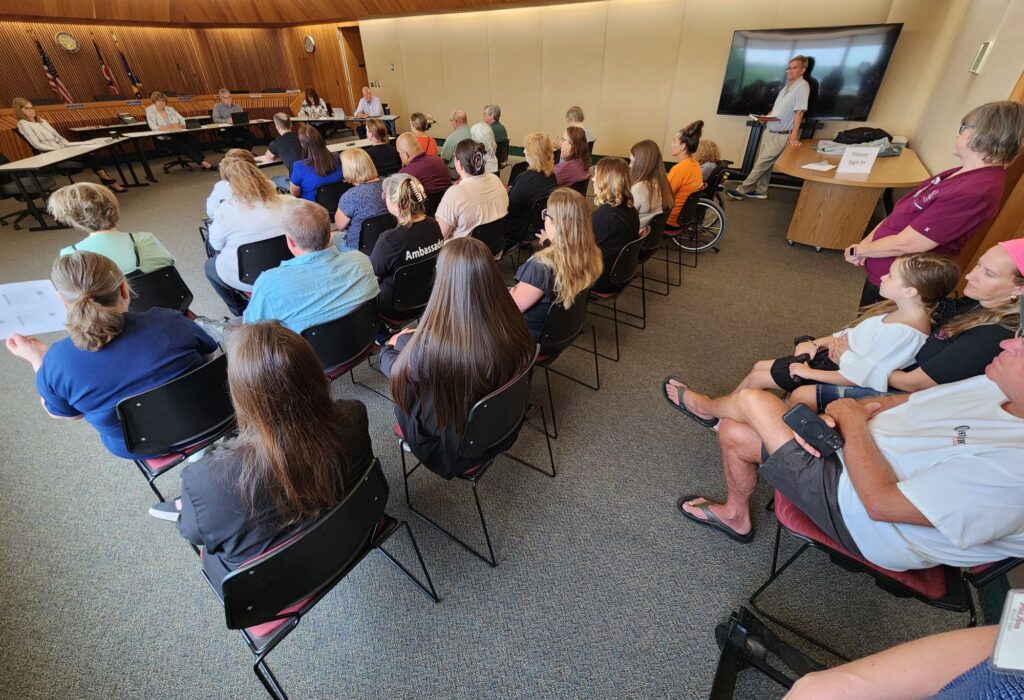
Some of the supporters of Wood Haven also spoke to the commissioners.
Judy Purney, a resident there for seven years, talked about the less than ideal accommodations. “It’s hard to share a small room,” she said.
But Purney said she appreciates the quality care and compassion of the staff.
“We really don’t have any place else to go,” she said. “I’m very thankful for being there. It is like a family.”
Nursing Director Shawn Oberhouse, who has 33 years of experience at senior facilities, originally worked at for-profit sites. She decided she needed a change when she came to Wood Haven.
“I haven’t regretted it,” she said.
In her position at for-profit facilities, Oberhouse said she was constantly dealing with resident and family complaints. That doesn’t happen at Wood Haven, she said.
“The families love us. We’re not the pretty penny, but the care that’s given is amazing,” she said. “The staff is dedicated to the residents.”
After the meeting, Scott and Janet Bechtel said they wanted to attend to show support. Scott’s mom was a resident at Wood Haven, until she passed away two years ago.
“It was like losing another family,” he said of the close relationships with staff.
Prior to coming to Wood Haven, his mother was at another facility, and was given a few days to find a new home when that facility said she wasn’t showing adequate progress.
“Wood Haven really was an answer to prayers,” Janet said. “His mom had nowhere to go.”
The family maintains ties with Wood Haven, with Scott returning to the facility every month to help residents with crafts.
“We wanted to be here to show support,” he said.
At the close of the meeting, Commissioner Craig LaHote thanked those who attended and spoke.
“We know they’re passionate and provide great care,” Commissioner Doris Herringshaw said. “But that all comes at a price, too.”
The commissioners struggle with using taxpayer money to pay for a service for a limited number of people.
“It’s becoming more and more of a financial burden, and we need to look into it,” LaHote said.
LaHote pointed out that few counties in Ohio are still in the nursing home business, with just eight remaining, and most of those are smaller counties that have fewer options for senior living facilities.
The next step for the commissioners is to hire a firm to study operations and expenses at Wood Haven.
“We have a lot more research to do,” LaHote said.