
By JAN McLAUGHLIN
BG Independent News
Growing up in Germany, Arne Spohr was accustomed to public transportation. In his mom’s village of 1,200 residents, there are a “gazillion” public buses getting people from Point A to Point B and beyond – then back home again.
After living in Bowling Green for 16 years, Spohr had almost given up on the concept of public transportation in this area. But he was pleasantly surprised when a recent Google search for public transit turned up the expansion of the GoBus program in Ohio.
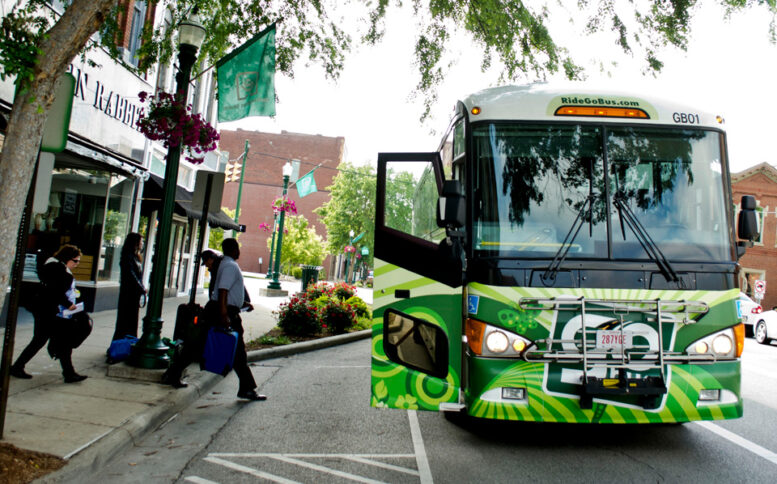
So last week, while on sabbatical from his job as professor in the College of Musical Arts at Bowling Green State University, Spohr hopped a bus in Bowling Green and headed to Athens for a few days, where he could explore the Ohio University community and hike the surrounding hills.
Spohr said it was curiosity that prompted him to take the “mini-trip.”
He found the transportation easy to schedule, comfortable, with clean restrooms and friendly drivers. The round trip cost him $60.
“Everyone was super nice,” he added.
“I’m very, very excited to see this here,” Spohr said of the GoBus connection in Bowling Green. “I think it’s great.”
Though he has a vehicle, Spohr likes the idea of using public transit. And he believes BGSU students without vehicles will find GoBus an easy and affordable way to go back home on weekends.
“I think the bus is an asset for the community,” he said.
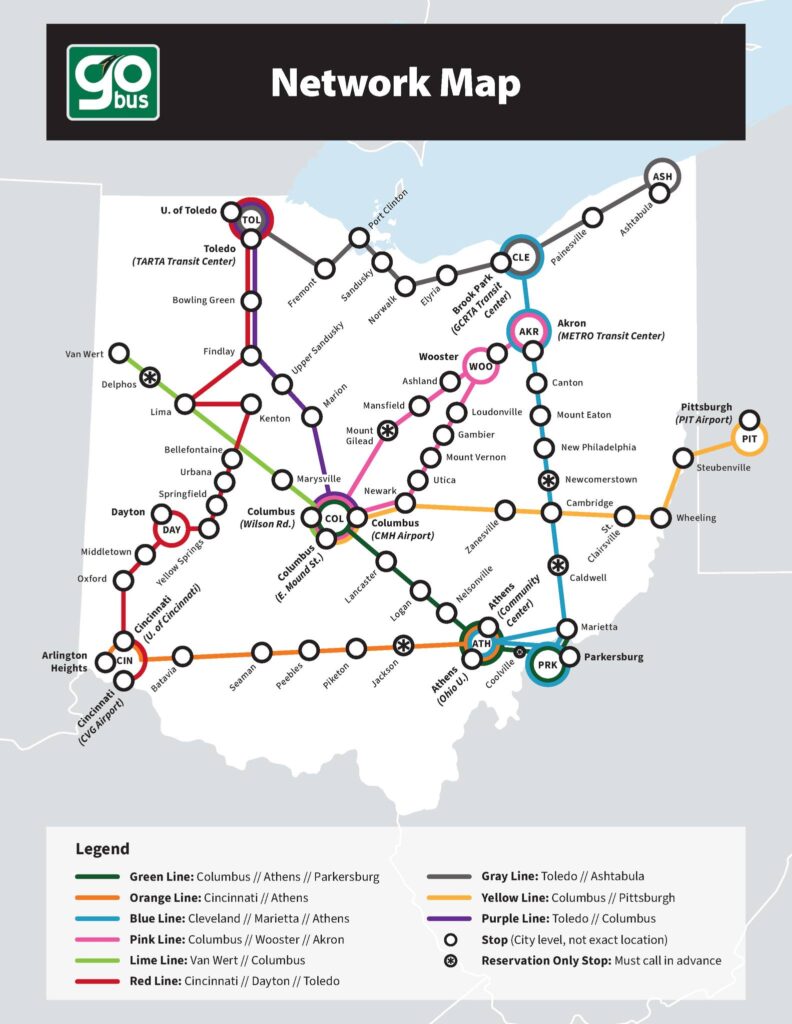
GoBus operates 365 days a year, with six stops in Bowling Green each day.
Spohr took the purple line first – picking him up in the Meijer parking lot on the east side of Bowling Green and dropping him at the Columbus airport. From there, he took the green line to Athens. The connections were easy, he said.
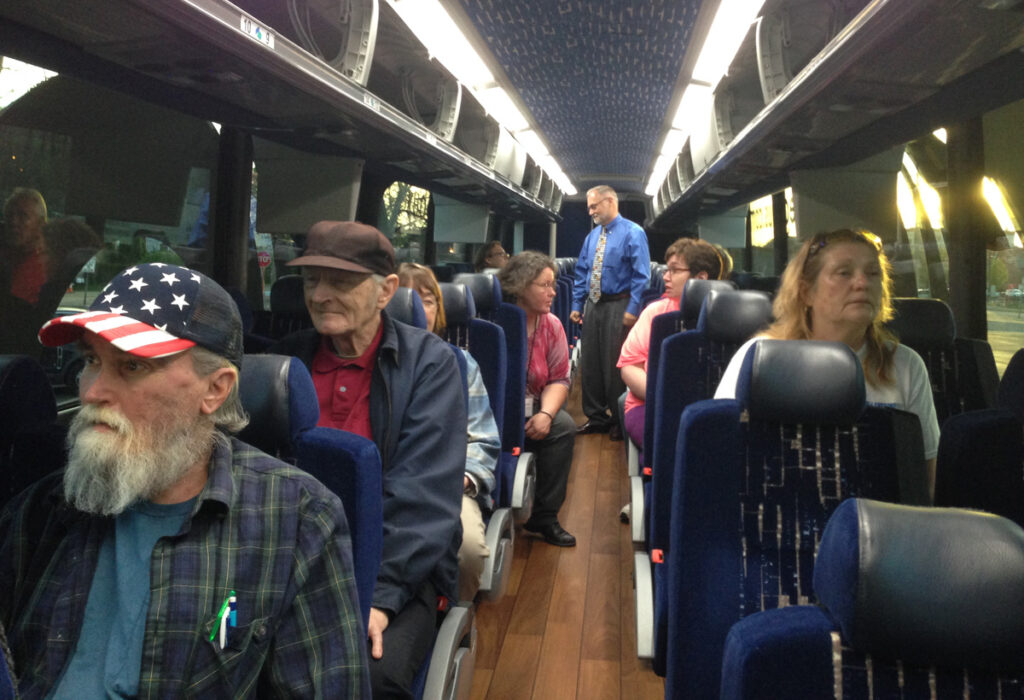
During the first leg of the trip (between Bowling Green and Columbus), he was the only passenger on the GoBus. Spohr took the opportunity to chat with the driver, a retired city bus operator, to read, and to watch the scenery without worrying about the road.
“You see places that you haven’t been,” he said, listing off Upper Sandusky and Marion, where the bus made stops. And he watched the landscape change from flat to rolling hills. “You don’t have to focus on traffic.”
On his way back to Bowling Green a couple days later, the route from Columbus to Lima was packed, since it is part of a longer route between Pittsburgh and Chicago. Then on the return trip from Lima to Bowling Green, ridership was again sparse with just two passengers.
Even when the bus was packed, Spohr characterized the ride as “super.”
“It was a very, very positive experience. It was relaxing and productive,” he said, noting the wifi connections and the experience of connecting with other passengers on the bus. That is another aspect Spohr appreciates about public transit.
“It’s about bringing people together,” he said.
Spohr had two concerns about the GoBus trip – first the lack of signage for the pickup spot in the Meijer parking lot, which is located outside the garden center section of the store. He is hoping in the future that the bus stop be relocated somewhere more accessible, perhaps on campus.
His other concern about delays during bad weather was alleviated when the bus operators explained that the buses wait to depart a stop until the bus linking with it arrives. Spohr saw that in action on his trip back to BG during the high winds last Friday, which caused the need for a detour.
“Nobody gets stranded,” he said.
GoBus, funded through the Ohio Department of Transportation, was created to link rural and underserved areas of metropolitan centers.
Now celebrating its 15th anniversary, GoBus has grown from 10,000 annual riders in 2010 to more than 129,000 riders in 2024. The service places 64% of Ohio’s population within 10 miles of a bus stop.
The recent expansion doubles the service footprint, extending routes to western and northern Ohio, including communities such as Bowling Green, Fremont, Marion, Middletown, Oxford, Upper Sandusky, and Yellow Springs.
With the added routes and stops, GoBus has:
- 9 routes across Ohio
- 27 local transit connections
- 32 university connections
- 47 counties in Ohio with GoBus stops
- 153,000 estimated annual ridership
This meets a mission of the Ohio Department of Transportation, which has “evolved from moving vehicles to moving people,” according to Matt Bruning, ODOT press secretary.
While the GoBus program is intended for anyone, Bruning said the expanded routes to more college towns will likely see a lot of use by students who don’t have cars on campus.
“That was a big factor” in the additional stops, he said.
But the GoBus rates should also make the public transit affordable for others across Ohio.
“For people who otherwise would not be able to travel,” Bruning said. “We’re excited to be a partner in this.”
Started in 2010, GoBus is a federally-funded intercity bus service administered by Hocking Athens Perry Community Action’s Transportation Division.
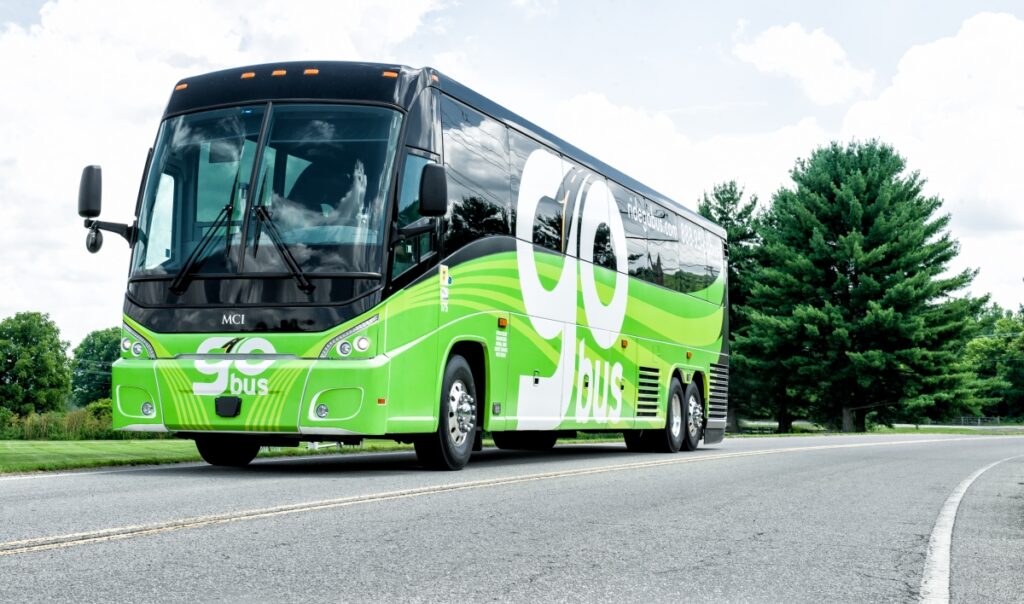
The buses are equipped with air conditioning, an on-board restroom, reclining seats with headrests, footrests, and tinted windows. Passengers may bring reading material, radio headsets, and a small pillow for comfort. Radios, laptops, and other electronic items may be carried on board, provided they do not disturb fellow passengers and that headphones are used.
Food and non-alcoholic beverages may be carried on board for personal consumption as well. Most of the buses feature free wireless internet connection and electrical outlets at every seat.
Advance reservation tickets
Tickets that are purchased online, from one of the ticketing locations, or over the phone are considered “Advance Reservation Tickets.” Passengers with advance reservation tickets will be boarded first. Passengers with cash will be able to purchase a ticket from the driver once all Advance Reservation passengers have boarded, if seats are still available.
Customers with disabilities who need travel assistance should call 888-95-GOBUS (888-954-6287) as far in advance as possible.
Ticket prices
Prices are based upon the distance that is being traveled. Ticket base fares are either $5, $10, $15, $20, $25, or $30. In addition to the base fare, there is sales tax, plus a $2.50 service charge per purchase. To find the price for a specific trip, call 888-95-GoBus (888-954-6287), or go to the booking page.
All trips less than 50 miles on a single line also have a $5 base fare. When purchasing from booking.ridegobus.com, in addition to the base fare, sales tax, and a $2 service fee will be assessed with each purchase. The maximum base fare for a one-way ticket is $40.
Passengers paying the bus driver should have the correct cash amount – credit cards are not accepted.
Children 5 years old and younger ride for free. Two free child tickets per adult ticket are permitted.
Baggage
Each passenger is allowed two pieces of checked baggage. Additional pieces of baggage will be accepted if space is available.
In general, acceptable baggage includes suitcases, duffel bags, toolboxes, trunks, and securely tied cardboard boxes. A plastic and/or a paper bag is not acceptable as checked baggage. Baggage must not exceed 62 inches when adding the total exterior dimensions of the piece.
One carry-on bag plus one small personal item can be taken on board for each adult or child. All carry-on bags must fit in the overhead compartment or under a seat.
Personal-type items include purses, briefcases, cameras, food containers, laptops, etc. Carry-on bags must be 25 pounds or less and are limited to the dimensions of 10 x 16 x 24 inches.
The following items are not considered carry-on bags or personal-type items and are not counted against the “one-bag plus one personal-type item” limit:
- A child restraint device for a ticketed child with a reserved seat or when complimentary, available space exists.
- Assistive/mobility devices for individuals with a disability.
- Outer garments or other wearable articles of clothing.
- Food for consumption during the trip.
- Walking canes or umbrellas.
Passengers are responsible for transferring their own bags if they are changing buses. But baggage assistance is available upon request.