By JULIE CARLE
BG Independent News
There’s a renaissance happening in a Toledo neighborhood known as Junction.
In the neighborhood that has been marked by disinvestment, physical vacancy and abandonment, there is a visual change taking place.
Renovation is happening to buildings and homes, and art is a part of the change.
According to Ahmad Jacobs, a local artist whose art is part of the neighborhood improvements, one of the latest projects he’s involved with is a complete redo at 614 Junction, near the corner of Junction and Nebraska.
He has been integral to the project spearheaded by a childhood friend and now Toledo businessman who is committed to breathing life into the neighborhood where they grew up. Though the businessman prefers to remain unnamed, his mark can’t be denied when looking at the homes and buildings he has purchased and renovated, Jacobs said.
The property owner is investing heavily in the Toledo neighborhood renovation and using a systematic approach to buying and renovating properties with a stone trademark.
“He sees the value of reinvesting in the neighborhood and wants to put back in the community where he grew up,” Jacobs said.
Stepping inside the current building project that will eventually house apartments, a lounge, a recording studio and a community art space is like stepping into an art mold museum. Molded concrete spheres and miscellaneous shapes are plastered throughout the space, many already brightly painted with every animal and type of nature imaginable—from his favorite horses to salamanders, lions, wolves, mushrooms, cats, dogs, lizards and snakes.
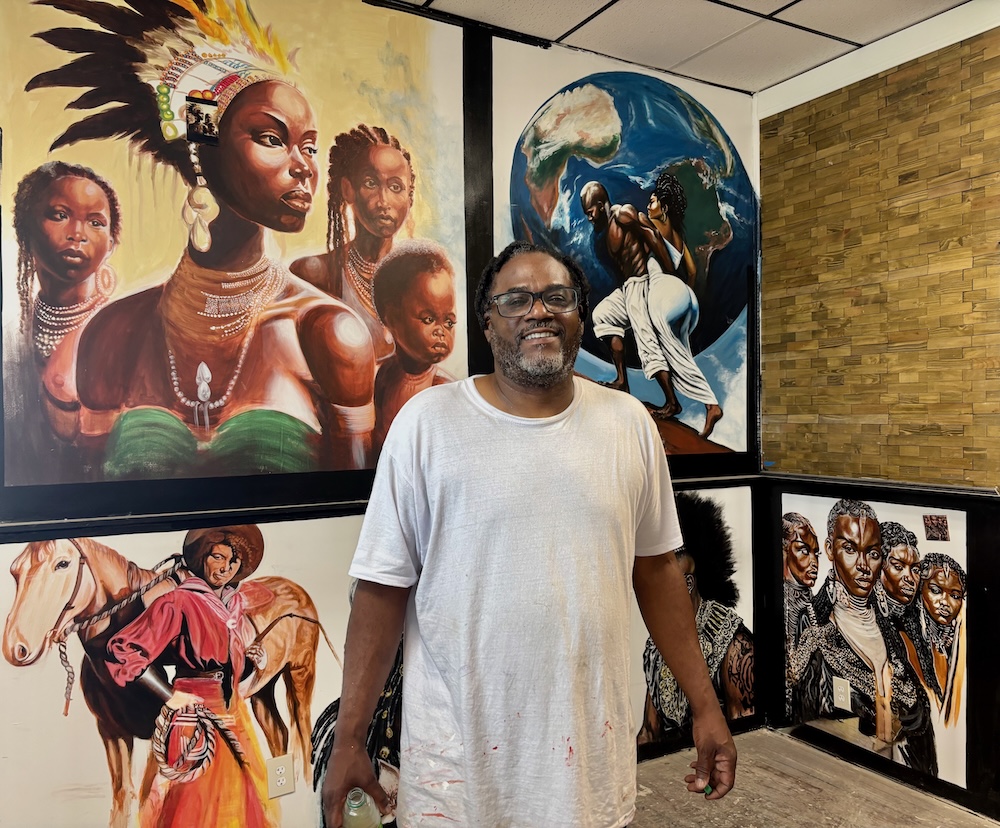
When it became difficult to purchase molds, a team of workers began making them by the hundreds. “He brought one to me and asked if I could make it come to life,” Jacobs said. “So I stopped the mural work I was doing in a different building and started working on painting the molds.”
The molds and stonework on the exterior and interior of the buildings and homes he’s renovating that are popping up everywhere in the neighborhood are the mastermind of the businessman. They are a symbol of permanence, endurance, and, with the added paint, of creativity and human ingenuity. Jacobs called it “a form of expression. … transforming raw materials into something beautiful and enduring.”
In addition to being a strong show of building community, the latest project has also proved to be an innovative approach to artist employment and skill development in underfunded areas.
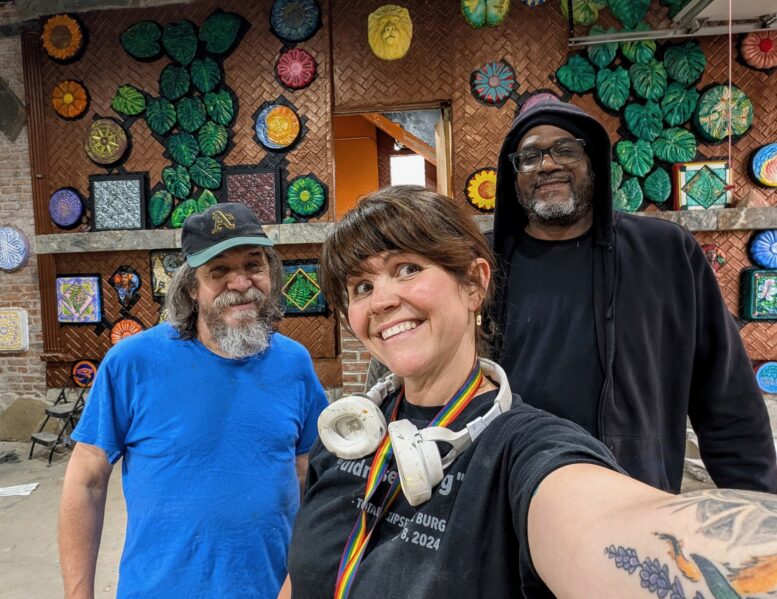
Perrysburg’s Kelleigh Bossa and Toledoan Jim Zalewski are two of the other dozen or more artists Jacobs has brought on to help with the building’s painting project. They have spent hour after hour adding their creativity and talents to the interior of the building.
Bossa called the art trio “a great team.”
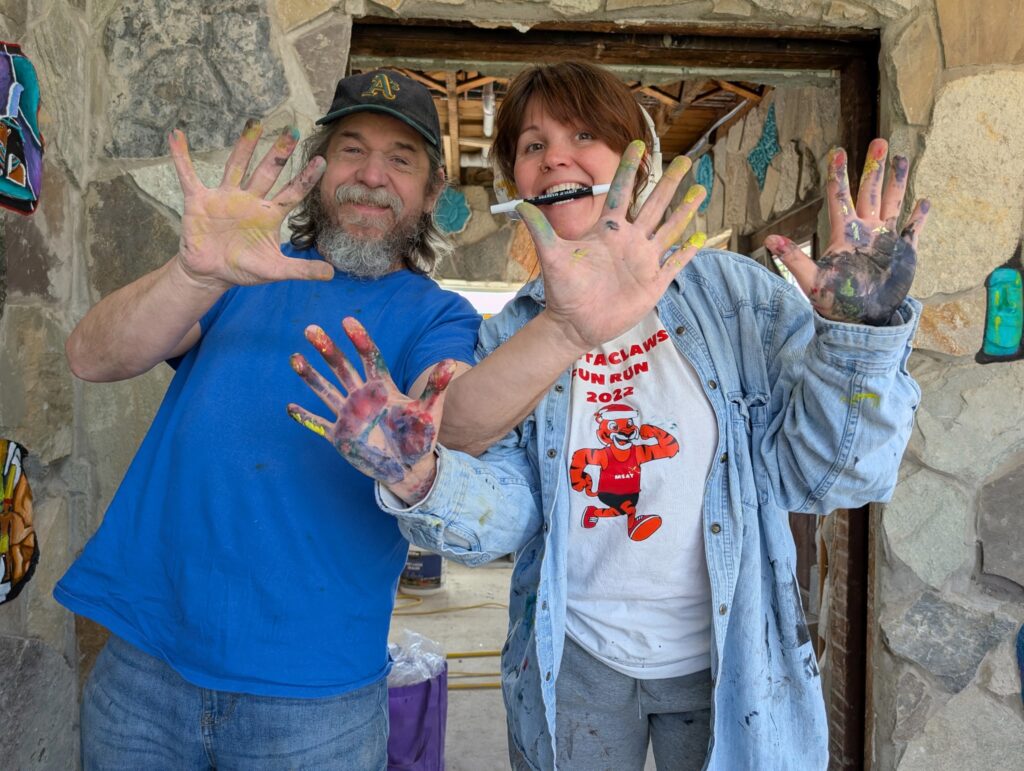
“This is a really special thing that I’ve never seen done before, especially the atmosphere of collaboration and learning together, like nobody is trying to show off; It’s just fun,” she said. “We’ve learned so much from each other.”
While the fun is evident in the art that fills the space, Bossa pointed out that their project has not benefited from arts funding that other art projects in Toledo have benefited from. “There’s this whole thing where certain parts of the city get art funding the rest of it does not,” she said. “And we’re in the ‘does not’ part, so they are very much out of funding to pay artists.”
The investor is the one paying them, Jacobs said.
“On the other side, we also see the value in what we’re doing, what we’re getting to add to our city, and also like the growth and other opportunities that have come from it,” he said.
“We’d like to give that opportunity to other artists and as much as I strongly believe artists should be paid, artists do have to learn as well,” Bossa said. “So, if there’s somebody who wants to learn more about 3D painting and textures on concrete or just work with decade-experienced artists, we’d love to have volunteer days where one or two at a time can come and help us paint and we’ll teach them what they need to do.
The job doesn’t require professional-level skills, “just someone who wants to be involved in a cool, large-scale project,” she said. “Come on out, claim a piece or a few and put your mark on this really cool project in the city.”
Getting involved “can show that you see a bigger picture and you just want to be part of something special,” Jacobs said.
Bossa’s philosophy is “always lead with love, and everything else will fall into place.”
The goal is to eventually host a community event for the project. It might be an open house on a Friday evening. Artists and others would be welcomed into the space-turned-gallery. Visitors would see what’s been done, but also create “all kinds of art” to eventually be sold to pay more artists to come help.
The cool thing about the art in the space is that “no one piece is one artist,” Bossa said. “We all just come in and work on stuff, adding to what’s there or starting something new for others to add their mark.”
The emphasis is on community over individual recognition, she explained. In the end, everyone benefits: the artists, the work crews and the neighborhood. The project continues to show how art serves as a community-building tool and a factor in economic development.