
By JAN McLAUGHLIN
BG Independent News
Decades after his parents fled a civil war and extreme poverty in Latin America, Saul Flores found himself drawn to the region they escaped.
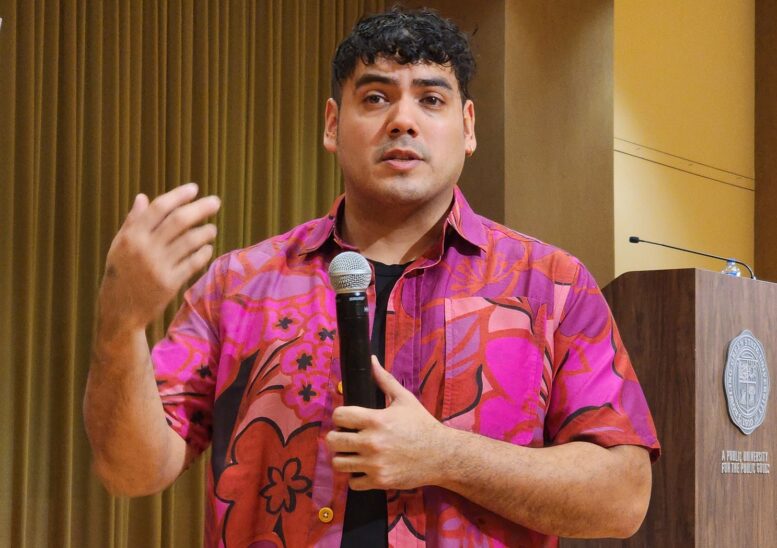
Flores shared his story Wednesday at the annual Latino/a/x Issues Conference at Bowling Green State University.
He told of growing up poor but proud in New York City, and of his parents’ sacrifices to give Flores and his siblings a better life. He talked of his life-changing trip to his mother’s small Mexican hometown, where he made a promise to build a new school. And he took his BGSU audience on his 5,328-mile journey following in the footsteps of countless immigrants trying to get from Latin America to the U.S.

Child of sacrifice
At age 17, Flores’ mom was the only one of nine children in her family to escape the crippling poverty of their small Mexico town. His dad fled war in El Salvador, and the two met and started their own family in New York City. To make ends meet, they took menial jobs such as chopping vegetables in kitchens and mopping floors in restaurants.
They were “dignified working people” who were forced to leave their homelands to find a better life.
As a child, Flores was aware of his family’s economic status, but he didn’t feel lacking. While his dad worked nights, he shared a twin mattress with his mom and sister. They knew hunger, but didn’t complain since they understood their parents were doing all they could to provide for the family.
A highlight for Flores and his sister was accompanying their mom to her job as a housecleaner on Saturdays. To this day, he treasures the memories of tagging along as they traveled to the Upper West Side to clean the home of a wealthy French woman. The woman would tell Flores and his sister to help themselves to any food in her pantry – which often held delectable French desserts. One day, the siblings found a box of croissants with chocolate inside.
“That was the best day of my life,” up until that point, Flores said, smiling about their delicious discovery.
That same day, Flores recalled the smell of bleach as his mother scrubbed the fine floors of the French woman’s home. He realized that his mom was his guardian angel, with “love rooted in sacrifice.”
Making a promise
Flores applied for scholarships and fellowships to North Carolina State University, and became the first generation of his family to go to college.
“I was given the opportunity to do something with my life,” he said.
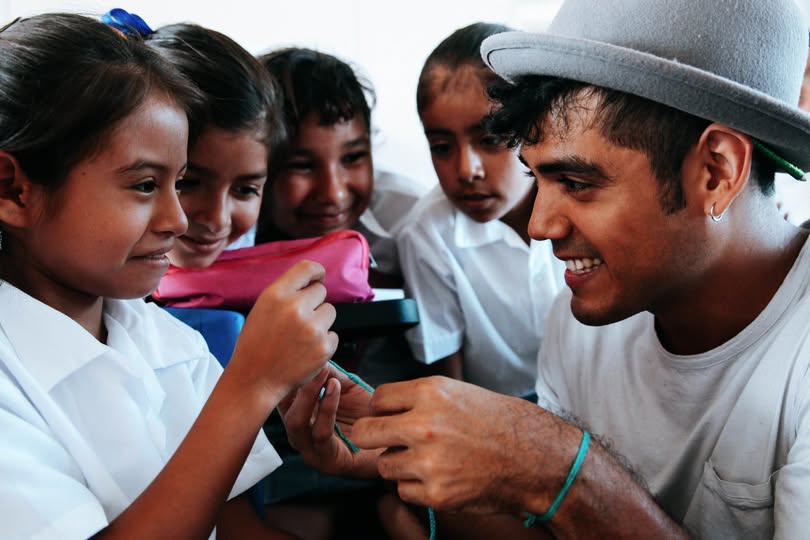
That “something” began by leading service trips for fellow college students to his mom’s hometown of Atencingo in southern Mexico – “a town in the middle of nowhere.”
Flores recalled showing up at his grandma’s home with 14 students in tow.
“She came outside and saw 15 people, and she ran inside and started cooking,” he said.
He described how in the southern states of the U.S., it’s polite to clean off your plate. But in Mexico, cleaning a plate is a sign that the diner is still hungry. So his grandma kept cooking till she was out of food.
Later, his grandma took Flores and his friends to the elementary school that his mom had attended as a child. The old cinderblock building was “our beacon of hope,” his grandma said.
Flores made the small school part of his annual treks back to Atencingo, when one year a student revealed to him that the school would soon be shut down because of the condition of the building. The student, from a poor family, would likely be unable to travel to another school and would probably start working alongside his father.
“Access to education was being robbed from them,” Flores said.
Long journey to a better life
Deeply troubled by the loss of the school in Atencingo, Flores made a pledge to raise funds to build a new school by embarking on the difficult journey many immigrants endure as they try to build a better life for their families.
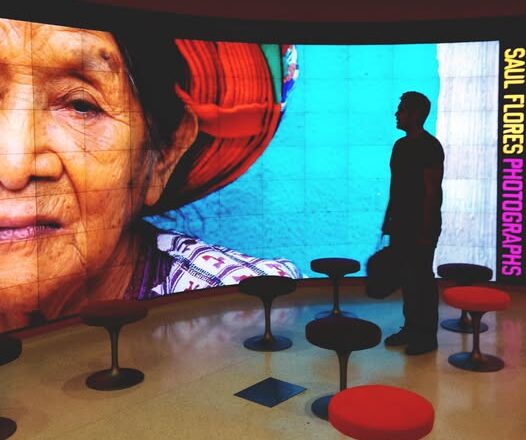
In 2010, as a junior in college, Flores decided to photograph his journey to produce a photo documentary “Walk of the Immigrants” showing the challenges faced. It didn’t take long for him to learn the hardships.
“I started with a romantic perspective of migration,” he said. “The people who make it to the U.S. are the lucky ones.”
Flores began his 5,328-mile trek in Ecuador. He told of kindness along the way, as people with little to give provided him a plate of food or a place to sleep.
“I can tell you stories that will break your heart,” he said.
Flores also told of being helped by a “coyote” who joined him during the dangerous journey through the jungles of the Darien Gap, where they encountered deep mud, raging rivers, poisonous frogs and trees so dense they had to use a flashlight to navigate.
It was in the jungle that they were approached by a man wearing camouflage and carrying a shotgun, warning of the Revolutionary Army Forces of Colombia taking hostages ahead.
After backtracking for days to avoid dangers ahead, and being helped along the way when he was partially paralyzed by poisonous frog secretions, Flores searched for another route.
He came upon a man who offered him a ride in his boat – which turned out to be a crude carved-out tree with the leaves still attached. After seven days on the water, they arrived in Panama City.
“Tell your friends that there are good people in Latin America,” Flores stressed to his audience.
Flores shared a handful of his photographs taken along the journey – showing the bright colors of clothing and homes, and the deep wrinkled faces of the hard-working populations.
His favorite photo is a group shot of the students at the new elementary school built with funds raised by Flores’ photographs.
Flores found his work was not done. After rebuilding the school, he set about his next project of founding MAMA Sugar company in collaboration with sugar cane workers and their families in Pueblo, Mexico.

Finding champions
During his talk at BGSU, Flores encouraged his audience to find “champions” in their lives.
“I can’t begin to tell you how important it is for you to have champions,” he said.
He asked all those in the student union ballroom to close their eyes and think of a person who sacrificed to get them where they are today. Then he asked them to share.
One woman told of the difference between her hands and her mother’s hands. While her own hands are smooth and soft, her mother’s are cracked and worn from manual labor.
A man spoke of his parents who immigrated to Texas when they were teenagers to help their families pick cucumbers. They then followed that crop to Ohio. His mother had to escape with her children from their alcoholic father, which led to months of living in a shelter. The son watched as his mother worked to learn English, and labored long hours until she could buy their first car, then their first home.
And another woman spoke of her mom, who sacrificed to escape the poverty of Puerto Rico. There were days that she worked from sunrise to sunset. “It made me feel loved,” she said.
Flores said it’s good to reflect on family history.
“It’s important to look backwards to see where we have been,” he said.
Flores encouraged those present to find their passion, then cement it.
He admitted that during this critical point for immigration in the U.S., he at times does despair.
“It’s a pretty turbulent time,” he said. “Our country is going through a rough spiritual awakening.”
And in case those attending the conference needed one more champion in their lives, he read aloud his personal cell phone number to everyone in the ballroom.
30 years of connecting
Wednesday was the 30th Latino/a/x Issues Conference at BGSU, giving Latino students, faculty and staff an opportunity to connect over common concerns, according to Professor Luis Moreno, who co-chaired the conference with Professor Susana Pena.
The event was open to the general public.
For three decades the conference has dealt with issues such as their “belonging being under attack” for many Latino Americans.
“Hopefully this is creating a space for conversations,” Moreno said. “Some of the issues are the same as 30 years ago.”
The purpose of the conference is not to come up with solutions, but to promote working together, he said.
With the current political climate, many Latino students have worries about their families with mixed legal status, Moreno said. The concerns about family members being detained are very real and ever present on social media, he added.
“It’s more intense,” Moreno said.
That puts additional pressure on Latino students who have to deal with immigration issues at the same time they are “trying to manage their courses as well.”