By JAN McLAUGHLIN
BG Independent News
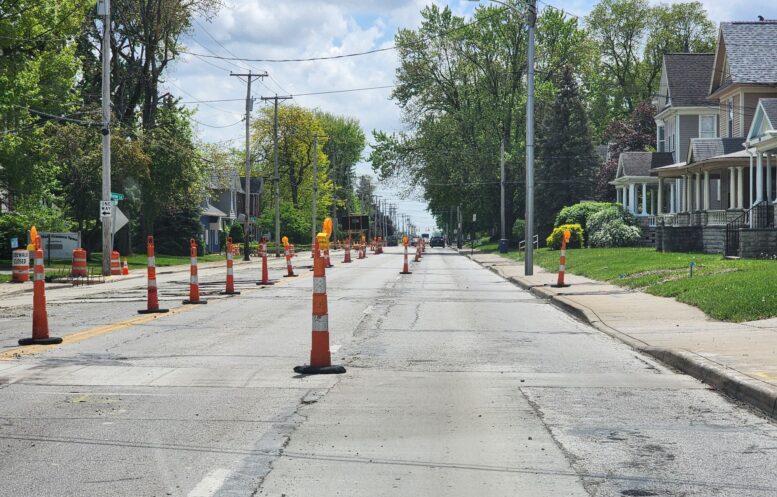
After his plan to shift more funding into street repairs hit a roadblock last summer, Bowling Green City Council member Bill Herald is looking for a detour.
Like last year, Herald’s proposal would shift income tax revenue from the utility fund, which would create the need for increases in the water and sewer rates, Mayor Mike Aspacher said. Taking dollars from one fund to satisfy another leaves a hole that must be filled by city residents.
Before a step like that is taken, a comprehensive study of the impacts should be conducted, the mayor stressed.
“I think it’s premature to consider,” Aspacher said.
“If it is decided that it’s a strategic priority to identify additional revenue for street repairs,” then all the options should be considered, the mayor said after Monday’s meeting.
But Herald was not deterred. After Monday’s meeting, he said it appears “funds are tight everywhere” in the city budget. “Every fund seems to have its own set of pressures.”
Herald acknowledged that shifting money from the water and sewer fund over to street repairs will likely result in hikes on utility bills. But he added that it makes sense that utility customers pay for the expenses of the water and sewer services.
Herald’s last attempt to put more money into Bowling Green streets and sidewalks hit a dead end last summer. That proposal was short on details and failed to get enough support from fellow council members.
At that point, council had already approved an ordinance redistributing the city’s existing unvoted 1.5% income tax from capital funds for water and sewer projects to fire and police station improvements and to street repairs.
That ordinance allocated $500,000 more a year to roadwork and sidewalks.
Believing that was not enough, Herald offered an amendment which would take more from the current formula from water and sewer projects.
“We have more roads than money,” he said last summer. “We all know streets and sidewalks need work.”
All the council members supported the redistribution of the funds, devised by the city administration over several months of studying the issue.
The city administration’s formula required increases of roughly $5.40 a month in residential water and sewer bills to make up the difference. Herald’s amendment would have pushed those increases up to $7.20 per month.
This time around, Herald asked the city’s utility director to calculate the increases in rates if they are based on usage, not on the base rates. That information is expected to be available before council votes on the ordinance in September.
Last summer, fellow council members noted that Herald’s amendment would nearly double the increase already planned in the administration’s proposal for streets. When Herald was asked for his methodology in asking for even greater funding, he said his proposal was based on “decades of observing this issue.”
Aspacher explained the administration’s proposal was based on a “deliberate and mindful process” that had been deliberated for many years before a formal proposal was made to council.
Aspacher said city leaders have worked to “chip away at capital needs,” and did consider different scenarios of taking more from the water and sewer fund. However, he added, the administration also wanted to minimize the negative impact on utility users and taxpayers.
Council President Mark Hollenbaugh remarked last summer that he has long been protective of the city’s funding for water and sewer projects – noting that Bowling Green is careful to maintain funding for water and sewer infrastructure unlike other cities that often don’t have revenue to make repairs or expansions.
Hollenbaugh said that in 20 years, he does not want the city to fall behind in repairs because too much money was shifted over to streets and sidewalks.
The proposed ordinance will have its third reading and be voted on by council at the next meeting on Sept. 8.