
By JULIE CARLE
BG Independent News
William “Bill” Henderson believed in the power of people working together. Whether he was guiding a group through a leadership activity, teaching a new song, mentoring a young 4-H professional or sharing an idea that could make a program better, Henderson had a gift for bringing people together and helping them recognize what they could accomplish.
That quiet but enduring influence will be recognized next week (Oct. 26), when Henderson is posthumously inducted into the National 4-H Hall of Fame during the ceremony in Kansas City, Missouri.
Henderson, who died Aug. 13, 2024, spent his career helping young people and adults develop leadership skills, build confidence and learn by doing. His work with Ohio State University Extension and the Buckeye Leadership Workshop reached far beyond the communities where he worked, influencing 4-H professionals and volunteers across Ohio and around the country.
For those who knew and worked alongside him, the national honor recognizes a legacy that was evident long before his name was added to a Hall of Fame.
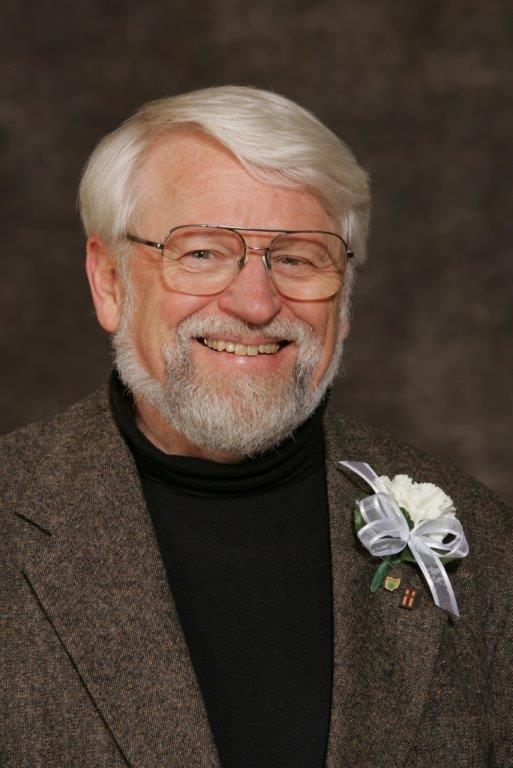
“He was a master in group facilitation,” recalled Dick Martin, a longtime OSU Extension colleague who began working with Henderson in 1971. “In his own quiet, calm demeanor, Bill could lead a group of any age in an activity or learning exercise where all were involved.”
Henderson never needed to raise his voice to command attention. Instead, he listened, encouraged participation and made room for people who might otherwise have remained on the sidelines.
It was a leadership style that shaped not only the programs he led but also the people who carried those lessons into their own careers.
Finding his place in 4-H
Henderson began his Extension career as the 4-H agent in Allen County, Ohio. His academic background was sociology, with bachelor’s and master’s degrees from Ohio University, rather than the OSU agricultural training common among many Extension professionals at the time.
As Extension increasingly recognized that 4-H work required specialized skills in youth development, teaching and volunteer management, Henderson demonstrated the value of understanding how people learn and work together.
“Bill’s ability to listen and counsel helped our newer 4-H agents hone their skills, learning teaching techniques not usually taught in university classrooms,” Martin said about Henderson’s role as the Northwest Extension District 4-H specialist.
Jayne Roth, who began her Extension career in Putnam County in 1981 before the same role in Wood County in 1985, remembered Henderson as a mentor whose influence extended throughout her professional life.
“He definitely was my mentor throughout my whole career,” Roth recalled.
He excelled at helping groups function as teams. He could guide an activity so that everyone had a role, even participants who initially were reluctant to join in.
“He was very in tune with how everybody was feeling, and he would make sure that if people weren’t being heard, that they could be heard,” retired Wood County 4-H educator Jayne Roth said about her longtime mentor. “He had a leadership style about him that was more of a cheerleader than an authority-type figure. He had that way people felt confident and comfortable and allowing people that didn’t usually speak to let them speak.”
Henderson encouraged Roth to attend the Buckeye Leadership Workshop, a decision that led to decades of involvement in the program. Their professional partnership also took them across the country to teach leadership through recreation.
Under Henderson’s district leadership, Northwest Ohio’s 4-H professionals developed a strong sense of teamwork, collaborating on programs and supporting one another. Roth remembered the district as a place where educators worked together to deliver programs others wanted to emulate.
His mentorship was practical and personal, Martin said.
“Interestingly, as District Director I was technically Bill’s supervisor and mentor. But in reality, Bill was my mentor,” Martin said. “Bill taught me many skills in working with people, especially when dealing with difficult situations. Like the 4-H agents he mentored, I learned more from Bill than I learned in any university classroom. Many an evening Bill and I would stay after hours to discuss how we might handle a situation with an employee or volunteer. Bill’s calm and thoughtful demeanor helped me to think through all aspects of the situation rather than to quickly jump to a conclusion.”
Making leadership come alive through music
Music was one of Henderson’s most distinctive teaching tools, his daughter Amanda Parish said.
An accomplished vocalist, choir director and dulcimer player, he understood how a song could turn a roomful of strangers into a connected group.
“He loved teaching, and he loved music,” Parish said.
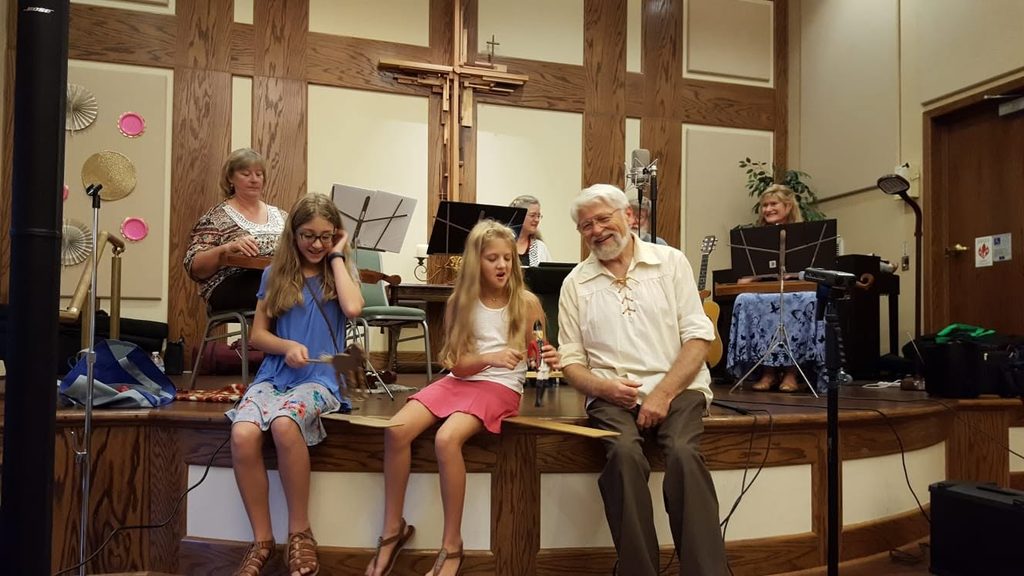
“Music was his passion,” said his wife, Patricia Henderson. He was in a gospel singing group, a dulcimer group and he loved playing the autoharp, especially with his granddaughter Allie. “He had autoharps for everybody,” she said with a smile
He didn’t major in music at Ohio University, but he was a member of the Men’s Chorus.
“He used to talk about doing dishes with his sister and mother, and to keep him and his sister from fighting, they would sing together,” Parish said.
He brought that understanding to leadership workshops throughout Ohio and across the country, teaching participants how to incorporate music and recreation into educational programs.
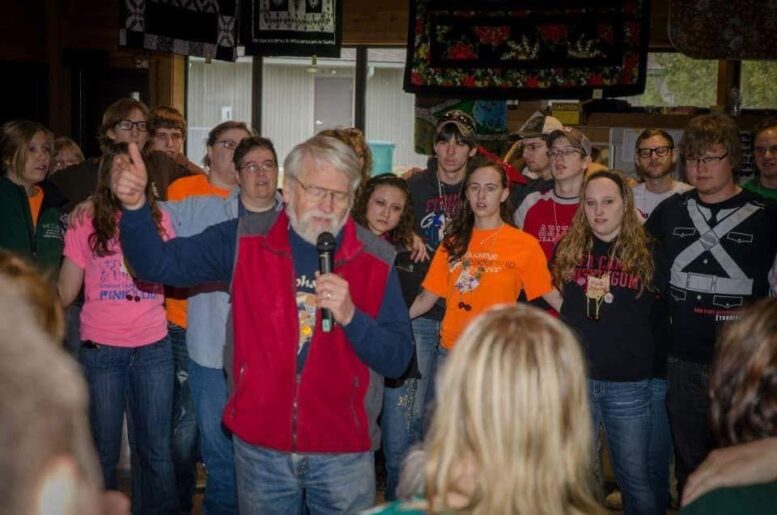
At the Buckeye Leadership Workshop, his morning song circles became a memorable tradition.
Participants gathered in three concentric circles, learning songs together and finding themselves singing alongside people they might never have met otherwise. Henderson guided the group from the center, creating an atmosphere in which even those unfamiliar with the songs could gradually join in.
“After breakfast at Buckeye Leadership Workshop, we’d all run to the lodge so that we could be in the inner circle of three circles,” Roth said.
The experience was about more than singing. It offered a lesson in inclusion, participation and group dynamics, Parish said. People who arrived as individuals became part of something larger, learning to contribute while making others feel welcome.
Henderson believed that traditional songs had an important place in 4-H and other youth programs. As some groups moved away from singing, he continued to encourage the use of actual songs alongside chants, call-and-response activities and other forms of group interaction.
For Henderson, music was another way to teach, connect and give people the confidence to participate.
A workshop built on sharing
Henderson’s influence was closely tied to the Buckeye Leadership Workshop, a program that grew from efforts by Extension professionals in the 1940s to teach recreational leadership to youth and adults involved in volunteer organizations.
Through hands-on activities, games, music and group experiences, participants learned skills they could use to lead others in their own communities.
Henderson served on the workshop’s planning committee for approximately 15 years. He became a familiar instructor, often traveling with colleagues to teach programs in other states.
His contributions went beyond music, according to Parish. He was an accomplished woodworker who created pieces of art and donated work for workshop auctions. He also taught woodworking and developed games and activities that participants could make and use in their own programs.
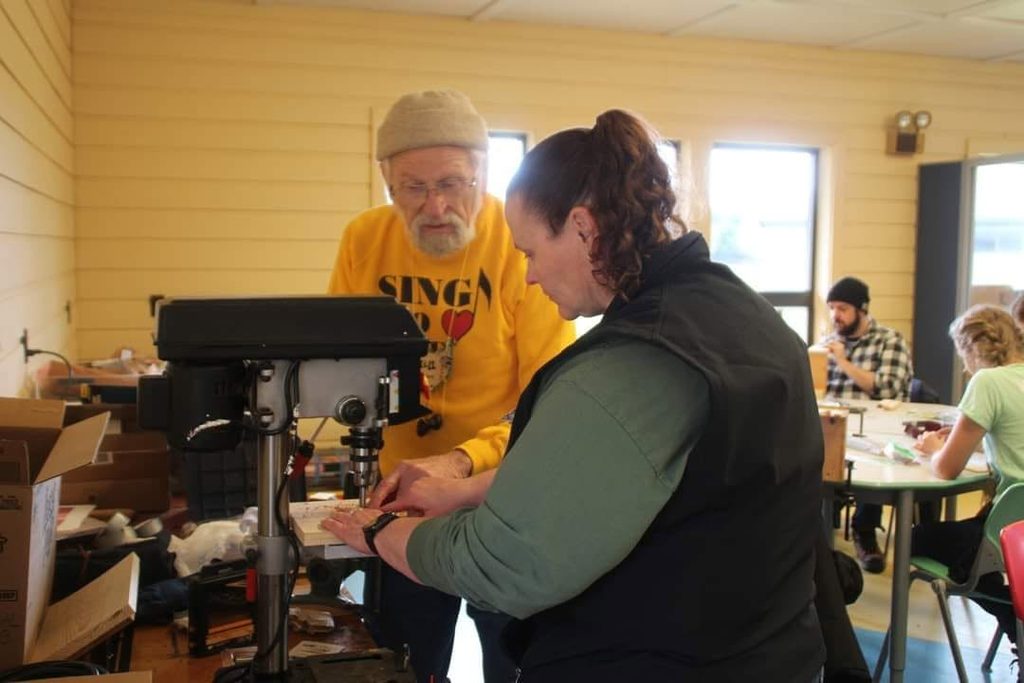
She recalled that her father designed several multi-game activities that could be built and shared with others. Rather than guard his ideas or seek exclusive ownership, he freely passed them along.
He believed that good ideas were meant to be used.
“Great ideas don’t care where they came from,” Martin said, recalling one of Henderson’s frequent statements.
The phrase captured his approach to both leadership and service, Martin said. The value of an idea mattered more than who received credit for it.
His willingness to share helped extend his impact well beyond the programs he personally delivered, Parish said. People carried his activities, teaching techniques and leadership lessons back to their own communities, where others could benefit.
A people person who loved solving problems
Henderson’s professional accomplishments were rooted in a genuine interest in people.
Patricia Henderson described him as an extrovert who loved his job and enjoyed solving problems. When someone came to him with a challenge, he wanted to find a way to help.
He could be opinionated, Parish admitted, but he was also willing to listen. His ability to understand different perspectives made him an effective peacemaker and facilitator.
That combination of conviction and openness helped him navigate the sometimes complicated work of youth programs, volunteer organizations and Extension administration.
He also understood the importance of building relationships among colleagues. The annual gatherings they hosted for Northwest District educators and their spouses became a valued tradition, bringing colleagues together outside their professional responsibilities, Patricia said.
For Henderson, teamwork was not simply a way to get work done. It was something worth cultivating and celebrating.
He retired from Ohio State University Extension in 2002 and later became professor emeritus at Ohio State, an accomplishment that made him proud, Parish said.
Yet his influence continued through the professionals he mentored, the activities he developed and the leadership practices he helped others adopt.
His legacy begins at home
Henderson’s commitment to service shaped his family as well as his career.
Parish said her father encouraged her and her brother, Lee, to work hard, pursue their interests and give their best effort. He celebrated their accomplishments and found ways to be present for important moments, sometimes driving back from work commitments to attend a concert or track meet before returning to his duties.
He also encouraged them to explore possibilities without feeling trapped by a single path. Trying something new, learning from the experience and choosing another direction were all part of growing.
Through 4-H, his family learned the value of planning, organizing, taking responsibility and giving back to the community.
Parish has become an active supporter and advocate in the Wood County 4-H program, continuing a family connection to the organization. She met her husband, Tim Parish, when he was a photography judge at the Ohio State Fair working with her father, who was the assistant superintendent for photography. When Henderson retired from the state fair position, Tim Parish succeeded him.
For the family, these connections are part of a larger inheritance: “We believe that communities thrive because people are willing to contribute their time and talents,” Parish said.
Henderson’s dedication sometimes meant long hours and time away from home, a challenge the family recognized. But they also understood how much community programs depend on people who are willing to step forward and do the work.
An honor that reflects a lifetime of influence
Those who knew Henderson believe he would have been delighted by the National 4-H Hall of Fame recognition, even if he might have been uncomfortable being singled out.
Roth said he would have been proud of the national honor while likely pointing to the many other people who contributed to the work.
“It is such a wonderful honor for Bill to be inducted into the National 4-H Hall of Fame. Certainly there is no one more deserving,” said Martin. “It is unfortunate that he was not inducted until after he passed, but knowing Bill, he may have wanted it that way. Bill was never one to seek personal recognition.”
That instinct was characteristic of a man who valued shared accomplishments and believed that the best leaders help others succeed.
His legacy is visible in the 4-H professionals he mentored, the young people who gained confidence under his guidance, the workshop participants who learned to lead through recreation and music, and the ideas he freely shared with others.
The 4-H principle of “Learning by Doing” offered a fitting description of Henderson’s approach, Martin said. He did not simply talk about leadership. He created experiences in which people could practice it, learn from one another and carry those lessons forward.
The National 4-H Hall of Fame induction on Oct. 26, 2026, will formally recognize a career that touched people across Ohio and throughout the country.
But Henderson’s most lasting achievement may be found in the people who continue to teach, lead, volunteer and share because he showed them how.
As his family and colleagues remember him, his legacy is not simply a list of positions held or programs delivered. It is a continuing act of generosity: helping others find their voices, giving them the tools to lead and trusting them to pass those gifts along.
His legacy, much like the songs he taught, lives on.