By JAN McLAUGHLIN
BG Independent News
The Bowling Green Zoning Board of Appeals denied two requests for variances from businesses Wednesday evening.
With split votes, the board told the businesses to go back to their drawing boards and come up with plans that meet the city’s zoning requirements for signage and for building heights.
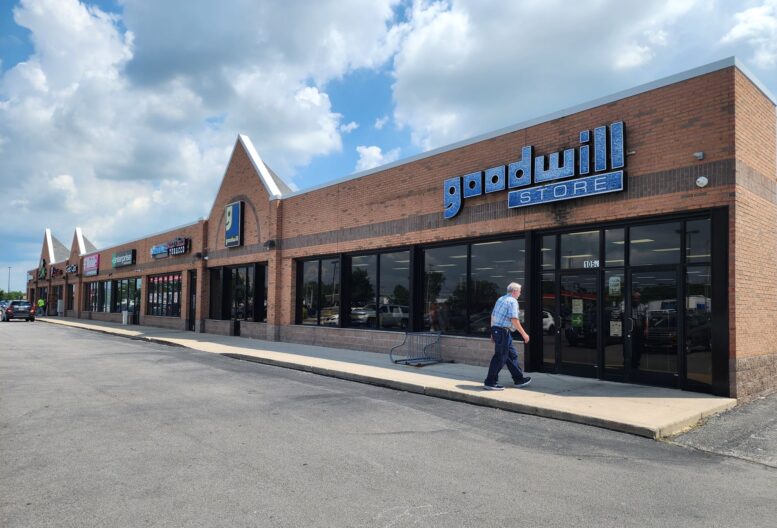
One zoning variance was requested by Chipotle, which is planning a restaurant at 1187 S. Main St., south of the Burger King and north of U.S. 6. The other was sought for the strip mall on North Main Street, just south of the Kroger store.
Zoning Board of Appeals President Rod Noble explained those testifying on the variance requests need to tell of hardships that would be created if the variances were not granted.
The first to testify was Dan Stone, an engineer speaking on behalf of Chipotle, which wants to construct a commercial building that would be 18-feet 8-inches tall – which would not meet the minimum 25-foot structure height required in a commercial district.
The shorter height would be comparable to the Burger King restaurant next door, which was constructed prior to changes in the city’s zoning code.
Stone explained the Chipotle building plan is a prototype used by the corporation across the nation. Making the building taller would be a break in the company’s prototype and would cost the company more.
Zoning board member Jerry Anderson asked if denial of the variance would create any practical difficulty, or just require Chipotle to vary from its cookie cutter plans. He inquired if “this is just about the cost of changing the plans?”
Anderson also questioned the company’s claim in its application that changing the building plans would make it difficult for Chipotle to recover its costs at the location. Corporation profits do not constitute a practical hardship.
Zoning board member Tim Emmerich noted the current business climate, and voiced his concern about adding to the corporation’s costs. He added that with the varying building heights along South Main Street, the request for the variance was not a big difference.
Zoning board member Jeff Crawford also voiced support for granting the variance, saying, “this is not going to hinder the aesthetics of South Main Street.”
But Anderson then questioned why the city adopted its new zoning code standards, if the board was just going to ignore them.
“I’m just trying to protect the zoning code,” Anderson said. “It’s going to cost them money to play by the rules.”
Zoning board member Bob McOmber asked for an explanation for the new 25-foot commercial building height minimum.
Assistant City Planning Director Chase Fletcher said the zoning code’s commercial building height minimums and maximums are intended to provide a more uniform look in commercial areas.
Noble expressed his disappointment that the developer was not present to respond to questions from the board.
Voting in favor of granting the zoning variance were Crawford, Emmerich and Jay Sockman. Voting against were Anderson, McOmber and Noble. The tied vote meant denial of the variance. The petitioner can appeal that decision with the Wood County Common Pleas Court, Noble said.
The next issue to come before the board was a requested variance to allow the construction of a 6-foot by 12-foot monument sign to advertise the businesses located in the strip mall just south of Kroger on Main Street. The requested size exceeds the 64-square-foot maximum monument sign area by 8 square feet.
Patric Shei, of Vandaco Signs, spoke on behalf of the owner petitioning for the variance. With eight commercial tenants, who all want their businesses to be visible on the sign, the variance is needed, Shei said.
Since Shei represented the sign-making company, Anderson asked why the firm couldn’t come up with a design that complies with the zoning code. “Why not make that 64 square feet?” he asked.
Shei replied that the logos and words would then have to be smaller. Anderson suggested it is their job to design signs that serve a purpose and meet zoning requirements.
“That is not enough for us to look the other way on our zoning code,” Anderson said.
McOmber noted the application wording that referred to the proposed size over the zoning regulation as being “minimal.” “That works both ways,” McOmber said, adding that meeting the regulation should take “minimal” changes.
Changes in the city’s signage rules came after citizen concerns about the proliferation of commercial signs creating sign pollution.
“There is a general feeling in the community that we’ve been too permissive,” McOmber said. “What if the next person wants 80 square feet? There has to be a spot that is a stopping point.”
Crawford said the variance requested was not that significant. And Emmerich said “signs are important to businesses,” adding that the zoning board was “splitting hairs.”
Noble again reminded that the petitioner must show practical difficulty. He also noted that the BG Planning Commission and BG City Council “worked long and hard on this zoning code update” – with it being the zoning board’s responsibility to uphold it.
Voting to grant the variance were Crawford and Emmerich. Voting to deny it were Anderson, McOmber, Noble and Sockman.
Also at the meeting, the zoning board voted in favor of a variance allowing a homeowner at 1723 Wexford Drive to widen his driveway five feet more than allowed. The homeowner explained that his family has six cars, and there is little space in the existing driveway to park without extending over the sidewalk, and that little street parking is available.
Feeling the homeowner had proved a hardship, the zoning board voted unanimously to grant that variance.