
By JULIE CARLE
BG Independent News
Andy Thomas has an eye for cool stuff and a heart for bargains.
He comes by it naturally. From a young age, he accompanied his mother to garage sales, where he used the coins she would give him to find toys, video games, and other trinkets for much less than he’d pay in a store.
When he had a surplus of items, he learned early on to sell them on eBay for a profit. More recently, he’s been in a sneaker-selling business with his brother, learning to expand online sales to Shopify, Whatnot and other marketplace platforms.
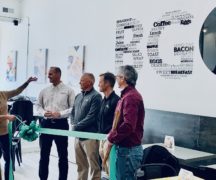
Now, at 22 years old, he’s using that same entrepreneurial mindset and those reselling skills at his first brick and mortar store—Buffs, Bowling Green’s new vintage thrift shop for unique clothes, shoes and accessories.
At 140 E. Wooster St., Suite 4, the store is tucked away in a space behind a restaurant and a bar, and accessible through a door on the east side of the building. The store’s grand opening was Tuesday (Aug. 12).
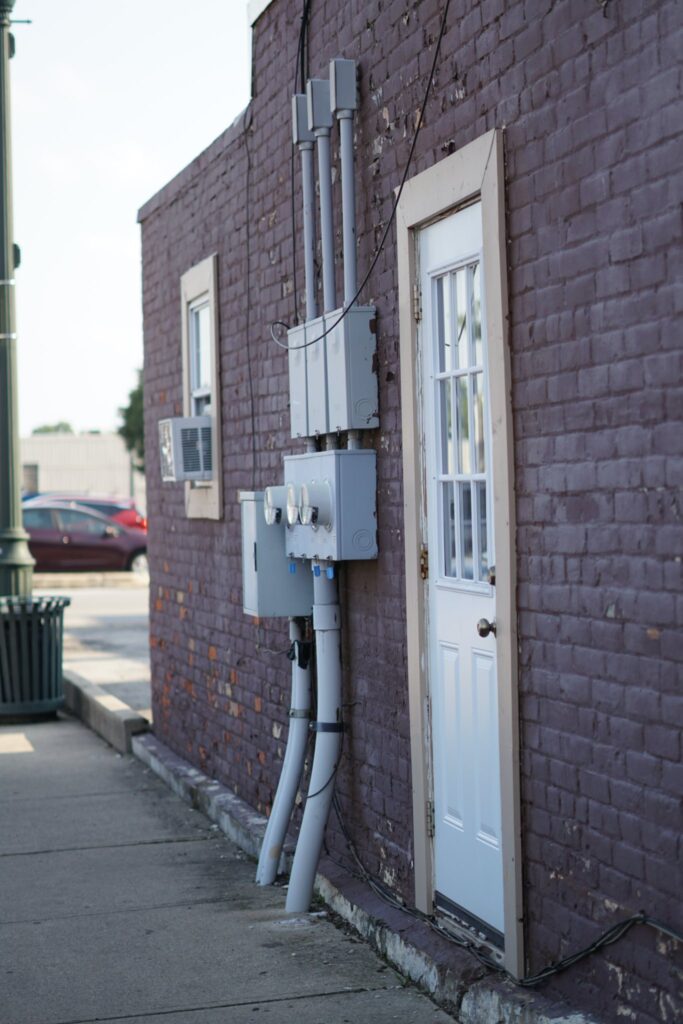
Step inside the store and there is a cool vibe. With brick wall interior, Thomas said, “It’s not a cookie-cutter space. It definitely has some character.”
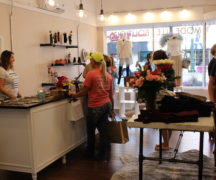
To start, Thomas has set up racks of curated T-shirts, jeans and pants, shoes, sunglasses and jewelry.
His starting merchandise includes “a little bit of everything,” he said, “But the more I grow and as people bring in more inventory, we’ll increase what is available,” he said.
Thomas is from and lives in Findlay, yet he chose Bowling Green to be home for his first store.
“I knew this would be a really good location, because it’s always so lively. There’ are a lot of kids here from the college that are busy and active.,” he said. “When I started coming up here with my friends, I saw kids wearing the stuff that I sell, and I’m thinking, ‘There’s nowhere you can buy it here.’”
Most likely, they were buying it online or out of town, he thought, so he decided he could serve that niche market in Bowling Green.
“As I started getting more into the vintage market, I realized people don’t necessarily want to spend a lot,” he said.
His focus is to sell vintage items at affordable prices. Thomas even takes it a step further by being open to negotiating or haggling on prices. That comes from his garage sale days, he admitted.
“I know myself, when I’m shopping, I’m always looking for a good deal,” Thomas said. “Is this a store that I would like to shop at? Well, yeah, it is, because I can find something that I like, and then I can make it so that people can negotiate on items they like.”
For example, a customer could find a $20 shirt they liked but didn’t want to spend that much. They could offer less or trade for a pile of clothes they don’t wear any more, Thomas explained.
“I always try to be fair with my prices,” he said. “And I’m always trying to buy more inventory or trade it. So if people have extra used clothes they want to get rid of, I’ll buy it. Or if they find something that they like at the store, I’ll trade it.”
He doesn’t discriminate on what he accepts for trade. Even if there is only one item in the traded clothes that he considers cool, he will still accept the items.
“I hand select the stuff that I think is cool, but my eye isn’t the only one. I’m not the one who defines what fashion is,” he said. “People come in here surprising me all the time with what they are looking for.”
One customer came in looking for “a normal button-down shirt.” While Thomas’s preference is more for graphic shirts—featuring cars, sports teams, colleges, and music—he wanted to broaden the selection to appeal to other customers’ tastes.
“If I pick that up, they might find something they like,” he said.
Thomas is careful to curate the items he sells, grouping them according to style and within the style, by color and size. The result is a clean, organized look that makes it easy to see what’s available.
“I like the idea of keeping everything sorted and curated,” he said.
The shoe section of the store has a variety of vintage-style shoes that he has cleaned up using an ultraviolet grow light and solutions that reverse the oxidation on shoes.
Often, people don’t want to wear sneakers after they start looking dingy, but his process “gives them a new life.”
He also has bins full of shoes that have not been cleaned up but are available at a reduced price.
Thomas is also proud that his vintage business is helping “combat the fast-fashion trend that we see nowadays.” By reselling clothes, he can help reduce the number that end up in landfills.
Some of the items he sells are 20 to 30 years old and made with heavyweight cotton that is comfortable and lasts longer than some of the petroleum-based fabrics that are more common today.
Thomas also sells items via his online platform at buffsofficial.myshopify.com, or find him on Facebook and Instagram.
Long-term, he hopes to grow the e-commerce side of his business and operate out of a large warehouse, similar to the business model of one of his uncles, who has been one of his mentors and inspirations.
“I’m really excited to do this work. I’ve had a lot of inspiration in my life with people who are even younger than me, making a success name for themselves, and people who are older, like my uncle,” he said.
The store’s name comes from the nickname of Cartier Buffalo sunglasses that he and his brother used to sell knock-offs. “They were an affordable item that people could pick up,” he said. “I liked the name Buffs. It was a one-word name that is easy to remember.”
Store hours are Monday through Saturday noon to 6 p.m. and closed on Sundays. He may extend hours or change them if there are special events going on, such as the Black Swamp Arts Festival.
“I think Buffs is a place where anyone can come in and find at least one thing that they like,” said Makayla May, who assists Thomas with marketing and branding the store. “I like the fact that everything is negotiable to make it more feasible for anyone who walks in. It’s good for business and it’s good for the community.”