By ANDREW SPIESS
BG Independent News
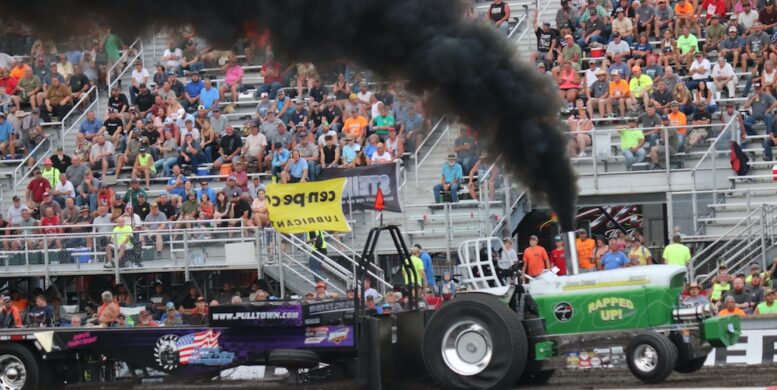
Inside the entrance of the open-air grandstand at the Wood County Fairgrounds, people carried funnel cakes, lemonades, and cardboard baskets holding burgers and sausages to their seats to watch the much-anticipated National Tractor Pulling Championships.
Men, women, and children packed the bleachers and settled into their own lawn chairs around the dirt tracks that supported the contest. Cans of Coors and Busch Light populated the area. Bags of cotton candy and fountain pops colored the crowd. Many people dressed in comfortable workwear for this late-August evening outdoors, sporting common brand names including American Cattle Co., Carhartt, and Caterpillar.
This year marked the 59th anniversary of the National Tractor Pulling Championships, which started in 1962. Many national tractor pulls are held in states around the country—including Tennessee, Wisconsin, and Iowa—but the tractor pull held in Bowling Green, Ohio, is considered to be the most significant.
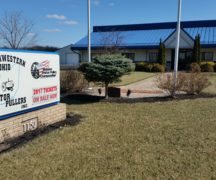
“People come here because they know this is the best of the best pulling,” stated Keith Seiler, who sits as secretary on the Northwestern Ohio Tractor Pullers Association Board of Directors. Seiler has committed the last nine years to the board, but has been involved for a total of 18 years.
“There are Europeans that come over and pull, so this is the best of the best worldwide. When they say Bowling Green, Ohio, and tractor pulling, they know it from California, all the way down to Mexico and all the way up into Maine.”
In the audience, some of the children sitting next to their parents wore earmuffs to protect their hearing from the blaring engine revs, despite the noisy excitement of every pull. Many of them could be seen recording the action on their phones. The thrill of tractor pulling comes from the speed of the vehicles, the clouds of smoke spouting from tractors, and the dirt that flies from the tires of a truck’s vigorously rotating wheels.
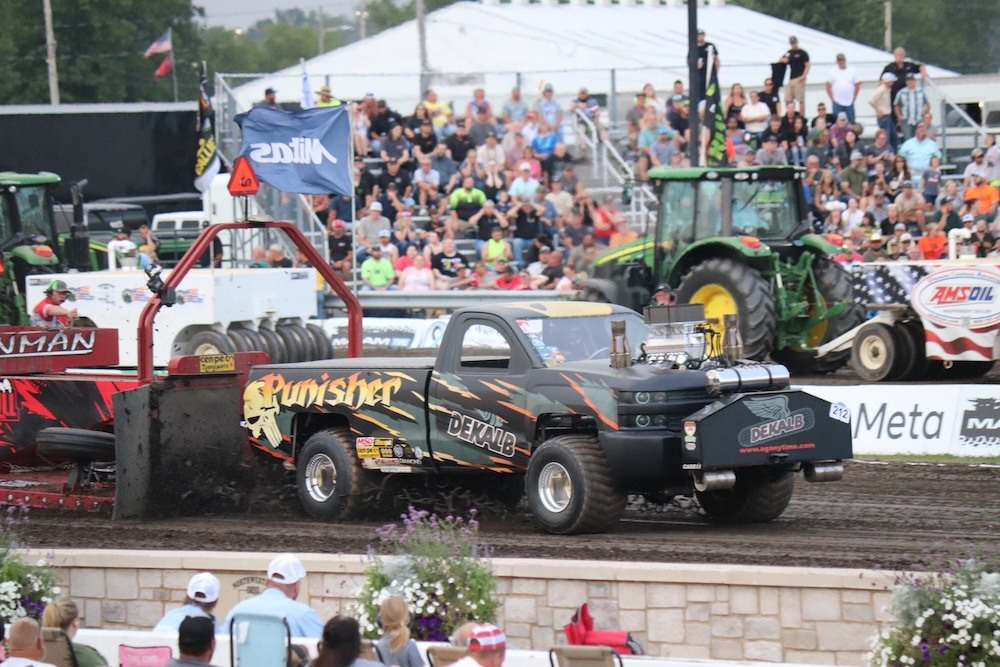
According to Seiler, most motorsports focus on the necessity of horsepower, which has to do with sustained high speed over a length of time. Think NASCAR or Formula 1. However, tractor pulling doesn’t rely on prolonging high speeds.
With this particular motorsport, torque, or the rotational force of wheels powered by a brawny engine, is the most important element. Torque leads to horsepower, and speed is certainly part of the game, but the relatively short bursts of torque are needed for tractors and trucks to pull hulking sleds across dirt tracks in record time.
The sleds are specially designed to resist the pull of a tractor or truck without acting like a brick wall. It uses various mechanisms, including a moving weight box and a steel pan that digs into the dirt, to stall the opposing vehicle, and sometimes that vehicle’s engine takes itself beyond its breaking point.
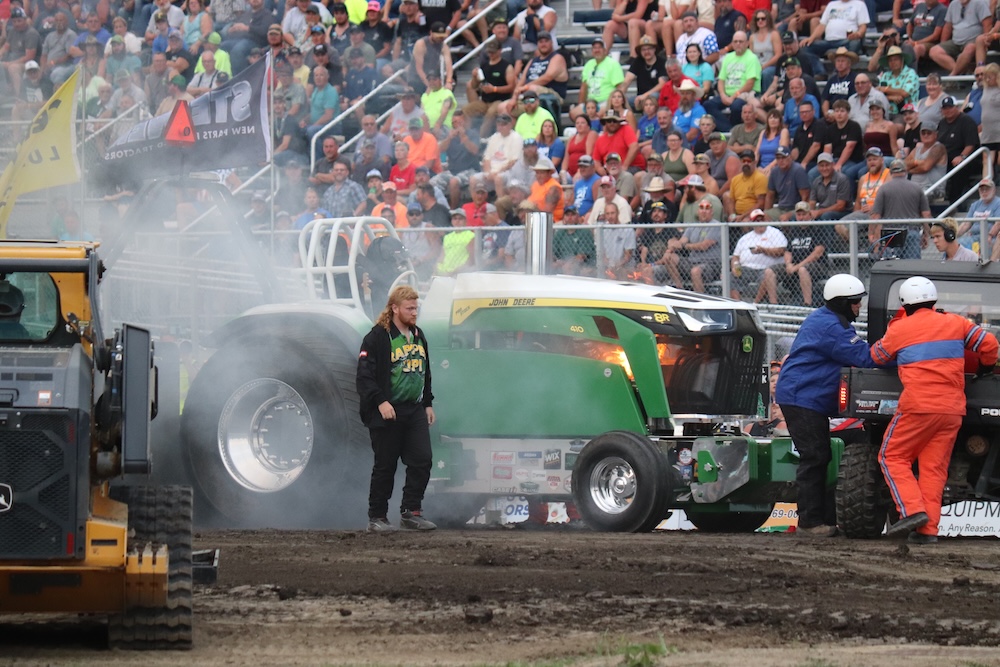
When the engine of a John Deere tractor caught fire, the National Tractor Pulling Championships Safety Team acted promptly. Rodney Johnson, lead organizer of Risk Management Associates, had two teams positioned every 100 feet on the north and south sides of the tracks, keeping a close eye on the vehicles throughout the contest. These teams of volunteers—widely ranging from ages 18 to 60—were trained in fire safety and EMS (Emergency Medical Services) through classes held every other year and through vocational schools like Penta Career Center every year.
“We have a UTV carrying a 10-gallon foam system backed by a vehicle with a 20-gallon system, and another vehicle with a 100-gallon system nearby,” Johnson said about their deliberate overpreparation for the safety of the competitors.
Along the track with each team are 2 ½-gallon handheld extinguishers. They refer to overpreparation as the value of “redundancy,” ensuring the survival of anyone caught in an unpredictable emergency. Connected to Indiana University with 34 years involved in this tractor pull, Johnson made sure his safety team was set up on the Wednesday before the championships until Sunday.
“This is the largest pull of the summer,” said competitor Brian Shramek, pulling with a 10,000-pound pro stock-class tractor called Young Blood. “So normally we pull against 20 to 25 tractors in a class. Tonight, we got 45.”
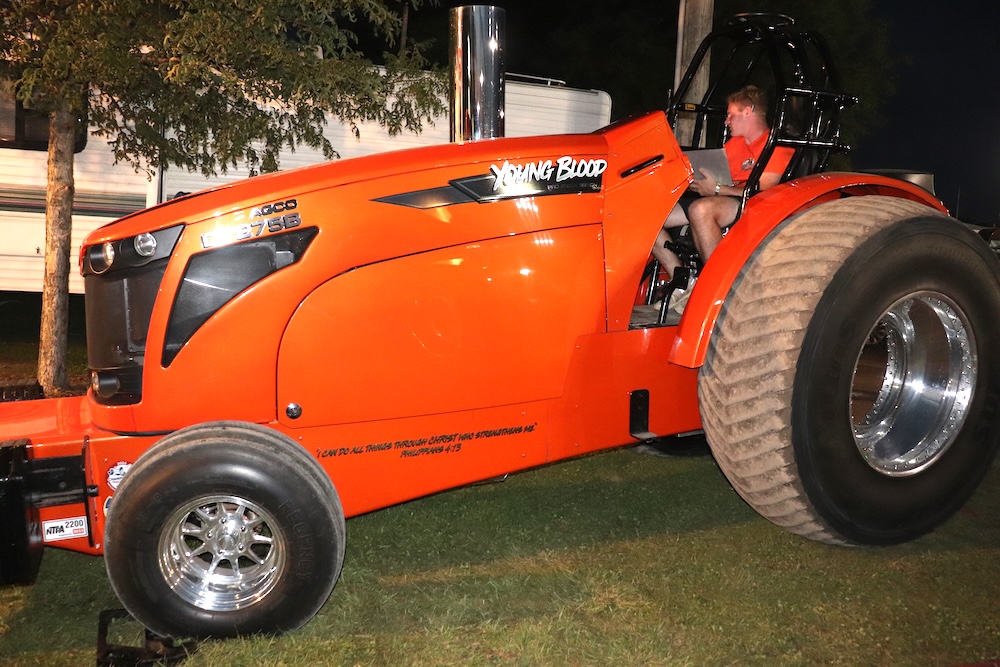
“I was 18th hook [in the order to compete], and when I went, I took over first place,” Shramek said. “And I just lost first place here, maybe about five tractors after that. Another guy just barely beat me out. But I’d say we’re going to end up in the top five.” He spoke about the difficulty of participating in a competition with such a high number of tractors. In other words, the more competitors there are in a contest, the less likely it is to come out on top, although it isn’t impossible.
Shramek, from Williamsburg, Kentucky, explained how much time he spends preparing for a season of tractor pulling, and how he and his team constantly brainstorm about how they can improve to execute a more successful pull.
“We mostly pull between May and September, but it’s a year-long project,” said Shramek. “Once we get done, we’ll start rebuilding something different: different motor concept, doing dyno work, and all types of repairs and maintenance and a new setup for the following year. So, it becomes a yearly thing for us.”
“We have a brand new tractor at the house now that we’re building, and it’s not quite done yet, but that’s all new technology and new setup,” he continued about his persistent ambition to enhance his chances, and chance indeed plays a role in tractor pulling. Shramek admitted that there is a degree of luck involved, no matter the condition or power of the vehicle.
“That’s the thing about when you come here, and you pull 45, the track changes, the conditions change,” he said. “It’s literally not only how good you are. You got to have a good tractor, but also you got to have a lucky draw. We always think we can create our own luck, but 45 tractors, there’s a lot of tractors up and down the track, and it tears it up.”
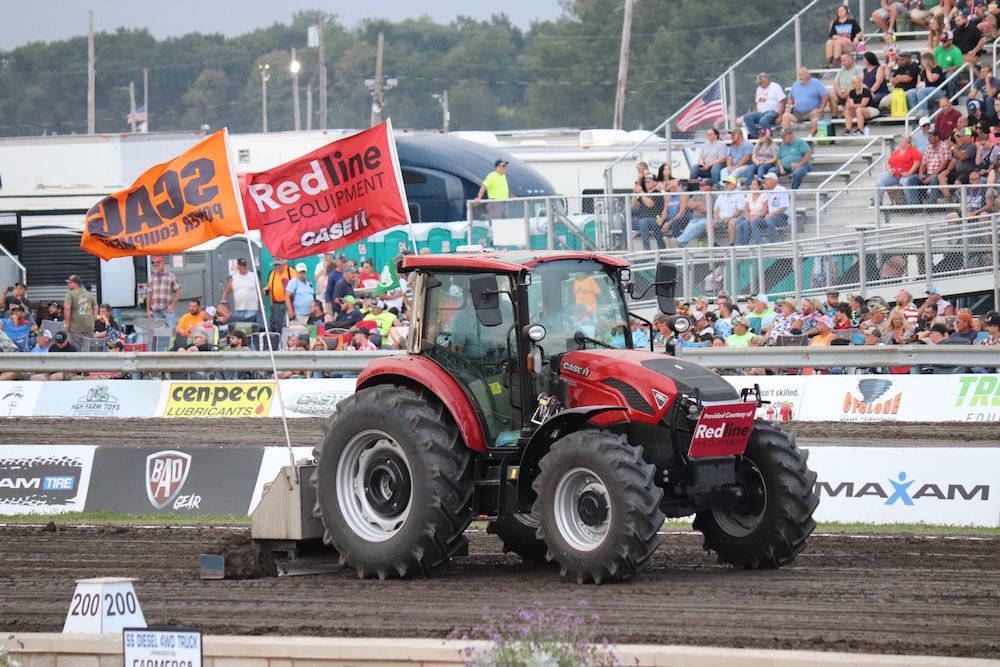
Seiler makes it clear that they do everything they can to keep the track in a consistent condition over the night with the use of a good track crew, despite the way moisture comes up through the ground as the pulls progress, changing the circumstances.
“We groom the track after every pull. Grade it up. We call those track dockers. And then at the starting line, at the finish line, we got rakes that they go out and rake it, too. And then we have rollers that’ll roll it back in. Wobble wheel rollers do the best job putting the track back tight.”
Ultimately, the 59th Annual NTPC kicked up as much excitement as possible while safeguarding through well-trained measures. Competitors put their hearts and passion for the pull on the track as they have in the past, and they’ll do it again next year for the 60th National Tractor Pulling Championships in Bowling Green.