
By JAN McLAUGHLIN
BG Independent News
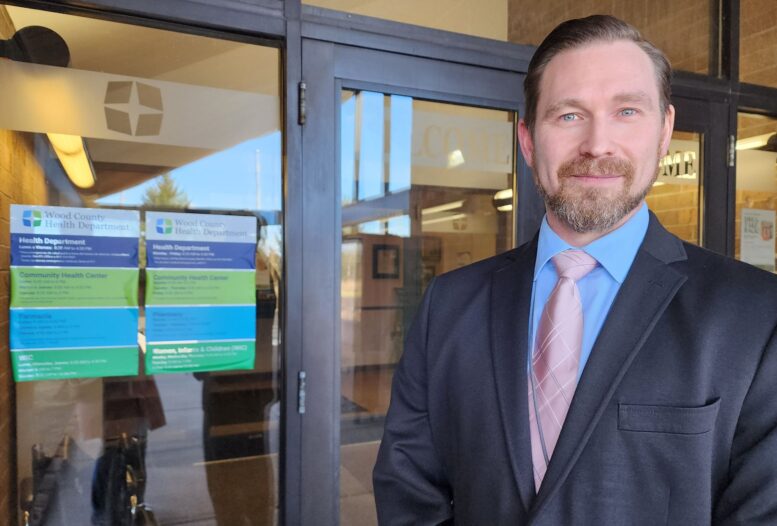
Ben Robison took over as Wood County Health Commissioner just as Covid was kicking into high gear in the U.S. six years ago.
Not one to shy away from challenges, Robison recently accepted a workforce development position with the Ohio Department of Health at a time when recruiting and retaining public health employees has become quite difficult.
Robison, a native of Bowling Green, leaves behind a legacy of building partnerships to better public health in Wood County.
“I think our best work is done collaboratively,” he said during his last day on the job in Wood County. “It goes beyond what we could do on our own. We are all one local government serving the community.”
Working as a team also helps eliminate “blind spots” that may exist within one branch of public service, Robison said.
“We have a chance to do bigger things than on our own,” he said.
That philosophy helped in Wood County’s approach to Covid, and its ability to vaccinate its residents. The Wood County Health Department was one of the first in the state to complete vaccinations for its homebound residents, and achieved the second highest vaccination rate for its senior citizens.
Before the vaccines were available, seniors over 80 years who contracted Covid had a 25% chance of hospitalization and a 20% chance of dying, Robison said.
Robison, who returned to Wood County in 2020 with experience in public health emergency response, praised the health department employees he inherited.
“What I saw here was a dedicated team of staff,” he said.
While Covid was unprecedented and all-encompassing, it wasn’t the only public health emergency handled in Wood County during Robison’s tenure. During an e-coli outbreak, Wood County saw more cases than any other county in Ohio. And the first case of H5N1 flu among cattle in the state was in Wood County.
Then there were growing pains that Robinson encountered – with the health center expanding to offer dental and mental health services, and building renovations to make room for WIC (Women, Infants and Children) services.
In addition to his emphasis on collaborating with others, Robison and his staff also worked hard to find available resources to better serve the public. In his six years as health commissioner, the health department secured about $14 million in grants.
“I really believe in leveraging every opportunity we have to make life better for the people who we serve,” Robison said. “It enabled us to do things for our community that we couldn’t do before. There is real value in the programs we do.”
Robison praised the health board’s selection of Rachel Aeschliman as interim health commissioner.
“She brings a wealth of knowledge and experience in public health,” he said of Aeschliman. “She has led with great compassion and care and collaboration.”

