

By JULIE CARLE
BG Independent News
Jean and Chris Geist seem to enjoy life and life’s adventures.
They are forever curious. They feed that curiosity through travel, music, theater, art and an occasional good craft beer. No matter where they find their next adventure, they are always happy to return to their happy place—a late 19th-century farmstead turned living sanctuary.
Inside their 1875 home, Jean talked about the weathered beams and the various additions and changes over time. With 40 years of raising their family and making the house their own, she shared the structure’s evolution with a loving familiarity that mirrors their relationship with the land on which the house sits.
When Jean and Chris arrived decades ago, the property was a traditional farm.
“This was a farm. When we came, there were cattle, horses and a goat,” Jean recalled. Open pasture stretched behind the house, where the land was shaped by hooves and hay rather than habitat. Today, that same ground tells a different story.
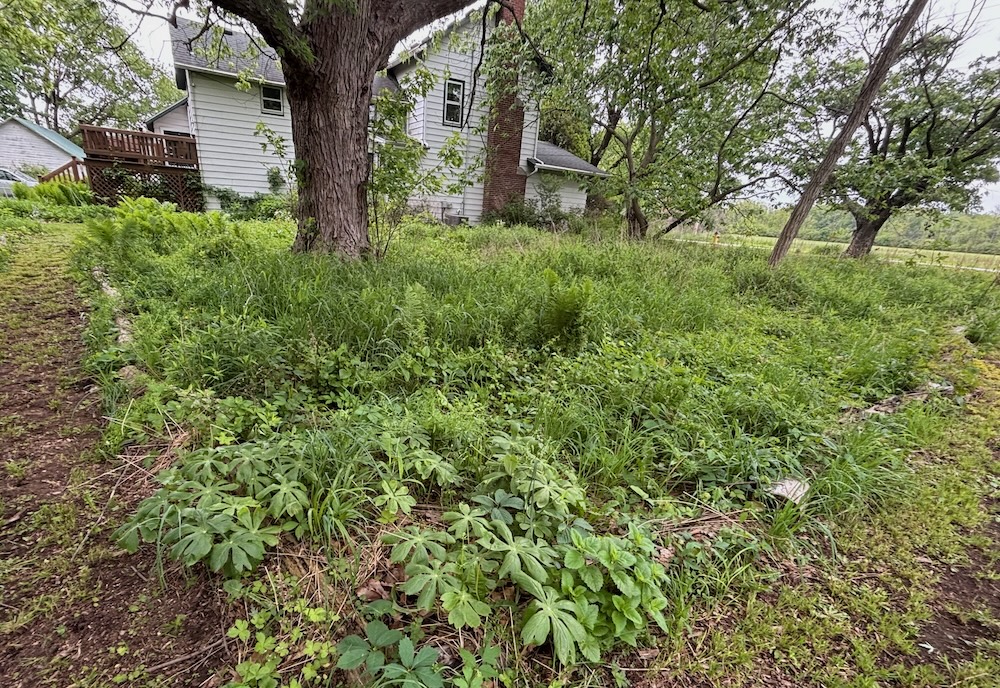
What was once pasture is now prairie, gardens, trees and a magnificent, nature-attracting pond.
The transformation has been gradual, deliberate and deeply personal—a shift from conventional agriculture to native habitat restoration that reflects both ecological conviction and their lifetime of curiosity.
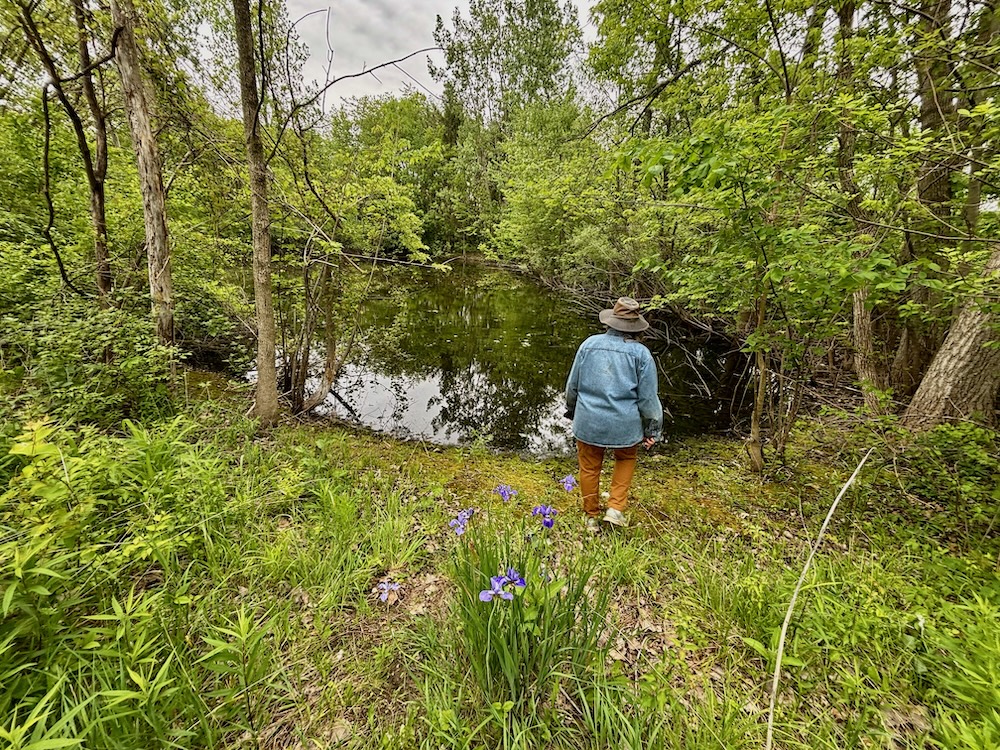
The Geists’ lives have long revolved around exploration. They quietly admit that their most enduring and meaningful project has been right outside their door. Over the years, they have reimagined their land as a refuge for native plants and wildlife, replacing monoculture grasses with biodiverse ecosystems.
That transformation has not been simple.
A central challenge has been the relentless spread of invasive species—mostly honeysuckle and buckthorn—plants that crowd out native growth and alter entire ecosystems. Removing them has required years of labor and expertise. Chris credits much of that effort to Nick Breen, a restoration specialist and their collaborator, who has helped guide the project.
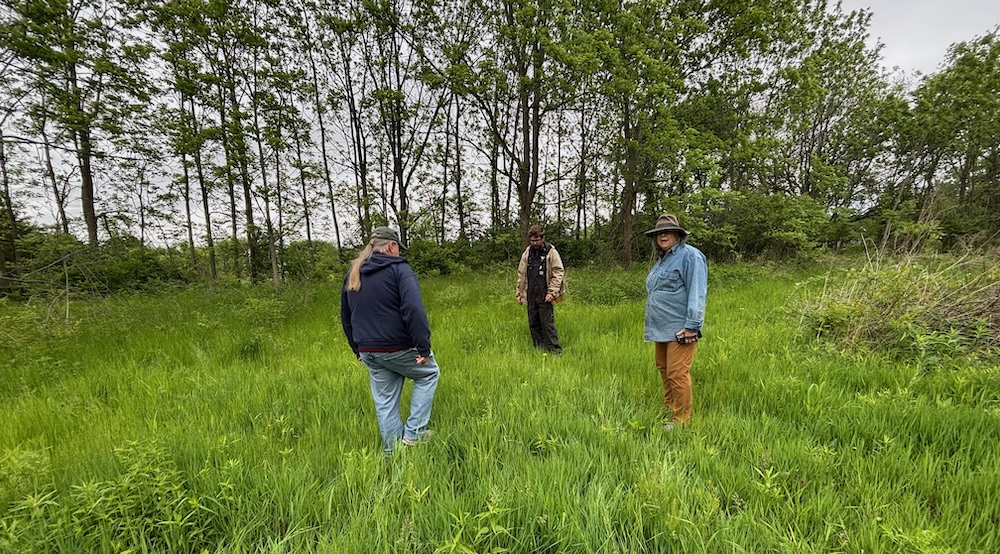
“I can’t emphasize how much work it’s been to get rid of the invasives, especially the honeysuckle,” Chris said. The work is ongoing, a constant negotiation between human intention and nature’s persistence.
Establishing native plants has come with its own learning curve. Early efforts involved prairie seed mixes sourced from regional nurseries, but identifying what thrives—and what doesn’t—has taken time. “Everything I planted has been trial and error,” Jean said.
That uncertainty and lengthy process haven’t dampened their commitment. If anything, it has deepened it.
The current canopy of the woods is primarily black locusts, black walnuts and oaks, three of which are lovingly referred to as The Sisters. “There are also a smattering of hackberries and cherries and a wonderful American elm,” Breen said.
Since Chris retired from Bowling Green State University’s popular culture department, he now has time to enjoy mowing and surveying the five acres at his leisure. They have simplified the mowing process by removing some of the longtime marks of family outdoor time, such as a fire pit and picnic table that became cumbersome to mow around.
For Chris, the measure of success often comes on wings. An avid bird watcher, he has spent countless hours observing how the land responds to their efforts. Orioles, hummingbirds, and herons now frequent the property, drawn by the habitat taking shape.
“The best year ever was the COVID year,” Chris said. “They said a lot of birds hung around and came to places because it was so quiet.” With less human activity, the natural world appreciated the quiet of the Geist property, making it a haven for the birds and other wildlife.
Watching birds requires some patience, Chris said. “Fifteen minutes is about what they take to get completely used to your presence.”
It’s a lesson that mirrors the broader restoration process: change happens slowly, on nature’s timeline.
That timeline, however, is not lost on Jean, whose passion is the plants that comprise her cottage garden, the prairie garden and the rest of the property.
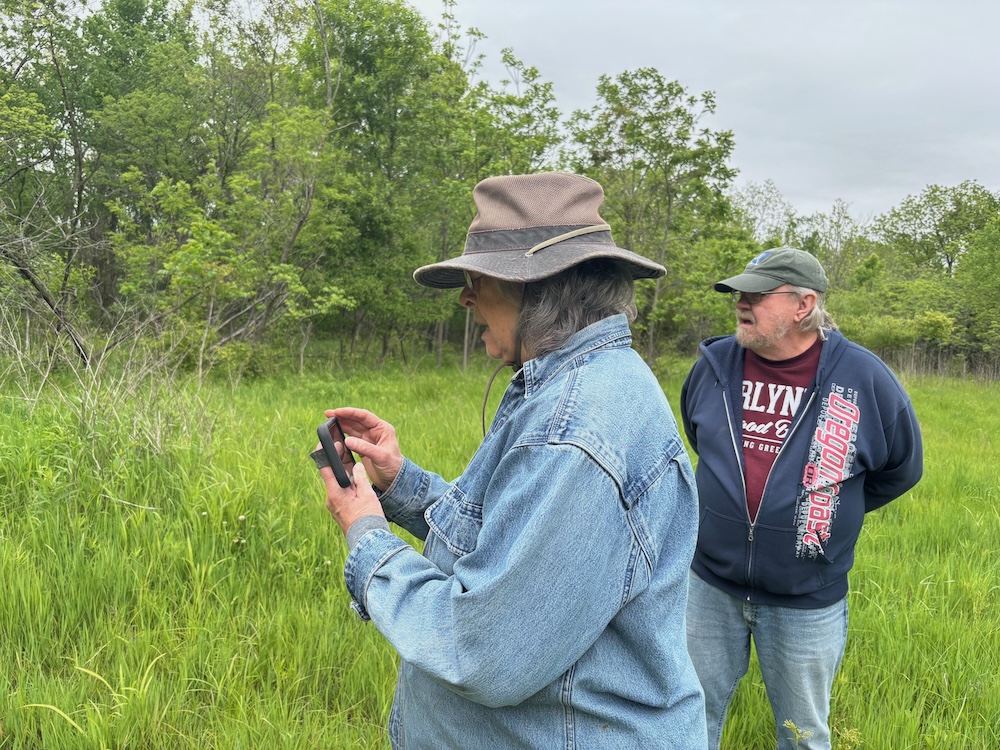
At 78, she is keenly aware of the gap between ecological restoration and human lifespan. “Nick keeps saying, ‘In three to five years, this will be great,’” she said. “And I say, ‘I’m 78.’” There is no bitterness in her voice—only a pragmatic recognition of time’s limits.
Physical changes have also altered her role in the work. “I don’t get things done like I used to,” she admitted. Yet her vision remains intact, anchored in a belief that the land itself is worth the effort, regardless of who sees its final form.
That vision has faced new challenges in recent years, particularly from climate extremes.
During the interview tour of the property, she noticed for the first time that there were no green leaves on a beloved Osage Orange tree.
The fall’s severe drought and the frigid temperatures of the winter proved devastating. “I walked out here… and I just wanted to cry,” Jean said, about losing some of her most prized trees, bushes and plants from the withering strain of the weather.
For the Geists, the loss underscored a sobering reality: even carefully restored landscapes are vulnerable to a changing climate. Adaptation, like restoration, is now part of the work.
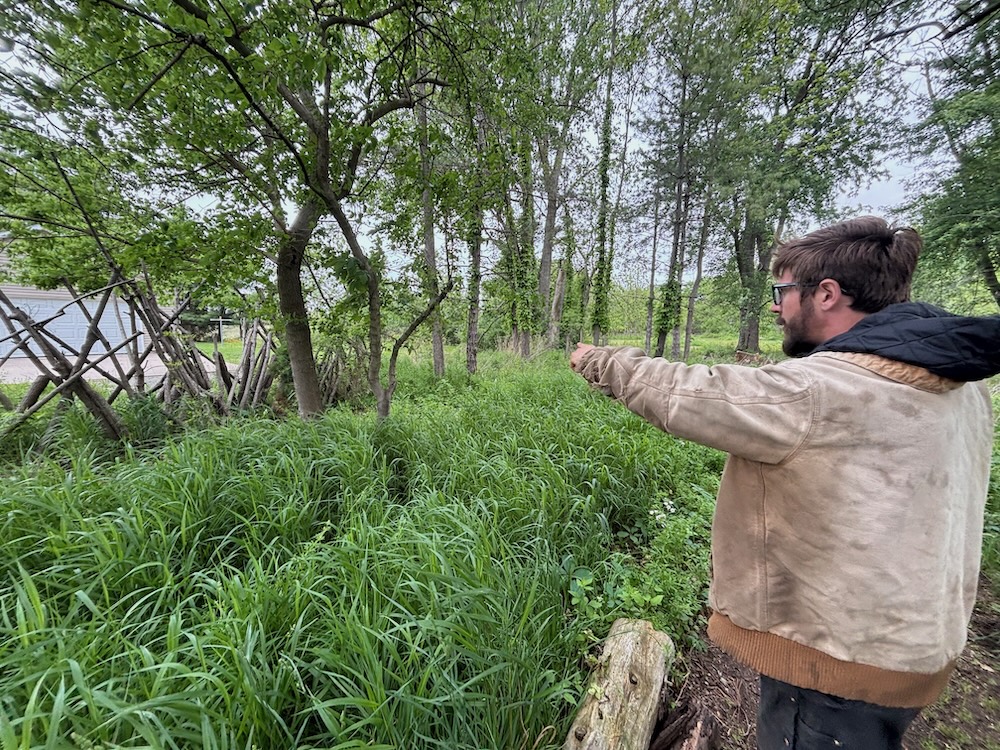
Through it all, collaboration has been key. Working alongside Breen has allowed the Geists to refine their approach, blending personal intuition with ecological expertise. The relationship is less about instruction and more about exchange—ideas shared, tested and reshaped.
“I love working with what’s already here,” Breen said. It’s a philosophy that aligns closely with the Geists’ own: respect the land’s history while guiding its future. “Being able to build things with customers—that’s really the core of what’s happening here,” Breen said.
That balance—between past and future, control and surrender—defines the Geist property today. It is neither fully wild nor fully managed, but something in between: a living system shaped by care, curiosity and time.
In many ways, the land reflects the couple themselves. Their lives, like their property, have been marked by exploration and reinvention. What began as a working farm has become a sanctuary—not just for wildlife, but for a way of thinking about the world.
“I love that you care about your plants and your birds,” Breen told the Geists. “This was a wonderful opportunity to work on the property that you have cared about for years and years and years. I love working for folks who have a great relationship with their property. You two have a great relationship with your property and have been faithful stewards.”
